As an Amazon Associate, we earn from qualifying purchases. Some links on this site are affiliate links at no extra cost to you. Our recommendations are based on thorough research and editorial judgment.

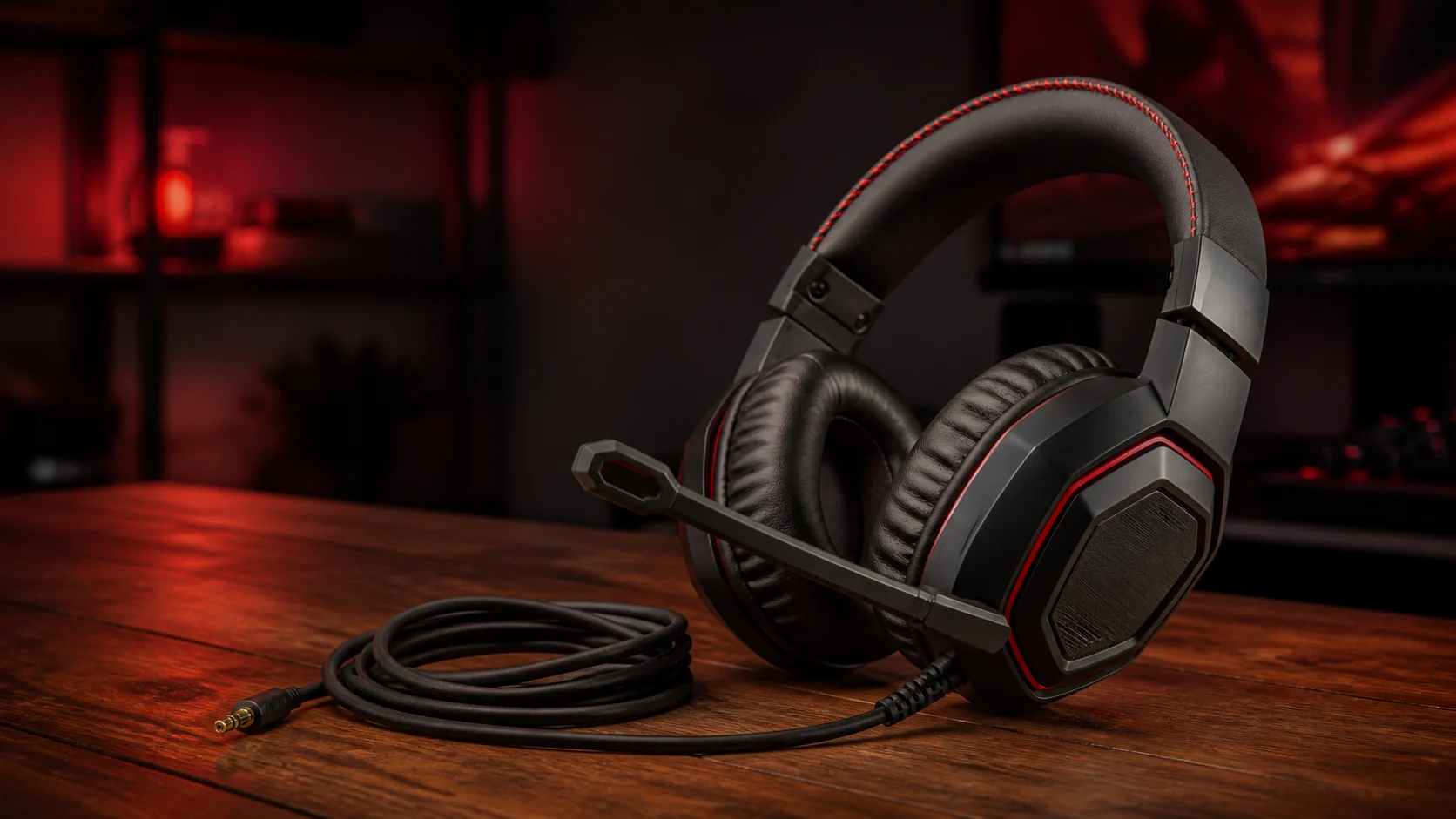
HyperX Cloud Series Gaming Headset Comparison: Which Model Is Actually Worth Buying

Walk into the headset aisle at Best Buy or scroll HyperX’s own store page, and the Cloud lineup starts to blur together. Cloud II, Cloud III, Cloud Alpha, Cloud Alpha 2, Cloud Stinger 2, plus wired and wireless versions of most of them. Prices swing from $50 to $300 for headsets that all wear similar red-and-black styling and promise legendary comfort. If you’ve ever added three HyperX headsets to a cart and closed the tab out of decision fatigue, this is for you. I broke down what actually separates these models based on official specs and verified press reviews, so you can pick the one that fits your setup instead of just the one with the flashiest name.
You may be interested

Sale


HyperX Cloud III – Wired Gaming Headset, PC, PS5, Xbox Series X|S, Angled 53mm Drivers, Spatial...
- Comfort is King: Comfort’s in the Cloud III’s DNA. Built for gamers who can’t have an uncomfortable headset ruin the flow of their full-combo, disrupt their...
- Audio Tuned for Your Entertainment: Angled 53mm drivers have been tuned by HyperX audio engineers to provide the optimal listening experience that accents the dynamic...
- Upgraded Microphone for Clarity and Accuracy: Captures high-quality audio for clear voice chat and calls. The mic is noise-cancelling and features a built-in mesh filter...


HyperX Cloud Alpha - Gaming Headset, Dual Chamber Drivers – Red & QuadCast - USB Condenser Gaming...
- Product 1: HyperX Dual Chamber Drivers for more distinction and less distortion
- Product 1: Signature award winning HyperX comfort
- Product 1: Durable aluminum frame with expanded headband
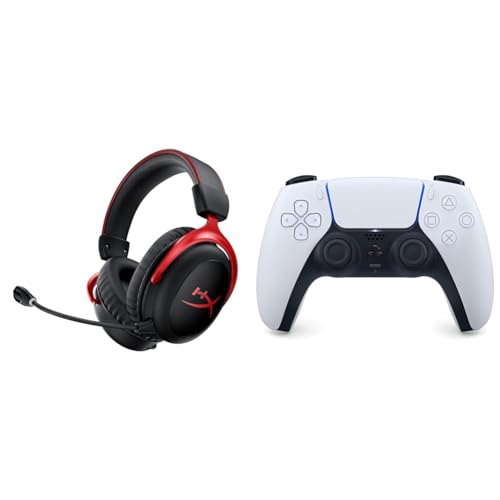
HyperX Cloud II Wireless -Gaming Headset for PC & PlayStation DualSense Wireless Controller
- Product 1: Headphones fit type:Over-Ear
- Product 1: [Gaming-grade wireless with long battery life]: Cut the cord and roam free with low-latency 2.4GHz Wireless connection, a range of up to 20 meters and a...
- Product 1: [DTS Headphone:X Spatial Audio]: DTS Spatial Audio will help amp up your audio advantage and immersion with its precise sound localization and virtual 3D sound...
Sale
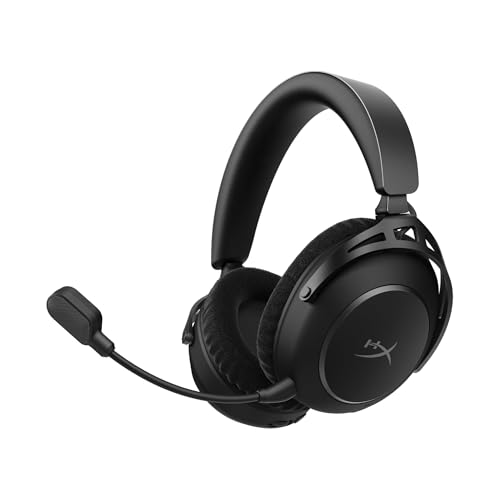
HyperX Cloud Alpha 2 – Wireless Gaming Headset with 53mm Dual-Chamber Drivers and up to 250 Hours...
- Up to 250 Hours of Battery Life on a Single Charge Enjoy up to 250 hours in 2.4GHz mode or 125 hours with simultaneous connection, keeping you powered for marathon...
- Multi-layer 53mm Dual Chamber Drivers with Spatial Audio by HyperX NGENUITY Experience premium, high-fidelity sound with our HyperX multi-layer composite design and 53 mm...
- Customize Your Setup with an included RGB Base Station The RGB Base Station is an audio control hub featuring customizable RGB lighting, programmable buttons and macros...
How the Cloud Naming Actually Works
HyperX splits its Cloud family into two rough tracks: the mainline Cloud models (II, III) built around comfort and value, and the Alpha line, which trades some of that plush simplicity for tighter bass tuning and, in the newer models, much longer battery life. Then there’s the Stinger series sitting below both as the budget entry point. Every model also comes in multiple connectivity flavors: wired, single-wireless (2.4GHz dongle only), and dual-wireless (2.4GHz plus Bluetooth). That’s where most of the confusion starts. A Cloud III and a Cloud III Wireless share a shell and a 53mm driver but are functionally different purchases once you factor in latency, battery life, and price.
The practical shortcut is to decide your connection needs first, whether that’s desk-only wireless, travel-friendly Bluetooth, or simple plug-and-play wired, then pick the tier that fits your budget within that connection type. Ranking all seven current models on one single “best overall” scale doesn’t really work, because a $49.99 Stinger 2 and a $299.99 Alpha 2 Wireless aren’t competing for the same buyer or the same use case.
HyperX Cloud Stinger 2 (Wired) — The Budget Starting Point
At $49.99, the Cloud Stinger 2 is the cheapest headset HyperX currently sells, and it feels like it in the build. The earcups are lighter plastic instead of the metal-reinforced yoke on the pricier Clouds, and there’s no detachable cable. But the basics are solid: a 50mm neodymium dynamic driver, onboard volume and mic-mute controls on the earcup, and a listed weight of about 0.60 lb (roughly 272g), which is noticeably lighter on the head than the rest of the lineup. The cable runs 6.56 feet with a small 3.5mm PC splitter included in the box for separate headphone and mic jacks on older desktops.
Sound-wise, this is not a headset for critical listening. Bass is boosted and the soundstage (how spread-out instruments and directional cues feel, rather than centered in your skull) is narrow compared to the 53mm-driver models above it. For someone who just wants working chat audio and decent in-game footstep cues for under $50, it does the job. Skip it if you already own any wired headset with a 50mm-plus driver from the last five years; you likely won’t hear an upgrade.
HyperX Cloud Alpha (Wired) — Still the Value Benchmark
The original Cloud Alpha has been on the market for years, and HyperX still sells it because it keeps winning value comparisons. Official pricing lists it at $99.99, though it’s frequently discounted to around $64.99 at retailers like the HyperX store itself. The headline feature is a 50mm dynamic driver with dual chambers, essentially two separate acoustic paths inside each earcup that split bass and mid/treble frequencies to reduce distortion when a game’s explosion and a teammate’s voice line up at the same time. It’s a genuinely clever piece of engineering for the price bracket, and it shows: this headset produces cleaner, punchier bass than most wired headsets twice its cost without needing an EQ app running in the background.
Build quality leans on an aluminum frame under the padding, which keeps the headband from feeling flimsy after months of use, though the frame doesn’t fold flat for a bag. At roughly 0.65 lb, it sits comfortably through long sessions thanks to memory foam earpads, and the detachable cable (4.26 ft headset cable plus a 6.56 ft PC extension) means a frayed cord doesn’t kill the whole headset. There’s no software requirement and no RGB, which some buyers will read as a con given the gaming-headset norm, but it also means zero driver installs or firmware quirks. If you want the best sound-per-dollar in the Cloud lineup and don’t care about wireless, this is still it.
HyperX Cloud II Wireless — The Aging but Reliable Middle Option
The Cloud II Wireless lists at $149.99 and regularly drops to the $99.99–$119.99 range during sales. It uses a 53mm neodymium driver, connects over a 2.4GHz USB-A dongle with a rated range up to 20 meters, and claims roughly 30 hours of battery life, with independent testing landing close to 27 hours, which lines up well with real use. At 0.7 lb, it’s light for a wireless model, and USB-C charging is a welcome update over the micro-USB ports that plagued earlier Cloud headsets.The catch is software. The companion NGenuity app offers little beyond a volume slider and a virtual 7.1 surround toggle, so there’s no real EQ customization here. The microphone is also the weak point of this specific model, recording noticeably thinner and quieter than the Cloud III Wireless that effectively replaced it. There’s no wired fallback either, which matters if the dongle ever gets lost. Given that the newer Cloud III Wireless now often sells for similar money, the Cloud II Wireless mostly makes sense as a sale-priced pickup rather than a full-price purchase.
HyperX Cloud III and Cloud III Wireless — The Current Sweet Spot
The Cloud III wired model starts around $57.99 on sale (from a $99.99 list price) and carries the same 53mm angled driver used across the whole Cloud III family. HyperX angled the drivers this generation to sit more naturally against the ear rather than facing it head-on, and in practice that translates to a wider, more directional soundstage, useful for hearing whether footsteps are coming from your left or right rather than just “somewhere behind you.”The Cloud III Wireless bumps the price to $149.99 and swaps in a 2.4GHz-only connection with a genuinely strong 120-hour rated battery life, a real jump from the Cloud II Wireless’s 30 hours. What it lacks is Bluetooth, which is where the Cloud III S Wireless comes in.
The Cloud III S Wireless costs $179.99 at MSRP, though it’s commonly found for $139.99 to $168.99, and adds both Bluetooth and HP Instant Pair on top of the 2.4GHz mode, letting you keep the headset paired to your PC while also connected to a phone for calls or music. Battery life matches at 120 hours on 2.4GHz and stretches to around 200 hours over Bluetooth. Reviewers who tested it directly called it “everything the Cloud III Wireless should have been,” for roughly $10-$30 more. The tradeoffs across the whole III Wireless family: none of them fold flat for travel, and the virtual surround sound mode is widely described as underwhelming rather than essential. If you’re choosing one wireless HyperX headset for the money, the Cloud III S Wireless is the one to look at first.
HyperX Cloud Alpha 2 Wireless — The Premium Flagship
At $299.99 MSRP (frequently seen around $279.99), the Cloud Alpha 2 Wireless is the most expensive headset in the current Cloud catalog by a wide margin. It carries over the 53mm angled driver design and pairs it with a genuinely standout battery spec: up to 250 hours on 2.4GHz alone, or 125 hours when running simultaneous dual-wireless (2.4GHz to your PC and Bluetooth to your phone at the same time). It also includes a desktop base station and supports wired 3.5mm/USB connections when you want zero latency for competitive play.The catch reviewers keep pointing out: at this price, buyers expect audio quality to leap ahead of the $150-$180 models, and it mostly doesn’t. Tom’s Hardware noted the sound and microphone quality land close to the cheaper Cloud III series, meaning you’re paying the extra $120-$150 primarily for battery life, the base station, and simultaneous dual-wireless rather than a dramatically better listening experience. It’s excellent for gaming specifically, with sharp positional cues for footsteps and gunfire, but for music listening the review called it “not quite $300 good.” Worth it if you specifically want the base station convenience and best-in-class battery life; skip it if you’re buying primarily for audio fidelity.
| Model | Price (MSRP) | Driver | Connectivity | Battery Life | Weight | Best For |
|---|---|---|---|---|---|---|
| Cloud Stinger 2 | $49.99 | 50mm dynamic | Wired 3.5mm | N/A | ~0.60 lb (272g) | Tightest budget |
| Cloud Alpha (wired) | $99.99 (often $64.99) | 50mm dual chamber | Wired 3.5mm | N/A | ~0.65 lb (295g) | Best value/sound per dollar |
| Cloud II Wireless | $149.99 (often $99.99–$119.99) | 53mm neodymium | 2.4GHz USB dongle | ~30 hrs rated (~27 hrs tested) | 0.7 lb (301g) | Budget wireless on sale |
| Cloud III (wired) | $99.99 (often $57.99) | 53mm angled | Wired 3.5mm | N/A | Not specified | Updated wired sound |
| Cloud III Wireless | $149.99 | 53mm angled | 2.4GHz only | Up to 120 hrs | Not specified | Simple 2.4GHz wireless |
| Cloud III S Wireless | $179.99 (often $139.99–$168.99) | 53mm angled | 2.4GHz + Bluetooth | Up to 120 hrs (2.4GHz) / ~200 hrs (BT) | 12.05 oz (341.5g) | Best all-around wireless value |
| Cloud Alpha 2 Wireless | $299.99 (often $279.99) | 53mm angled | 2.4GHz + Bluetooth + wired | Up to 250 hrs (2.4GHz) / 125 hrs (dual) | 12.16 oz (344.7g) | Max battery + base station |
Which One Should You Actually Buy
For most people, the Cloud Alpha wired at its typical $64.99 sale price is the best dollar-for-dollar pick in the lineup. It sounds better than its price suggests thanks to that dual-chamber driver, and skipping wireless keeps the cost down. If you need to cut the cord, the Cloud III S Wireless is the one worth the extra money over the plain Cloud III Wireless, since Bluetooth support alone justifies the $10-$30 gap for most desks and living rooms. Save the Cloud Alpha 2 Wireless for buyers who specifically want a base station and multi-day battery life and are willing to pay a premium that isn’t matched by a proportional jump in audio quality. And the Stinger 2 remains a fine backup or kids’-room headset at $49.99, just don’t expect it to compete with the 53mm models above it.
Related headphone guides
- Headphone Rental Services: Are They Worth It?
- Headphone Extended Warranty: Worth It or Not?
- Cost Per Hour: Are Expensive Headphones Actually Worth It?
- Are Sony Headphones Good for Gaming?
- Are Gaming Headphones Good for Listening to Music?
- Marshall Headphones Review Roundup: Which Model Actually Deserves Your Money