As an Amazon Associate, we earn from qualifying purchases. Some links on this site are affiliate links at no extra cost to you. Our recommendations are based on thorough research and editorial judgment.

Does the Iphone 13 Have a Headphone Jack?

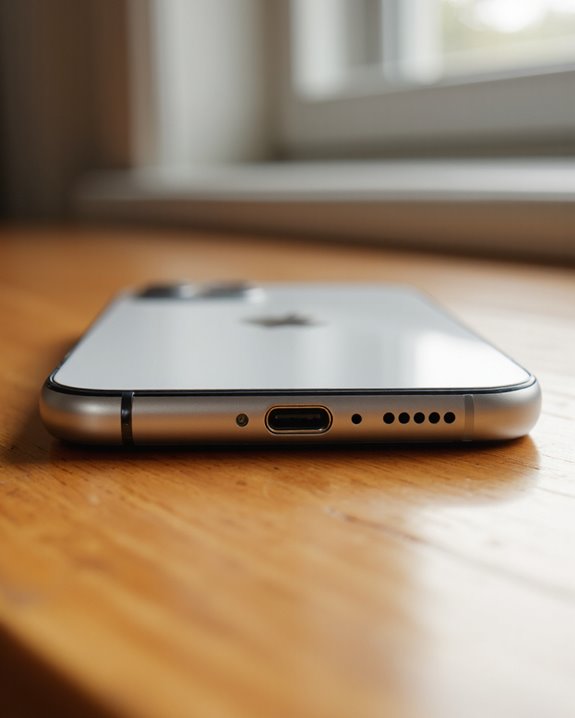
No, the iPhone 13 does not include a traditional 3.5mm headphone jack. Instead, it uses a single Lightning port for audio output, charging, and data transfer. Wired headphones require either a Lightning adapter or EarPods with a Lightning connector, as Apple prioritizes a slimmer device profile and internal space for advanced components. For wireless audio, the iPhone 13 supports Bluetooth, Dolby Atmos, and spatial audio. Additional solutions and reasons behind this design are explored in detail below.
Key Takeaways
- The iPhone 13 does not have a traditional 3.5mm headphone jack.
- Wired headphones require a Lightning to 3.5mm adapter for connection.
- The Lightning port is the sole physical port for charging and audio.
- Wireless audio is supported via Bluetooth headphones and speakers.
- No headphones or adapters are included in the iPhone 13 box.
Design Choices Behind the Iphone 13 Audio Port
You may be interested



Although the iPhone 13 continues Apple’s trend of omitting the traditional 3.5mm headphone jack, its audio port design reflects a deliberate shift toward wireless and digital-first connectivity. This design philosophy is evident in Apple’s prioritization of the Lightning connector, which serves as the singular physical port for both charging and digital audio output through adapters. By eliminating the audio jack, Apple aims to streamline device architecture, supporting slimmer profiles and internal space optimization. Compatibility with a broad spectrum of audio formats—such as AAC, MP3, FLAC, and Dolby Atmos—demonstrates a commitment to audio quality despite the absence of the analog jack. Apple’s approach is further underscored by environmental considerations, particularly reduced packaging and fewer included accessories, reinforcing the company’s sustainable technology initiatives.
How to Use Wired Headphones With the Iphone 13

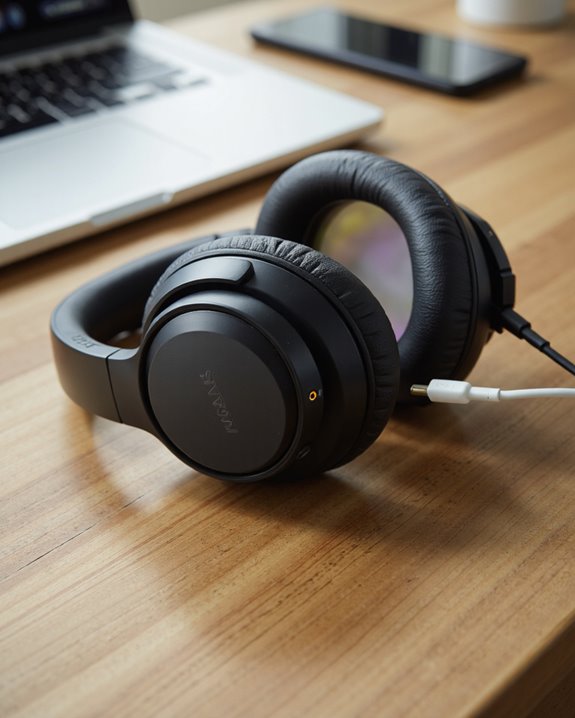
With the iPhone 13’s streamlined audio port design prioritizing the Lightning connector, users seeking to connect wired headphones must employ specific accessories to maintain compatibility and audio quality. Since the device omits a 3.5mm headphone jack, traditional wired headphones require a Lightning to 3.5mm adapter, which Apple officially provides to guarantee peak adapter compatibility. Users connect the adapter to the Lightning port, then attach their headphones for reliable audio playback; EarPods with a native Lightning connector bypass the need for an adapter entirely. For consistent audio quality, it is crucial to use Apple’s official adapter or a high-quality third-party equivalent, as inferior options may introduce dropouts or distortion. Regular cleaning of ports and connectors further enhances connection reliability and preserves sound fidelity.
Lightning Port Functionality and Supported Accessories
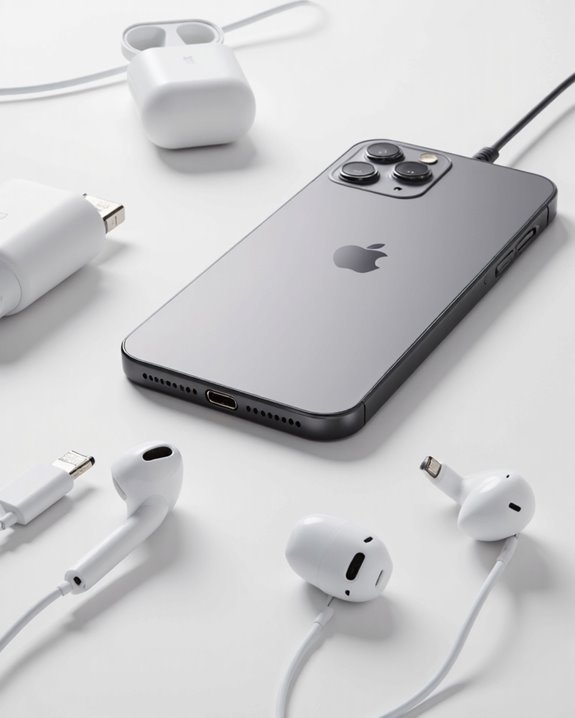
The Lightning port serves as the iPhone 13’s sole physical interface for charging, data transfer, and accessory connectivity, embodying Apple’s commitment to a streamlined, multifunctional design. Measuring 6.7 mm by 1.5 mm, this eight-pin digital connector is reversible, which simplifies everyday use. The port supports USB 2.0 data transfer speeds—up to 480 Mbit/s—adequate for most tasks, though not as fast as USB 3.0, which remains exclusive to certain iPad models. Lightning accessories, including USB adapters, HDMI or VGA video output adapters, and SD card readers, expand device capabilities. The integrated authentication chip enhances security but restricts third-party compatibility. For charging, the port supports fast charging when paired with a compatible USB-C power adapter, reflecting Apple’s focus on efficiency and environmental responsibility.
Wireless Audio Options for Iphone 13 Users
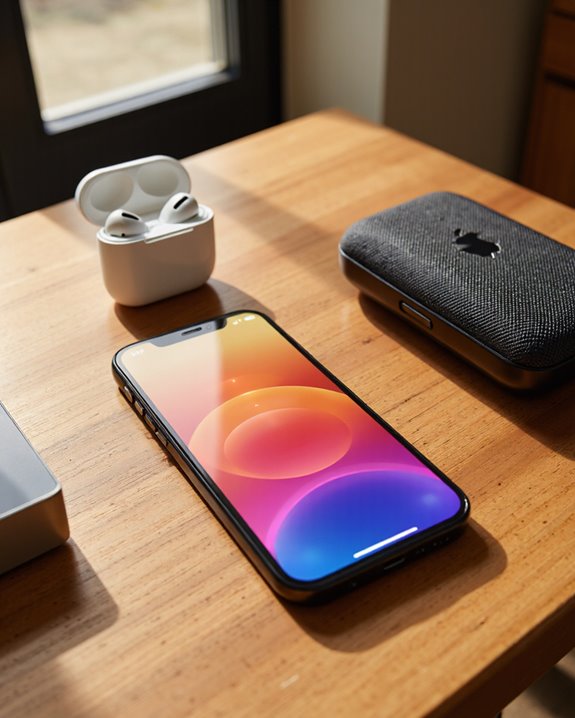
How do iPhone 13 users adapt to a device without a traditional headphone jack? They rely primarily on wireless solutions. The iPhone 13 supports Bluetooth functionality, enabling seamless pairing with a broad array of wireless headphones and speakers. Its compatibility with advanced audio formats—including AAC, Apple Lossless, and FLAC—ensures users experience high-quality playback. Spatial audio and Dolby Atmos further enhance immersion, especially when paired with supported headphones. For personalized listening, audio customization features within “Headphone Accommodations” allow adjustments to frequencies and volume, catering to individual preferences and hearing needs. Audio sharing enables two sets of AirPods or Beats headphones to connect simultaneously, ideal for joint listening. Users can fine-tune audio settings via Bluetooth and accessibility menus for prime wireless performance and comfort. Many wireless earbuds now feature Bluetooth 5.4 technology, providing faster and more stable connections for iPhone 13 users.
What’S Included in the Iphone 13 Box
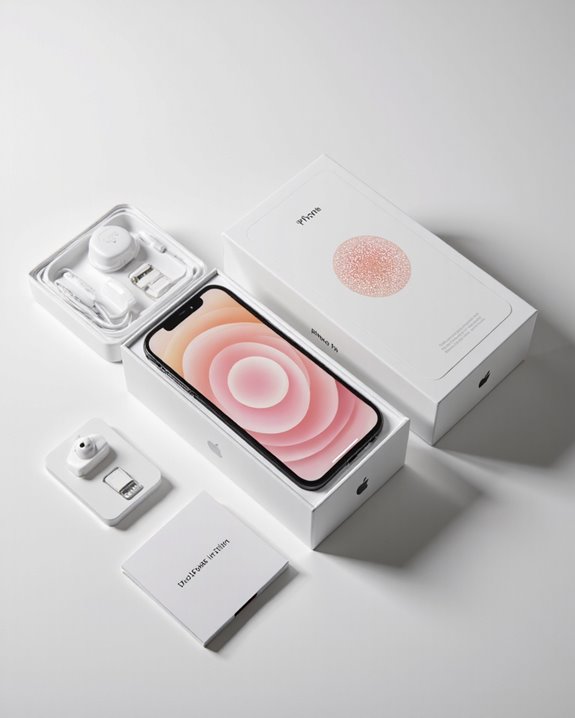
Understanding wireless audio solutions for the iPhone 13 naturally leads to questions about what users actually receive in the device’s packaging. The Included Accessories are minimal: buyers receive the iPhone 13 handset, a USB Type-C to Lightning cable supporting fast charging, basic documentation, a SIM ejector tool, and a single Apple sticker. Significantly, several Excluded Accessories reflect Apple’s environmental strategy—no power adapter, headphones, Lightning to headphone jack adapter, or protective case is provided. This approach results in a smaller box, reducing shipping emissions and aligning with Apple’s broader sustainability goals. Users are expected to reuse existing chargers or purchase new power adapters and headphones separately. The included USB-C to Lightning cable is compatible with modern adapters and guarantees versatile charging options.
Comparing Iphone 13 to Previous Iphone Models
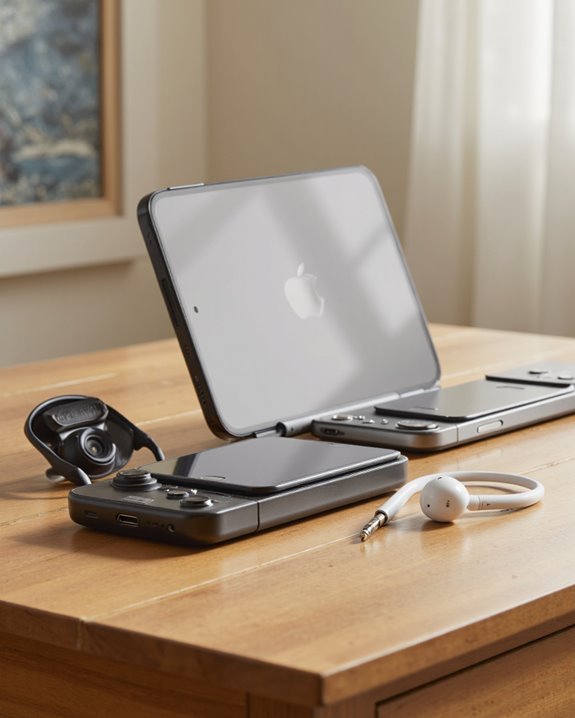
Since Apple’s removal of the 3.5mm headphone jack in the iPhone 7, each subsequent model—including the iPhone 13—has refined its approach to audio connectivity and device design. iPhone 13 maintains a streamlined form factor by relying exclusively on its Lightning port for wired audio, mirroring the strategy of its predecessors. This design evolution allows for improved water resistance and internal space optimization, enhancing the device’s durability and performance. Audio technology has also advanced; the iPhone 13 supports both high-quality wired audio via a Lightning to 3.5mm adapter and wireless options such as Bluetooth and AirPods. Compatibility with a broad accessory ecosystem remains, ensuring users can connect to external sound systems and personalize audio experiences while benefiting from the latest technological improvements.
Apple’s Strategy and the Move Toward Wireless Audio
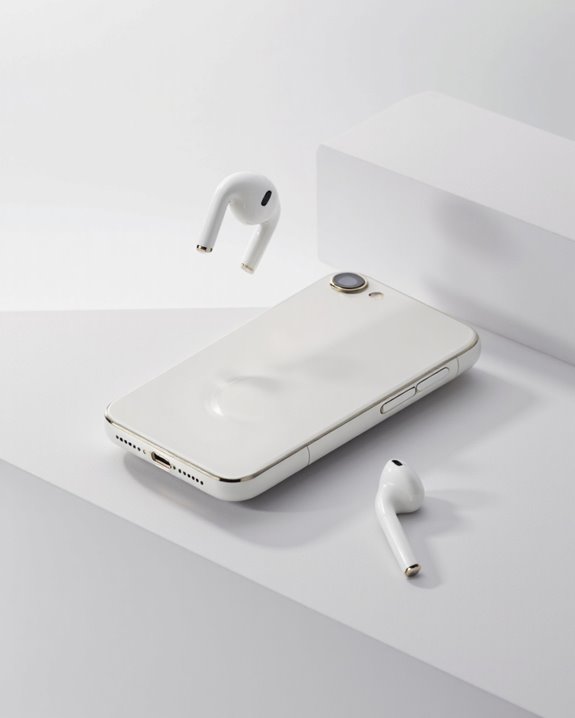
While Apple’s removal of the 3.5mm headphone jack in the iPhone 7 initially sparked debate among consumers and industry analysts alike, the decision was grounded in a multifaceted strategy prioritizing technological advancement, product design, and market influence. By shifting focus to wireless technology, Apple fostered audio innovation, enabling slimmer device profiles and enhanced water resistance. The absence of the headphone jack in models like the iPhone 13 allowed more internal space for improved components. Apple’s promotion of AirPods and other wireless headphones exemplifies its commitment to shaping user habits and accelerating wireless audio adoption. Although adapters remain available for traditional headphones, the broader market has followed Apple’s lead, expanding wireless audio options and driving advancements in sound quality, connectivity, and user convenience. Today’s wireless headphones often feature Bluetooth 5.0-5.3 connectivity, rapid charging, and extended battery life to meet diverse user needs.
Frequently Asked Questions
Can I Use Third-Party Adapters With the Iphone 13 for Headphones?
When considering headphone use with iPhone 13, third party brands offer adapters compatible with its Lightning port. Adapter compatibility is broad, enabling users to connect various wired headphones and audio devices, supporting both convenience and audio quality preferences.
Does the Iphone 13 Support High-Resolution Audio Through the Lightning Port?
Many listeners now seek out high-resolution audio experiences, and the iPhone 13’s lightning compatibility allows support for high-resolution audio output, provided users utilize compatible adapters and devices, ensuring minimal signal loss and enhanced listening quality.
Are There Any Latency Issues When Using Bluetooth Headphones With Iphone 13?
Bluetooth audio on the iPhone 13 may present latency concerns, particularly noticeable during gaming or video playback. Users often report delays in sound synchronization, and while Bluetooth 5.0 offers improvements, latency issues can still affect certain headphones.
Is the Lightning to 3.5mm Adapter Included With All Iphone 13 Models?
The Lightning to 3.5mm adapter is not included with any iPhone 13 models. Users must purchase it separately. Adapter compatibility guarantees most wired headphones work, although headphone quality may partly depend on the adapter’s construction.
Will Using an Adapter Affect Microphone Functionality on Wired Headphones?
One might wonder if microphone quality is at risk when using an adapter—could sound clarity suffer? Adapter compatibility plays a vital role; some adapters fully support microphones, while others may cause signal loss or reduced audio performance.