As an Amazon Associate, we earn from qualifying purchases. Some links on this site are affiliate links at no extra cost to you. Our recommendations are based on thorough research and editorial judgment.

Sony LinkBuds vs Standard Earbuds: Is the Open-Ear Trend Worth Giving Up ANC?

You’re jogging at sunrise wearing sealed earbuds and nearly get clipped by a cyclist because you never heard the bell. Or you’re on video calls all day and keep pulling your earbuds out every 45 minutes because your ears start aching and itching. These are the two most common reasons people switch to open-ear headphones, like Sony’s LinkBuds, instead of traditional sealed in-ear models. But the trade-off isn’t small: you give up active noise cancellation (ANC, the tech that uses microphones and speakers to cancel out ambient noise) and some bass punch. What do you get in return? This article compares Sony’s LinkBuds Open and LinkBuds Fit directly against standard in-ear models at similar price points, based on verified specs and real user reviews, so you know exactly what you’re trading away.
Top Picks At a Glance
4 open-ear & sealed earbuds worth comparing
Updated 2026


As an Amazon Associate we earn from qualifying purchases.
What open-ear means and why it’s trending
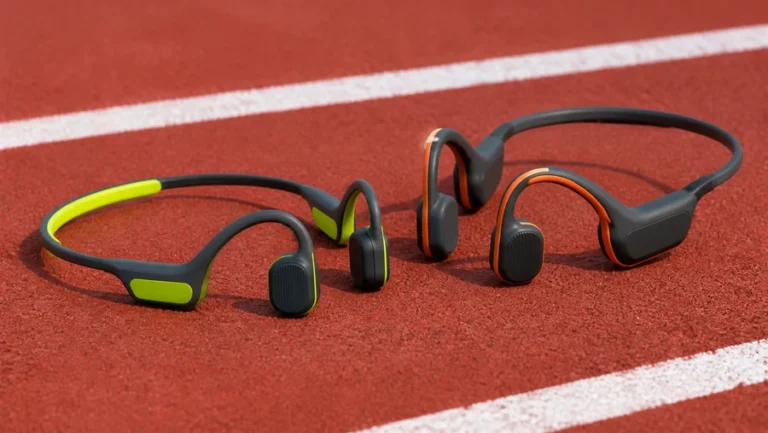
Open-ear headphones don’t plug into your ear canal. Instead, they place the driver (the component that produces sound, usually a small vibrating diaphragm) just outside or against your outer ear, so you can still hear traffic, a coworker calling your name, or a baby crying in the next room. Sony calls its design the Ring Driver on the LinkBuds Open — a ring-shaped driver with a hole in the middle that sits against the outer ear instead of sealing the ear canal like a typical earbud.
You may be interested

The trend has taken off with three specific groups: outdoor runners who need to hear traffic, office workers who wear earbuds six to eight hours a day and need something that won’t hurt after a few hours, and parents or caregivers who need to stay aware of sounds around the house. The trade-off is obvious: bass is noticeably weaker because there’s no seal to hold air pressure in the ear canal (what audio enthusiasts call “the seal”), and there’s no ANC at all, since the open design works against the whole principle of noise isolation.
Sony LinkBuds Open (WF-L910): specs and real-world experience
LinkBuds Open launched at $199.99, using Sony’s signature Ring Driver design and weighing just 5.1 grams per earbud — lighter than a nickel. Battery life sits around 9.5 hours per charge, with a 3-minute quick charge giving you about 60 minutes of playback, handy if you forget to charge overnight. Bluetooth 5.3 supports the LC3 codec (a newer Bluetooth audio standard that reduces latency) and includes multipoint, meaning you can connect to two devices at once, like a laptop and a phone, without manually disconnecting.
According to SoundGuys’ review, the weak point is sound quality, which lands only average compared to the broader headphone market, with bass nearly absent and treble (the high-frequency range) standing out more than everything else. This isn’t a design flaw so much as an unavoidable consequence of not sealing the ear — without a seal, low-frequency bass waves simply don’t stay contained. In exchange, the fit feels almost like you’re not wearing anything, something very few sealed earbuds manage after 2-3 hours of continuous wear. The Sony Sound Connect app lets you adjust EQ (an equalizer for balancing sound across frequency bands), update firmware, and includes a head-nod gesture for accepting calls that’s a fun idea, if a bit gimmicky in practice.
Sony LinkBuds Fit: a hybrid between open-ear and in-ear
LinkBuds Fit takes a different approach within the same product line — not pure open-ear, but using what Sony calls an “Air Fitting Supporter,” a soft cushion structure that holds the earbud in place in your ear without fully sealing it. It’s also priced at $199, uses an 8.4mm Dynamic Driver X, and the biggest difference versus LinkBuds Open: it has ANC. Battery life is notably lower, just 4-5 hours per charge depending on whether ANC is on, but the charging case adds three more full charges, for a total of 16-20 hours of all-day use.
According to reviews from Digital Trends and ecoustics, ANC on the LinkBuds Fit is significantly more limited than on the flagship WF-1000XM5 because it lacks strong passive isolation (physically sealing the ear canal to block mechanical noise). In other words, the ANC here mainly handles steady droning noise like fans or airplane engines, not sudden sounds like conversation or car horns. The big upside is an exceptionally light-feeling fit, designed specifically for gym workouts and running, plus the ability to customize colors through Sony’s made-to-order service.
Standard in-ear models: AirPods Pro 2 and Sony WF-1000XM5
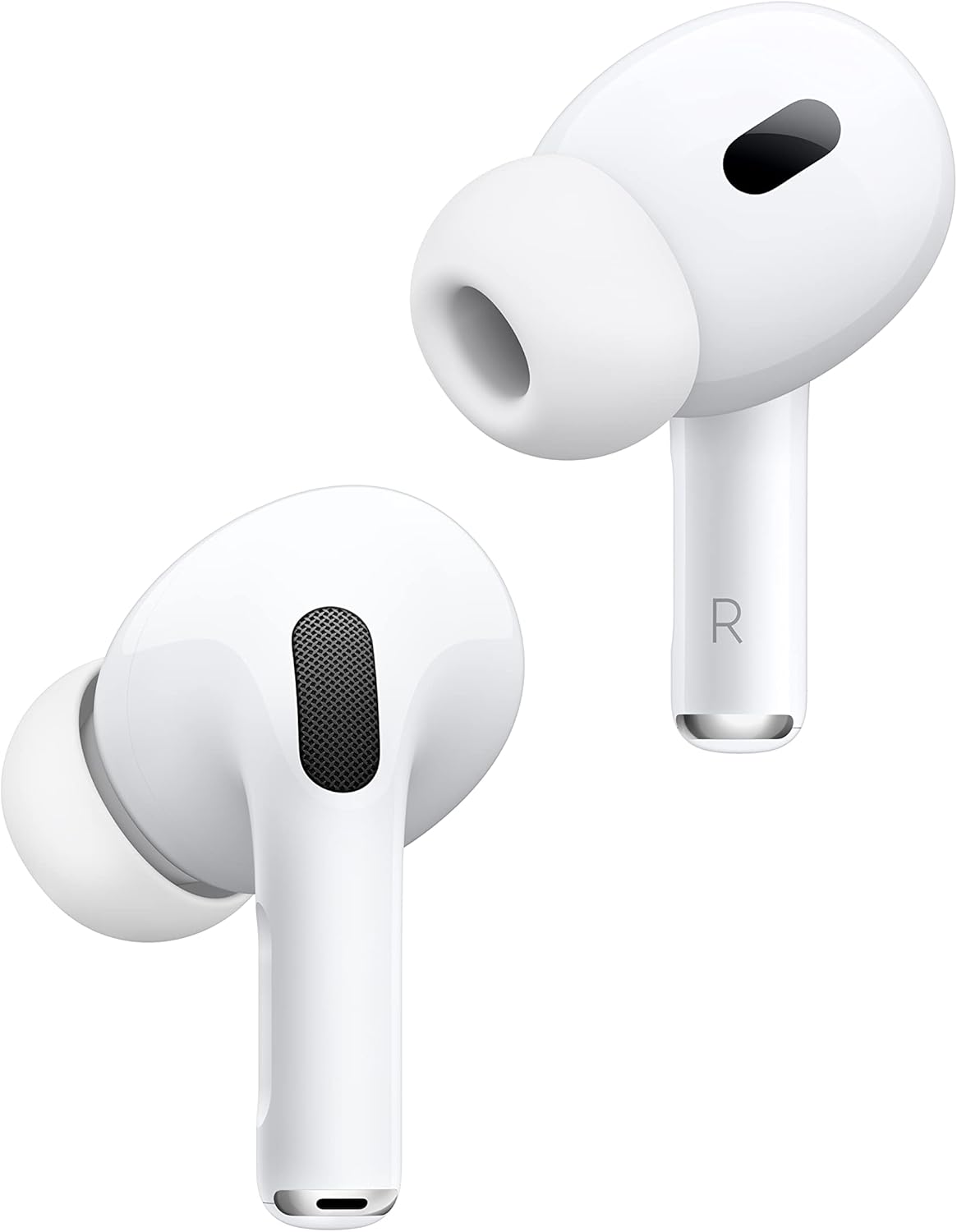
For a fair comparison, two representative models from the sealed in-ear camp are the AirPods Pro 2 and Sony WF-1000XM5 — both seal the ear canal with a silicone ear tip and rely on that seal to make ANC effective. The AirPods Pro 2 weighs 5.3 grams per earbud, uses Apple’s H2 chip, and gets 6 hours of battery per charge (dropping to 5.5 hours with Spatial Audio enabled), with the charging case providing 30 hours total. It carries an IPX4 water-resistance rating, meaning it can handle sweat and light rain but shouldn’t be submerged.
Sony’s WF-1000XM5 lists at $299.99 but is commonly found selling for around $195-230 on major retail sites. It uses an 8.4mm driver, gets 12 hours per charge on paper (SoundGuys measured about 9.5 hours in real-world testing), 24 hours total with the case, and supports Qi wireless charging — something neither LinkBuds model offers. ANC on the XM5 is rated “excellent,” canceling more than 30dB of low-frequency noise, enough to block out most airplane engine drone or open-office ambient noise. In exchange, wearing them continuously for more than 3 hours can feel stuffy for people with smaller ear canals, a common complaint in user reviews.
Spec comparison table
| Model | Price (MSRP) | Style | ANC | Battery (earbuds) | Battery (with case) | Water resistance | Weight/earbud |
|---|---|---|---|---|---|---|---|
| Sony LinkBuds Open (WF-L910) | $199.99 | Open-ear (Ring Driver) | No | 9.5 hours | Not specified | Roughly IPX4-equivalent (not officially rated) | 5.1g |
| Sony LinkBuds Fit | $199 | Semi-open (Air Fitting Supporter) | Yes, limited | 4-5 hours | 16-20 hours | Not specified in detail | Not specified |
| Apple AirPods Pro 2 | Not listed on spec page | Sealed in-ear (silicone tip) | Yes, full | 6 hours | 30 hours | IPX4 | 5.3g |
| Sony WF-1000XM5 | $299.99 (commonly sells ~$195-230) | Sealed in-ear (silicone tip) | Yes, excellent (>30dB) | 12 hours (measured ~9.5 hours) | 24 hours | IPX4 | Not specified |
Which style fits your needs
If you run or cycle outdoors regularly, LinkBuds Open is the clearly safer choice — hearing a car horn matters more than deep bass. If you do high-intensity gym workouts and want a bit of ANC to dampen gym music, LinkBuds Fit is a reasonable middle ground, even though its ANC won’t match a flagship model. If your main need is working in loud environments — planes, coffee shops, open offices — the WF-1000XM5 or AirPods Pro 2 still win out thanks to genuine ANC and fuller bass. There’s no universally right answer here; the real question is whether you need to hear your surroundings more, or need to block them out.
Related headphone guides
- Shokz OpenRun vs OpenRun Pro: Which Difference Is Actually Worth the Money?
- Philips Headphones Buying Guide: Which Models Are Actually Worth It
- Nothing Ear Buds: Are They Worth It?
- Are Sony Headphones Good for Gaming?
- Beats Fit Pro vs AirPods Pro 2: Which Apple Earbuds Are Actually Worth It
- JLab Earbuds: Are They Any Good?