As an Amazon Associate, we earn from qualifying purchases. Some links on this site are affiliate links at no extra cost to you. Our recommendations are based on thorough research and editorial judgment.

Do Not Disturb Headphones: Ultimate Focus Solution

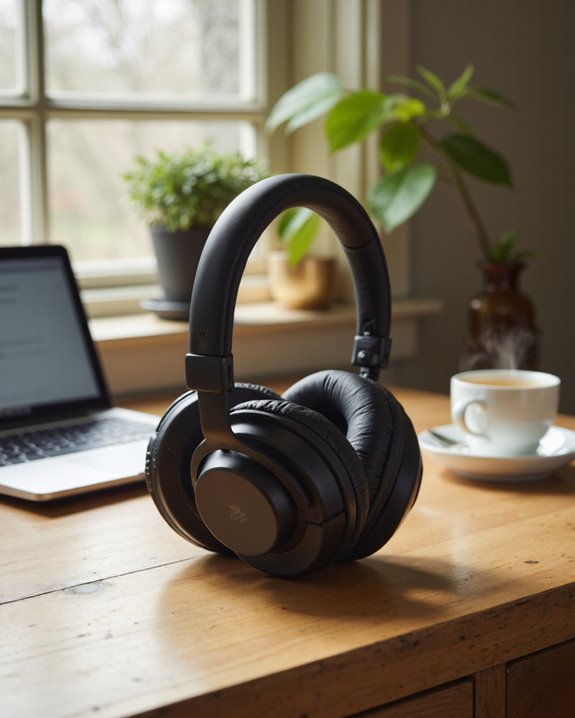
Do not disturb headphones combine two things that usually live in separate gadgets: real active noise cancellation (ANC) and a visible “leave me alone” signal. The ANC circuitry chews through low, droning background noise using dedicated signal processing, while a built-in busylight flashes a color-coded cue so coworkers know not to tap you on the shoulder. Models like the Bose QuietComfort Ultra and Sony WH-1000XM5 lead the category because they pair strong battery life and adjustable sound profiles with smart notification routing, so urgent alerts still get through. Add in comfortable, all-day builds, and you’ve got a setup that’s genuinely built for focus, not just marketed that way. Below, I break down what actually separates the good ones from the gimmicks.
Key Takeaways
- Good ANC doesn’t eliminate noise entirely, but it strips away enough steady, low-frequency sound to make deep work possible.
- A busylight turns your headphones into a visual do-not-disturb sign, which cuts down on the “hey, got a sec?” interruptions that ANC alone can’t stop.
- Bose QuietComfort Ultra and Sony WH-1000XM5 remain the pair to beat here, largely because their noise cancellation holds up over a full workday of battery life.
- Notification settings are worth tuning right away; get them wrong and you’ll either miss something important or get pulled out of flow every five minutes.
- Fit matters more than people expect. A plush headband and light clamping force are the difference between wearing these for eight hours and giving up after two.
How Active Noise Cancellation Actually Works
You may be interested

ANC looks like magic until you understand what’s actually happening inside the ear cups. Tiny microphones – mounted inside and outside the cup – are constantly listening to the room around you, tracking the frequency and amplitude of whatever’s happening out there. The chip inside then builds an “anti-noise” waveform, a mirror image of that sound flipped out of phase. Play that waveform through the driver at the same instant as the real noise, and the two waves collide and cancel each other out – what engineers call destructive interference. It’s not a universal noise-eraser, though. ANC shines against steady, low-frequency drone (think HVAC hum or an airplane cabin) and struggles more with sudden, sharp sounds like a dog bark or a door slam. Actual attenuation is measured in decibels and varies a lot by product and frequency band. Some of the newer AI-assisted ANC systems now adapt in real time, pushing noise reduction further than older fixed algorithms could manage.
Visual Signals: The Power of Busylights

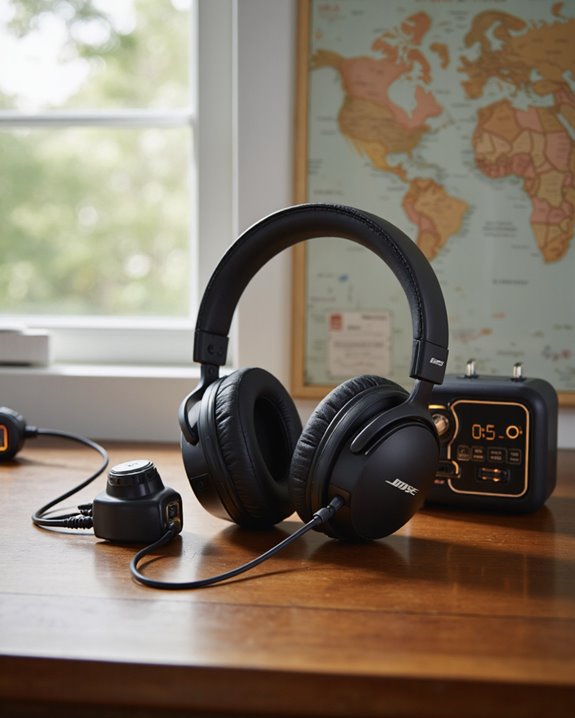
Here’s the problem busylights solve: in a hybrid office full of Slack pings and video calls, nobody can tell if you’re deep in a report or just scrolling. A busylight fixes that ambiguity with a simple color code – green means come on in, red means come back later – mounted right on the headset or desk where anyone can spot it from across the room. That visibility matters most in open-plan layouts, where a raised hand or a closed door just isn’t an option. The best part is how little effort it takes: plug the light into your unified communications platform and it updates automatically based on your call or meeting status, no manual toggling required. For the price of a cheap accessory, a busylight does a surprising amount of work protecting your concentration.
Top Features and Leading Models
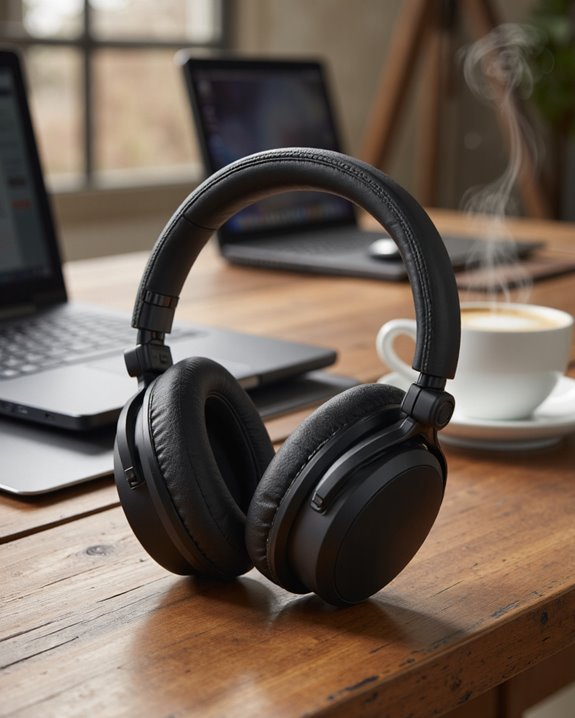
A busylight can flag your status, but the headphones themselves still have to deliver on noise cancellation and comfort, or none of this matters. In my testing, the Bose QuietComfort Ultra and Sony WH-1000XM5 keep trading the top spot depending on what you value most – Bose leans on longer ANC playback per charge, while Sony edges ahead on cutting background noise without introducing that faint hiss some ANC systems produce. Sound signature is where they diverge further: Bose gives you a customizable EQ plus its spatial Immersive Audio mode, while Sony leans on high-fidelity codec support like aptX Adaptive for listeners who care about codec quality over gimmicks. If battery life is your priority above all else, the Sennheiser Momentum 4 Wireless is worth a look – its tuning is more balanced than flashy, and it simply lasts. Comfort shouldn’t be an afterthought either: the Technics EAH-AZ100 and Noble Fokus Apollo both use lightweight shells and soft padding that hold up over marathon sessions. A handful of other well-reviewed picks also use hybrid ANC setups worth considering if none of these fit your budget.
Tuning Notifications So You Stay in Flow

Buying the right do not disturb headphones is only half the job – dialing in the notification settings is what actually keeps distractions out. Start by digging into your device’s own menus; on an iPhone that’s Settings > Sounds & Haptics > Headphone Safety, with similar toggles hiding in iPad and Apple Watch accessibility settings. From there you can turn headphone safety alerts on or off, cap the maximum volume, or flip on Reduce Loud Sounds if things are getting too aggressive. Bluetooth pairing routes notification tones straight to your ears by default, but you can override that manually in your notification and Bluetooth menus if certain sounds keep sneaking through. Pairing with a voice assistant like Google Assistant lets you have notifications read aloud hands-free, which is especially handy if you’re juggling multiple languages during the day. One caveat: some regions restrict how much you can customize these settings, so it’s worth checking local rules before assuming every option will be available. Plenty of earbuds also let you fine-tune EQ settings through a companion app, which is another lever for shaping the listening experience while you manage alerts.
Do They Actually Help? Real-World Pros and Limits
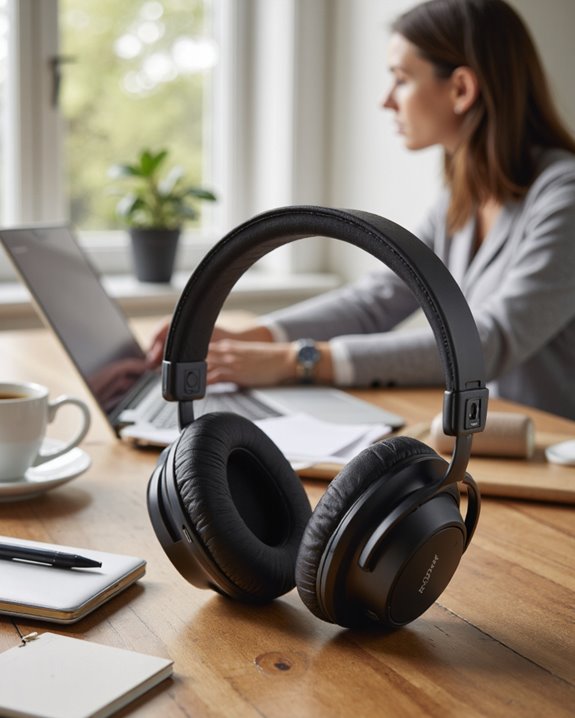
People tend to write these off as a comfort gadget, but the benefits go further than that. Solid ANC knocks out a meaningful chunk of the steady ambient noise around you, which translates into fewer workplace and environmental distractions and, for a lot of people, noticeably less stress from constant background drone. That said, comfort is genuinely subjective – some listeners find the seal and pressure relaxing, others can’t tolerate the sensation for more than an hour. For children with sensory processing disorders, these headphones can offer real relief from overwhelming stimuli, though results vary quite a bit from kid to kid. And in an open floor plan, just wearing them sends a message on its own: it signals you want to be left alone to concentrate, even before anyone notices the busylight.
Frequently Asked Questions
Are Do Not Disturb Headphones Safe for Long-Term Daily Use?
They’re a mixed bag over the long haul. You get better focus, sure, but daily use means paying attention to volume levels, taking breaks, and keeping an eye on fit so you’re not risking your hearing health down the road.
Can These Headphones Be Used During Physical Activities or Workouts?
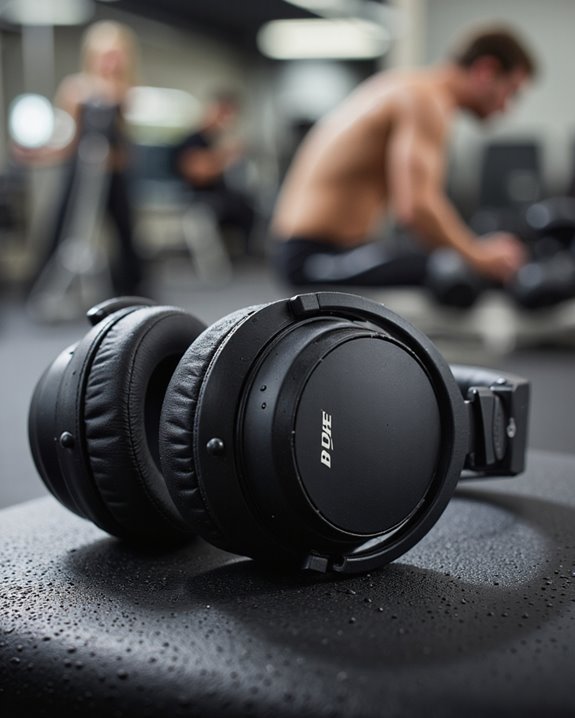
Some can, if they’re built for it – look for a secure fit, sweat resistance, and decent sound isolation. Not every do not disturb model checks those boxes, though, so confirm durability and comfort before you take a pair on a run.
How Do These Headphones Impact Battery Life Compared to Regular Models?
Ironically, the more processing power a headphone throws at noise cancellation, the more battery it tends to burn. ANC models generally sacrifice some playtime for that feature set, while basic headphones without ANC squeeze out longer battery life simply because they’re doing less work.
Are There Eco-Friendly or Sustainable Options Available in This Category?
Yes – a growing number of brands use bamboo, recycled plastics, or even mushroom-based leather in their builds. Look for FSC certifications and modular designs meant to be repaired rather than tossed, which cuts down on electronic waste over the product’s lifespan.
What Should I Do if Colleagues Ignore the Busylight Signal?
Interruptions are one of the biggest productivity killers in shared offices, so don’t assume the light speaks for itself. Explain what it means, set the expectation directly with your team, and give feedback when someone ignores it – most people respect the boundary once they understand it.