As an Amazon Associate, we earn from qualifying purchases. Some links on this site are affiliate links at no extra cost to you. Our recommendations are based on thorough research and editorial judgment.

Can You Wear Headphones While Exercising?

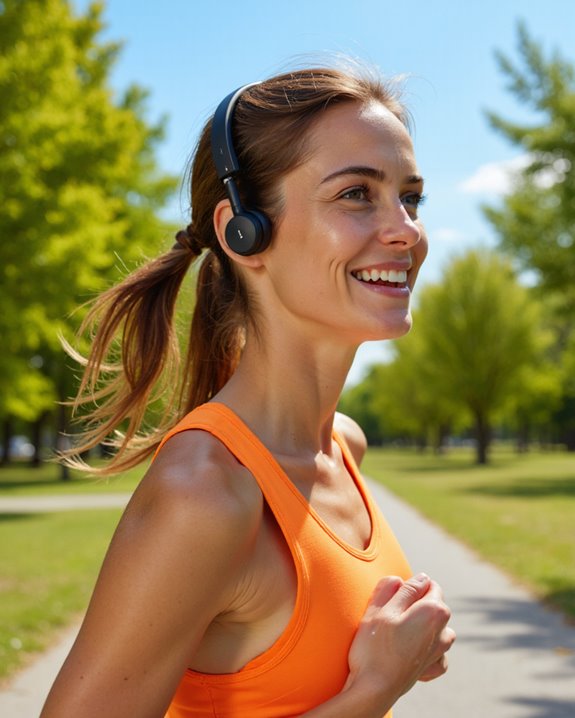
Short answer: yes, you can wear headphones while exercising, and in most cases you should. Music genuinely helps — it distracts you from the burn, keeps your pace steady, and makes an hour on the treadmill feel like forty minutes. The catch is doing it smart. Keep the volume under roughly 60% so you’re not frying your ears, pick a pair with a fit that survives sweat and bouncing (an IPX4 rating or better is the baseline), and if you’re running outside, turn on transparency or ambient mode so you can still hear a car coming. There are a few settings — busy intersections, crowded group classes — where I’d just skip the headphones entirely. Keep reading and I’ll walk through why, and how to pick the right pair.
Key Takeaways
- Wearing headphones while exercising is fine, and the right playlist can make a hard set feel noticeably easier.
- Cap the volume around 60% and favor a secure fit — both protect your hearing and keep you aware of what’s happening around you.
- Skip them in crowded gyms, busy streets, or group workouts where hearing other people actually matters.
- Cranking the volume for long stretches raises your odds of hearing damage, ear infections, and just feeling cut off from everyone around you.
- Look for sweat- or water-resistant builds and flip on ambient awareness features if your workouts take you outdoors.
Why Headphones Actually Help During a Workout
You may be interested


It’s easy to think of headphones as just another accessory, but for a lot of us they’re basically training equipment at this point. Drop the right track into a workout and motivation jumps noticeably — it’s just easier to start, and easier to keep going once things get hard. There’s real research behind this, too: music lowers your perceived exertion, which is a fancy way of saying it distracts your brain from how much your legs hurt, so you can push further without it feeling as brutal. Modern drivers don’t hurt either — a crisp, immersive mix keeps you locked in rather than reaching for your phone every five minutes. There’s also a mental-focus angle: putting headphones on is almost a signal to yourself that it’s go time, tuning out whatever noise is happening around you. A well-built playlist does the rest, matching the energy of the moment whether you’re grinding through intervals or cooling down. And durability has caught up with intent — plenty of models now carry IPX7 waterproofing, so a soaked shirt and a soaked headphone aren’t a problem anymore.
The Downsides Worth Knowing About

Headphones aren’t all upside, though, and it’s worth being honest about that before you clip them on for every run. The biggest one: they pull you out of your surroundings. On a city sidewalk, that can mean not hearing a bike, a car horn, or someone calling out — not great. Then there’s volume. Push the sound too loud too often and you’re gambling with your hearing, and in some cases even your balance, over the long run. Sweat and grime building up inside earbuds over months of use isn’t great for ear health either, and can lead to infections if you’re not cleaning them. There’s a social cost too — headphones can wall you off from the group energy that makes classes and group runs fun in the first place. And practically speaking, a $90–$250 pair of earbuds is small enough to fly out of your ear and vanish during a hard set, so don’t assume they’re indestructible or unlosable. If protecting your hearing while staying tuned in matters to you, Bluetooth hearing protection headphones strike a decent balance between sound and noise reduction.
How to Listen Safely While You Train
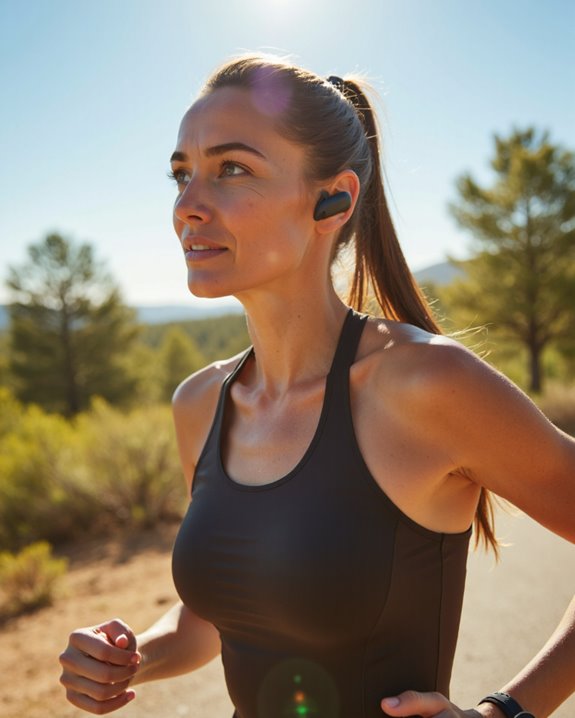
A few habits go a long way here. Keep volume at or below 60% — it’s loud enough to enjoy without drowning out your surroundings or your hearing over time. A sports-specific, snug fit matters more than people think; nothing kills momentum like stopping mid-set to reseat an earbud that’s slipping. If ambient or transparency mode is available, use it — hearing a bus, an announcement, or a shouted warning in real time beats being surprised by it. Sweat and water resistance (IPX4 or higher) isn’t optional if you sweat like a normal human being; it’s the difference between headphones that last years and ones that die in six weeks. Sound quality is nice, but it comes second to not tripping over a curb. One small trick: label your headphones with contact info — they’re tiny, they fall out, and getting a lost pair back beats replacing them. If you struggle with earbuds staying put, look for secure-fit features like swappable eartips or earhooks — it’s a small upgrade that solves a genuinely annoying problem.
Choosing Headphones That Actually Hold Up to Training
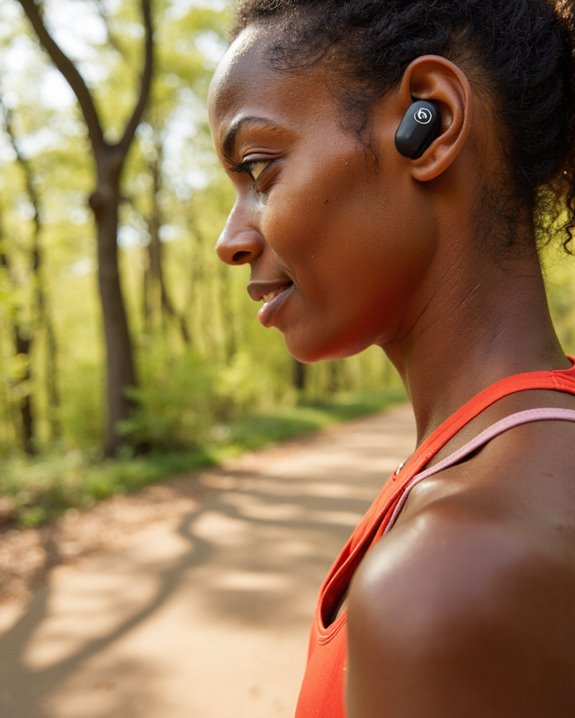
So what separates a decent gym pair from a mediocre one? Fit comes first — models with customizable ear tips are the ones that actually stay in through burpees and sprints, not just casual walks. Battery life matters more than most buyers expect until they’re mid-run at 10% and panicking; Raycon’s lineup, for instance, pushes up to 38 hours, which means you’re not babysitting a charge cable every other day. Water resistance is non-negotiable in my book — IPX4 or higher keeps sweat and rain from turning your $150 investment into a paperweight. Sound quality still counts, since a flat, tinny mix just doesn’t pump you up the same way a punchy one does. And don’t sleep on comfort — breathable materials and adjustable parts are what let you forget you’re even wearing them three miles in. Run through these criteria deliberately and you’ll land on a pair that actually earns its keep, rather than one that looked good on a spec sheet.
Over-Ear or In-Ear — Which Fits Your Workout?
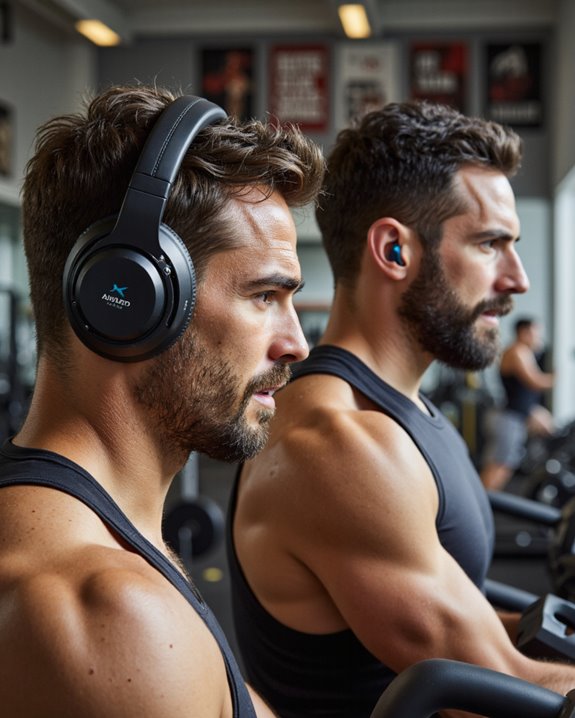
Once you know what to look for, the next decision is shape: over-ear or in-ear.
Over-Ear Headphones: These win on noise isolation and a fuller, more immersive sound — genuinely useful if you train in a loud gym and want to tune it all out. Battery capacity tends to be bigger too; some models, Raycon among them, stretch to 38 hours of playback, so charging becomes a once-a-week chore instead of a daily one. They also tend to stay put once you’ve got them positioned, which cuts down on mid-workout fidgeting.
In-Ear Headphones: These are the lighter, more travel-friendly option — better suited to sprints, HIIT, or anything where you’re moving fast and don’t want bulk on your head. You’ll trade away some noise isolation, but plenty of people find the smaller footprint more comfortable for long sessions. Sweat resistance is a mixed bag across models, though most fitness-focused in-ears are built specifically to handle it, so durability usually isn’t a real concern.
Sweat and Water Resistance — What the Ratings Actually Mean
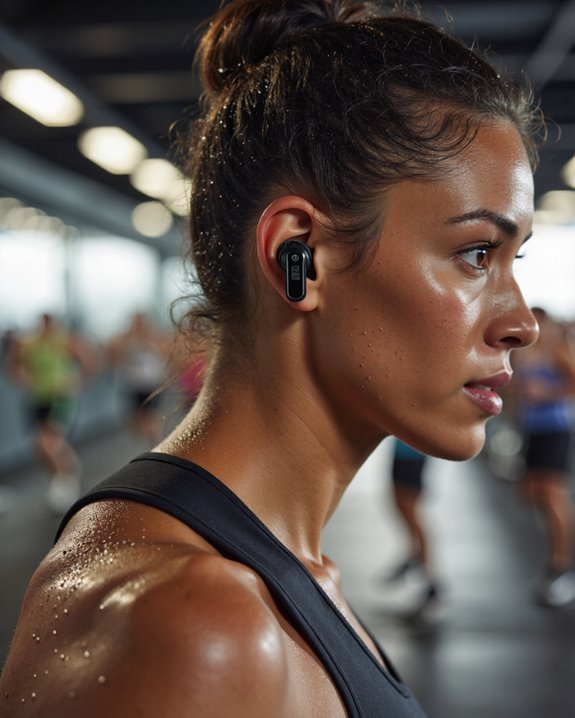
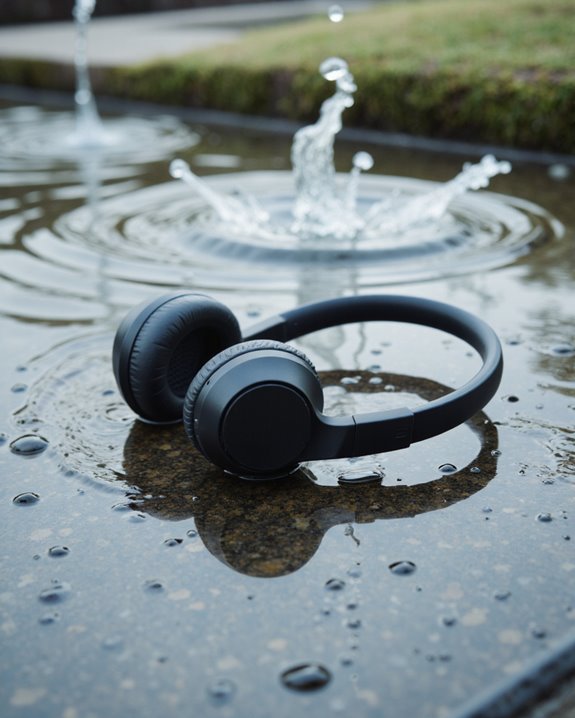
This sounds like a spec-sheet footnote, but it’s honestly one of the more important numbers to check before buying. An IP rating tells you exactly how much moisture a pair can take before something shorts out or the sound starts crackling. IPX4 is the everyday standard — it handles splashes from any direction, which covers most gym sessions and outdoor runs just fine. If you’re swimming, though, you need to go further up the scale; something like the Shokz OpenSwim carries an IP68 rating, built for full submersion. A lot of workout-focused headphones also add corrosion-resistant components and quick-drying materials on top of the base rating, which adds up over months of regular sweat exposure. Bottom line: match the rating to what you actually do, and your headphones will last a lot longer.
Keeping Your Ears (and Your Gear) Healthy
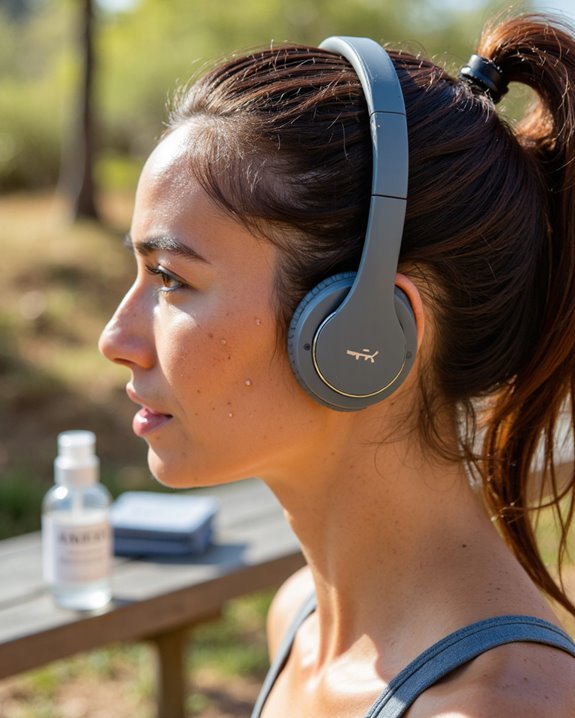
This part gets skipped by almost everyone, and it shouldn’t. Sweat trapped in earbuds is basically a petri dish — leave it long enough and bacteria growth becomes a real risk, which is how ear infections start. Wipe down your headphones and ear tips after every session with an alcohol wipe or a mild cleanser; it takes thirty seconds and saves you a doctor’s visit. Breathable materials help cut down on moisture buildup in the first place, and it’s worth swapping out ear tips or cushions periodically since worn-out ones hold onto grime and can irritate your skin. Hearing protection deserves the same attention — staying under 85 decibels and avoiding marathon listening sessions is the single best thing you can do to protect your ears long term. None of this is glamorous, but it’s the difference between headphones you can use for years and ones that cause problems.
When It’s Smarter to Leave Them at Home

Headphones make workouts more fun, sure, but there are moments where I’d genuinely leave them behind. Running through heavy traffic or somewhere unfamiliar is one — losing awareness of cars, cyclists, or curbs is a real risk, not a hypothetical one. In group settings, headphones tend to kill communication, and honestly a chunk of what makes group training work is the back-and-forth energy, which disappears the second everyone’s plugged in. If you’re in a guided class, missing a verbal cue from an instructor because a bassline drowned it out is more common than you’d think. And out on the trail, your ears are doing real work — picking up wildlife, uneven ground, or a storm rolling in — so staying tuned into your surroundings there isn’t optional, it’s just smart.
Frequently Asked Questions
Is It Okay to Wear Headphones While Exercising?
Generally, yes — music genuinely helps with focus and makes workouts more enjoyable for most people. Just balance that with awareness of your surroundings; a good soundtrack is great, but it shouldn’t come at the cost of noticing what’s happening around you. Safety wins if the two ever conflict.
Is It Better to Workout With or Without Headphones?
It really depends on where you are and what you’re doing. Music can boost motivation and intensity, but it also cuts into social interaction and situational awareness. In a controlled gym setting, headphones are usually fine; on a busy street, I’d think twice.
Is It Safe to Wear Headphones While Working?
It depends heavily on the job. In physical or safety-sensitive roles, reduced sound awareness can genuinely raise injury risk, so check your workplace’s policy first. In a quiet office, headphones for focus are usually a non-issue — just weigh personal preference against the actual safety requirements of your environment.
Is It Okay to Wear Airpods to the Gym?
Sure — AirPods are comfortable, sound solid, and can genuinely make a session more motivating. Just mind gym etiquette around other people, keep an eye on battery life so you’re not stuck mid-set, and make sure they actually pair reliably with whatever you’re using for music.