As an Amazon Associate, we earn from qualifying purchases. Some links on this site are affiliate links at no extra cost to you. Our recommendations are based on thorough research and editorial judgment.

Do iPhone 14 Models Come With Headphones?

Short answer: no. Do iPhone 14 models come with headphones in the box? They don’t. Crack open a new iPhone 14 and you’ll find the phone itself, a USB-C to Lightning cable, and a stack of paperwork – that’s it. No EarPods, no wired anything. Apple made this call for a mix of reasons: less e-waste, a hard push toward wireless audio, and boxes that ship smaller and cheaper. If you want wired sound, you’re buying a Lightning to 3.5mm adapter separately, or you’re going wireless. Below I break down exactly what’s in the box, why Apple cut headphones years ago, and what your realistic audio options look like now.
Key Takeaways
- No, iPhone 14 phones don’t ship with headphones – that’s been Apple’s policy since the iPhone 12.
- Apple frames the decision as an environmental one: less packaging, less waste, fewer parts nobody asked for.
- What you actually get in the box: a USB-C to Lightning cable, some documentation, and an Apple sticker.
- Need wired audio or an adapter? You’re buying it yourself – neither ships in the box.
- Bluetooth and wired headphones both work fine with the iPhone 14, but the 3.5mm adapter is a separate purchase.
What’s Actually in the iPhone 14 Box?
You may be interested
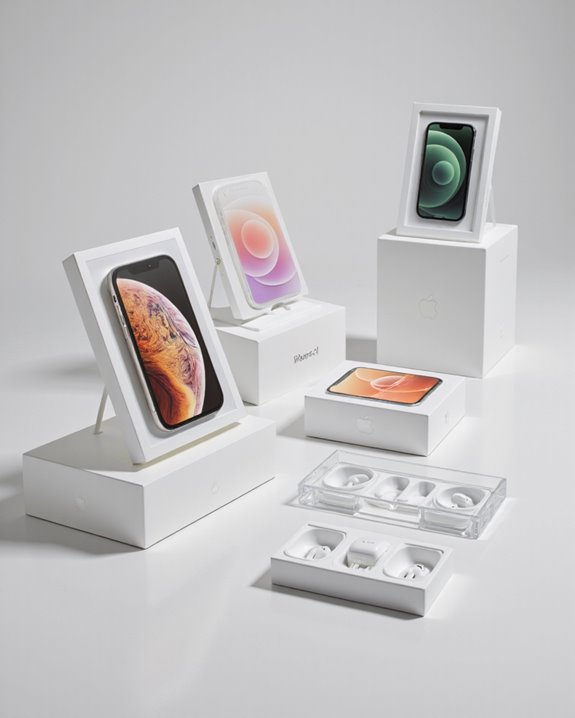
Pop the lid and the iPhone 14 box is almost sparse compared to what phones used to ship with. You get the handset itself, a USB-C to Lightning cable (1 meter), a thin booklet of documentation, an Apple sticker, and – if you’re outside the US – a SIM ejector tool. That’s the whole list. No power adapter, no headphones, no case. The box has also gotten noticeably thinner and is made entirely of cardboard now, which cuts down on plastic. The bundled cable still handles fast charging and data transfer once you plug it into a USB-C adapter or your computer. Whichever finish you pick, the packaging tells the same story: Apple’s leaning hard into minimalism, and it’s leaving more of the accessory shopping up to you.
Why Apple Stopped Including Headphones
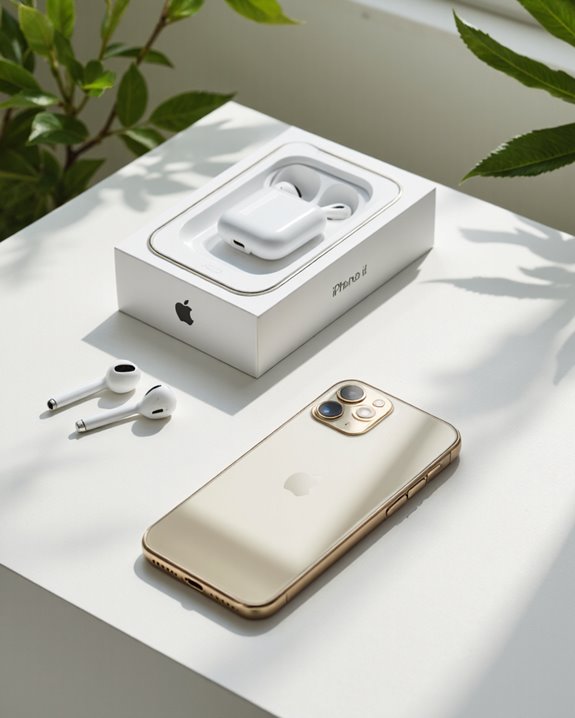
A handful of forces pushed Apple toward dropping headphones from the box, and it’s not just one tidy explanation. Consumers had already been drifting toward wireless – AirPods practically became a status symbol – so bundling wired EarPods started to feel like an afterthought nobody wanted. Bluetooth got better too: newer protocols, longer battery runtimes, and noise cancellation that actually works made wired earbuds feel like a compromise rather than a bonus. There’s a business angle here as well – cutting headphones from the box trims production costs and packaging waste, and it nudges more people toward buying accessories separately, which doesn’t hurt Apple’s margins. And yes, the environmental argument is real: fewer parts in the box means less electronic waste overall. Put it together and you get a strategy that fits where consumer habits were already heading, while pressuring competitors to follow suit. It also lines up with the growing popularity of Bluetooth 5.0-5.3 connectivity in wireless headphones, which makes pairing faster and more reliable than it used to be.
Your Audio Options on the iPhone 14
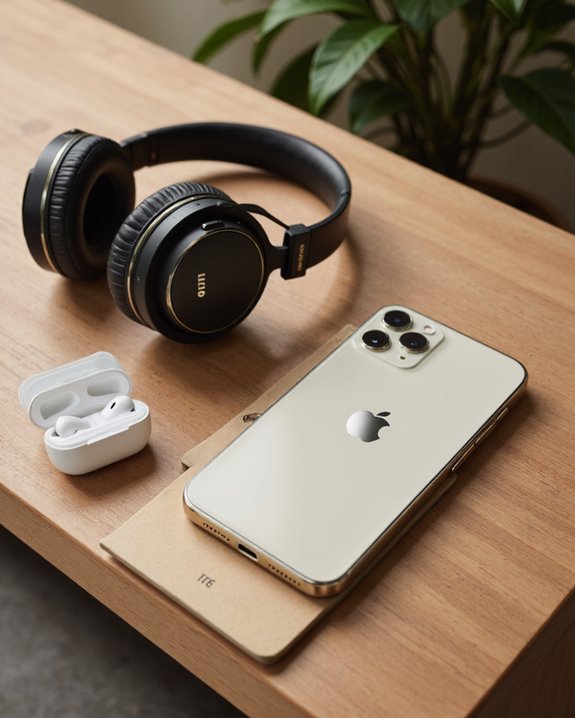
Losing the bundled headphones doesn’t mean you’re short on ways to listen. The iPhone 14 gives you stereo speakers built in, full Bluetooth support for headphones and earbuds, and obviously AirPods if you’re in that ecosystem – each has its own tradeoffs between convenience and sound quality. Wired headphones still work too, you just need that Lightning adapter since there’s no headphone jack. On the feature side, Spatial Audio and lossless playback add real depth for anyone who cares about fidelity, and accessibility options like mono audio and voice isolation cover listeners with different needs. You can also fine-tune balance, volume, and audio settings to match whatever you’re doing – music, video calls, podcasts, whatever.
Adapters and Third-Party Headphone Compatibility

Since the iPhone 14 only has a Lightning port and no 3.5mm jack, adapters are doing a lot of heavy lifting if you want wired sound. A Lightning to 3.5mm adapter is mandatory for traditional wired headphones, and again – it’s not in the box. Third-party options are everywhere, but quality swings wildly from one brand to the next. I’d lean toward adapters from established headphone brands with their own certified versions; they tend to hold up better and sound cleaner. Go too cheap and you risk audio distortion, flaky connections, or an adapter that just stops working after a few months. Prices run from a few dollars to premium territory, and in my experience, build quality and signal integrity usually track with what you pay. The good news: with the right adapter, the iPhone 14 plays nice with essentially any major headphone brand.
Wireless Audio: Bluetooth and AirPlay 2
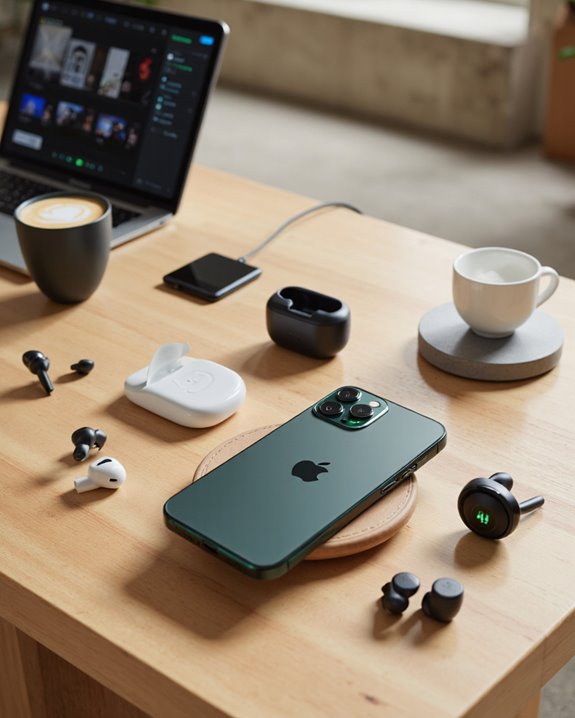
On the wireless side, the iPhone 14 leans on Bluetooth and AirPlay 2, and together they cover most cable-free listening scenarios well. Bluetooth handles the basics – streaming to headphones or a speaker without much fuss – while AirPlay 2 steps things up with better audio quality, multi-room playback, and tight integration with HomePod, Apple TV, and compatible smart TVs. AirPlay 2’s codec handling keeps fidelity intact, which is why it works so well for hi-fi setups and whole-home systems, including gear like Juke Audio. Controlling all of it is easy through Control Center or Siri, so switching outputs mid-song isn’t a hassle. For streaming itself, Apple Music, Podcasts, and most third-party apps play nicely with both Bluetooth and AirPlay 2. A lot of users pair the phone with wireless earbuds featuring Bluetooth 5.3 or 5.4, which brings faster connections, better battery life, and solid active noise cancellation into the mix.
What the Packaging Changes Mean for the Environment
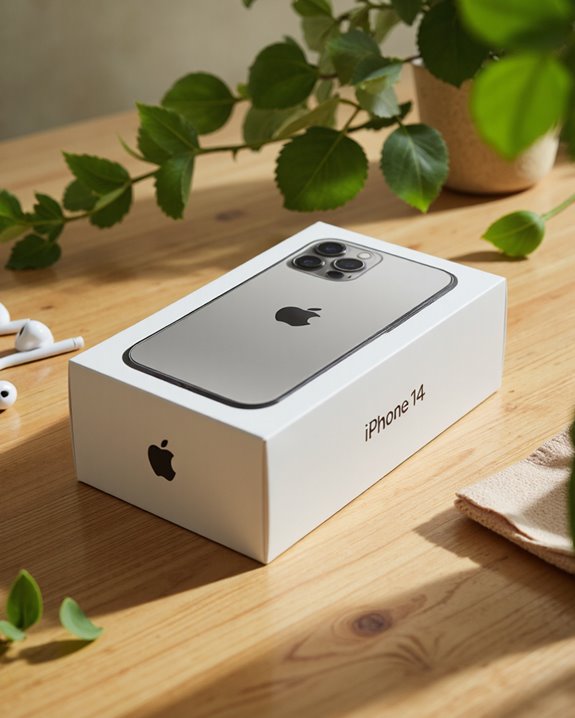
Apple’s ongoing packaging redesign for the iPhone 14 isn’t just marketing spin – there are real material and supply-chain changes behind it. The box leans heavily on recycled fiber and fiber-based materials rather than plastic, and there’s no outer plastic wrap at all anymore. Any virgin wood fiber that’s still used comes from responsibly managed sources, which helps on the forest-preservation front. Because the box itself is smaller and lighter, more units fit per shipment, which trims the carbon footprint of getting phones from factory to shelf. A number of Apple’s supplier facilities have also shifted toward renewable energy, cutting emissions further upstream. None of this is a single silver bullet, but stacked together, it adds up to a noticeably smaller packaging-related carbon footprint compared to older iPhone generations.
Hidden Costs to Budget for When Buying an iPhone 14
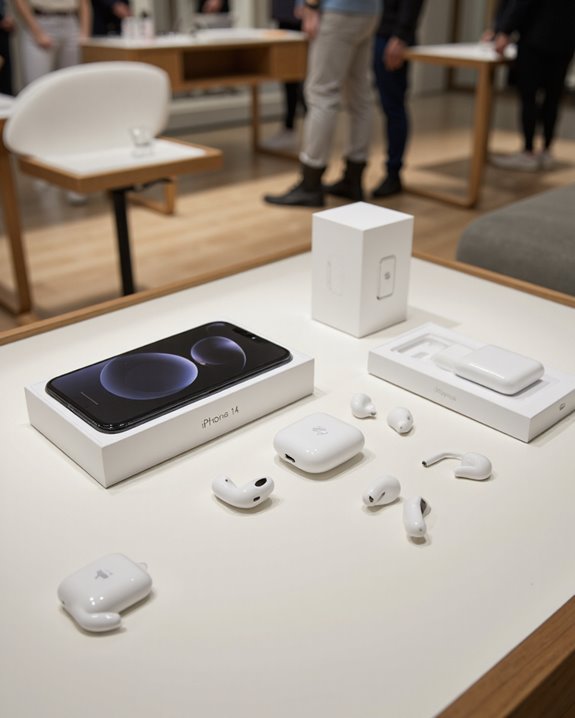
All that packaging innovation is nice, but it doesn’t change the fact that owning an iPhone 14 costs more than the sticker price suggests. Accessories add up fast – a Clear Case with MagSafe, a MagSafe charger, and an official power adapter are all separate purchases at Apple’s usual (and not exactly cheap) rates, which shift from time to time. Then there’s audio: since headphones aren’t included, that’s another purchase to factor in whether you go wired or wireless. Protection plans are worth considering too – extended warranty coverage or accidental damage protection isn’t cheap, but it can save you from a very expensive repair bill down the line. And if you’re the type who wants a custom case, a skin, or engraving, tack that onto the total as well.
Frequently Asked Questions
Are iPhone 14 Models Compatible With Older Apple Headphones?
Yes, older Apple headphones with a Lightning connector will work fine. If your headphones use a 3.5mm jack instead, you’ll need a Lightning to 3.5mm adapter – and that’s not something Apple includes with the phone.
Can I Use Non-Apple Wireless Earbuds With iPhone 14?
Absolutely. Bluetooth pairing on the iPhone 14 works with just about any wireless earbuds on the market, not just AirPods. The tradeoff is that a few Apple-exclusive features – automatic switching, spatial audio tracking, that kind of thing – stay locked to Apple’s own hardware.
Does iPhone 14 Support Lossless Audio Playback?
It does, but only through wired headphones or an external DAC – Bluetooth simply can’t carry lossless audio at full quality. If you’re listening wirelessly, native playback and AirPlay are your best bets for good sound.
Is There Any Difference in Audio Quality Between Models?
Not much. Across the iPhone 14 lineup, audio processing is essentially the same, though the Pro models edge out the standard versions slightly on speaker quality thanks to upgraded internal hardware.
Where Can I Buy Official Apple Headphone Adapters?
The Apple Store is the obvious choice, but Best Buy and Amazon both carry genuine Apple adapters too. Buying from any of these keeps you within a warranty-safe, guaranteed-compatible option rather than gambling on an unknown third-party version.