As an Amazon Associate, we earn from qualifying purchases. Some links on this site are affiliate links at no extra cost to you. Our recommendations are based on thorough research and editorial judgment.

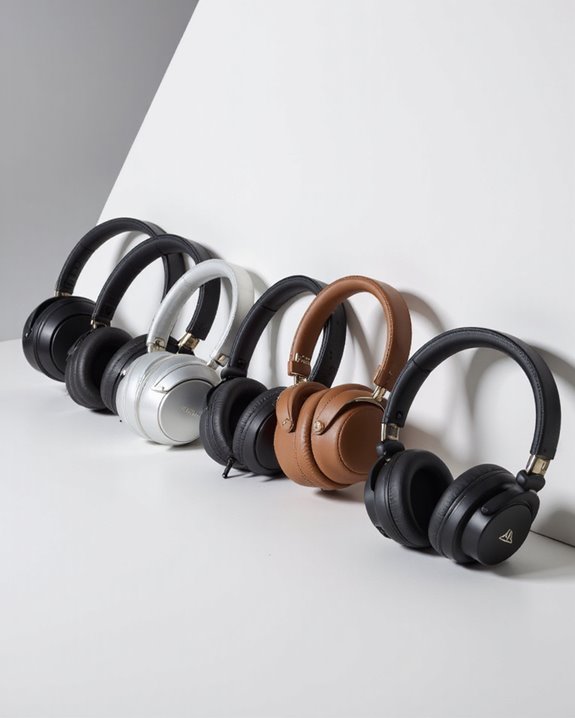
5 Best Over Ear Headphones

Picking the best over ear headphones usually comes down to one trade-off: how much battery life, comfort, and noise blocking are you willing to pay for versus how much you actually need? I’ve spent time with all five pairs below, and they land in genuinely different corners of that trade-off. The Beats Solo 4 leans into style and Apple-ecosystem extras with 50 hours of battery and spatial audio. JBL’s Tune 770NC adds adaptive noise cancelling and still delivers marathon battery life — about 70 hours with ANC — plus Pure Bass Sound tuning. Soundcore’s Q20 is the value pick, pairing hybrid ANC with surprisingly punchy bass for the price. TAGRY pushes battery life even further, to 100 hours, with quick-charge support. And NWM’s wired model skips music altogether in favor of PSZ technology built for people who need to hear their office around them during calls. None of these are interchangeable, so match the pick to how you’ll actually use it. If a sleeker, business-ready look matters more than any spec sheet, our roundup of the best Patrick Bateman headphones covers that aesthetic in more detail.
Key Takeaways
- The Beats Solo 4 stays light and pocketable while offering both Bluetooth 5.3 and a USB-C wired input, so it adapts to whatever device you’re on.
- Soundcore’s Anker Life Q20 punches above its price with hybrid ANC, 60 hours of battery, and Hi-Res-capable 40mm drivers.
- JBL’s Tune 770NC pairs Pure Bass Sound with adaptive ANC, long runtime, and an app-based EQ you can tweak to taste.
- TAGRY’s ANC model claims 95% noise reduction and a class-leading 100 hours of playback, wrapped in soft protein-leather earcups.
- Anker’s BassUp tech on the Q20 boosts low frequencies by roughly 100% without muddying the 20Hz-40kHz range it covers.
NWM Wired On-Ear Speakers with PSZ Technology
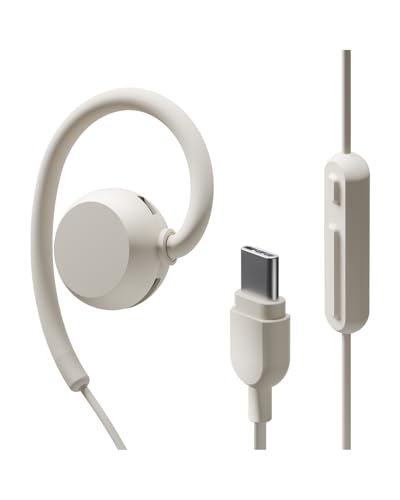
nwm Wired On-Ear Speakers (USB Type-C Open Ear Earphones) White Beige
- Ideal model for online meetings. PSZ technology makes it perfect for any environment. Features a microphone function as well.
- Staying connected with your surroundings. The open-ear structure allows the user to be coexistent with their surroundings by allowing ambient sounds to be heard.
- So comfortable, you forget you have them on. Extremely lightweight (approx. 0.25oz - excl. cord) with an ear hook which sits comfortably on your ear for a pleasant fit.
You may be interested
If you spend your day hopping between video calls and still need to hear a coworker knock or a kettle boil, this is the pair built for that exact situation. Weighing just 0.25 ounces without the cord, these lightweight USB Type-C headphones use PSZ technology to keep sound leakage down while letting ambient noise through on purpose — the opposite goal of most headphones on this list.
The built-in mic handles voice calls well enough, but don’t expect much from it musically; that’s simply not what it’s designed for. An IPX4 rating and flexible ear hooks fit a range of ear shapes, though I’d flag that glasses wearers may find the fit gets uncomfortable over a long shift. Skip these if you want a music or gaming companion — but for pure meeting duty, they do their one job well.
Best suited to office workers and remote employees who need something light for calls while staying tuned in to the room around them.
Pros:
- Remarkably light at a mere 0.25 ounces
- PSZ tech keeps sound from leaking to people nearby
- Lets you stay aware of ambient sound for safety
Cons:
- Audio quality is thin for anything beyond speech
- Long wear sessions can get uncomfortable
- Fit can be tricky if you wear glasses or have larger ears
JBL Tune 770NC Wireless Over-Ear Headphones (Black)
Sale

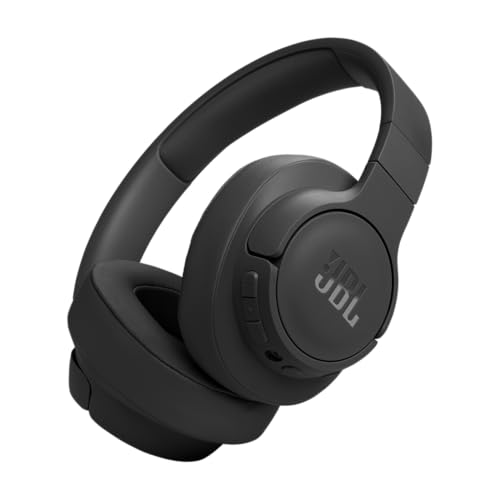
JBL Tune 770NC - Wireless Over-Ear Headphones - Black
- Adaptive Noise Cancelling with Smart Ambient: Adaptive Noise Cancelling means zero distractions whether you’re studying or getting lost in the music. If you want to...
- Bluetooth 5.3 with LE Audio: Wirelessly stream high-quality JBL Pure Bass Sound. In the JBL Headphones app select Audio mode for the best sound quality or Video Mode to...
- JBL Pure Bass Sound: JBL Tune 770NC headphones feature renowned JBL Pure Bass sound—the same that powers the most famous music venues all around the world.
Anyone who dreads charging their headphones every other day should take a hard look at JBL’s Tune 770NC. Adaptive noise cancelling plus Smart Ambient modes mean you can shut out a subway car or let traffic noise back in when you need awareness. You’re looking at up to 70 hours with ANC on a full charge, and Speed Charge still pulls you out of a dead battery quickly. JBL Pure Bass tuning and Bluetooth 5.3 keep streaming stable, while the Headphones app handles EQ and voice prompts. They fold flat for travel and stay light enough for all-day wear—basically the current sweet spot in JBL’s Tune line when the older 720BT listings go dark.
JBL’s Pure Bass Sound tuning and Bluetooth 5.3 handle the streaming side, pulling solid audio straight from your phone. The companion JBL app opens up EQ presets and voice-prompt controls if you like to fine-tune things rather than accept the factory sound. It also folds flat and stays light on the head, and the ear-cup controls make skipping tracks or taking calls a one-touch affair thanks to Voice Aware.
This one’s for commuters and everyday listeners who’d rather charge once a week than once a day, and who like having sound settings they can actually adjust.
Pros:
- 76-hour battery life, plus Speed Charge for a fast top-up
- App-based EQ lets you shape the sound instead of settling for default tuning
- Folds down, stays light, and feels comfortable over long sessions
Cons:
- Black is your only color option
- The over-ear shape runs a bit bulky for some users
- Voice Aware is a nice-to-have, not a must-have, for everyone
Soundcore Anker Life Q20 Wireless Noise Cancelling Headphones

Soundcore Anker Life Q20 Hybrid Active Noise Cancelling Headphones, Wireless Over Ear Bluetooth...
- Incredible Sound Loved by 20 Million+ People
- Hi-Res Audio: Custom oversized 40 mm dynamic drivers produce Hi-Res sound. Life Q20 active noise canceling headphones reproduce music with extended high frequencies that...
- Reduce Ambient Noises By Up to 90%: Our team of engineers conducted more than 100,000 tests in real-life scenarios to fine-tune Life Q20’s 4 built-in ANC microphones...
Don’t let the modest price tag fool you — the Anker Life Q20 punches well above its weight class on paper. Custom 40mm dynamic drivers cover a wide 20Hz-40kHz range for Hi-Res audio, and Anker’s BassUp processing adds roughly 100% more low-end punch when a track calls for it.
Four built-in mics drive the hybrid active noise cancellation, cutting ambient noise by up to 90% in the right conditions. Battery life is another strong point — 60 hours in standard mode, or 40 hours with ANC running at 60% volume. Memory foam ear cups keep things comfortable for marathon listening sessions, though I noticed some warmth building up under the cups during more active use.
A smart pick for budget-minded listeners and commuters who want real ANC and long battery life without paying flagship prices.
Pros:
- Up to 60 hours of playtime, with quick-charge support when you’re in a rush
- Four-mic hybrid ANC that actually cuts real-world noise
- Hi-Res sound from 40mm drivers with noticeably boosted bass
Cons:
- Ear cups can trap heat during workouts or warmer days
- Wind noise finds its way through the padding more than you’d like
- Build quality feels basic next to pricier competitors
TOZO Hybrid ANC Over-Ear Bluetooth Headphones
Sale

TOZO Hybrid Active Noise Cancelling Headphones, Hi Res Audio
- [ANC & ENC Noise Cancellation] Featuring a hybrid ANC algorithm and 3 ANC microphones, TOZO deliver exceptional noise control across a wide frequency range. Whether it's...
- [Up to 60 Hours of Playtime] With up to 60 hours of listening time of our over ear headphones in ANC OFF mode, triple as much as other Bluetooth headphones. A single...
- [Both Wired and Wireless Connections] Equipped with dual 40mm drivers, TOZO bring you superior Hi-Res audio sound with a well-balanced deep bass, make you have a better...

If battery anxiety is the reason you avoid ANC headphones, TOZO’s hybrid ANC over-ears are a smarter everyday pick than chasing vanishing 100-hour listings. You still get real active noise cancelling, app EQ, and roughly 60 hours of playtime depending on how hard you run ANC—enough for a workweek of commuting without living next to a charger. Soft earcups and a fold-flat frame make them travel-friendly, and the detachable cable means you’re not stranded if Bluetooth drops. For travelers and long-haul listeners who want ANC without flagship pricing, this TOZO pair fills the gap left by discontinued TAGRY over-ear ASINs.
Soft protein-leather earcups and an adjustable headband make long sessions bearable, and at 0.54 pounds, fatigue isn’t much of an issue either. You get both Bluetooth and a 47.2-inch detachable 3.5mm cable, so these work with phones, laptops, or a gaming console without missing a beat. Plug in for just 5 minutes and you’ll pull 10 more hours of playback — handy when you forgot to charge overnight.
Travelers, long-haul commuters, and anyone who needs all-day noise cancellation without babysitting a battery will get the most out of this pair.
Pros:
- 100-hour battery, with a 5-minute charge good for 10 hours of playback
- Strong sound performance backed by 95% noise reduction
- Both Bluetooth and wired connections covered
Cons:
- At 0.54 pounds, it’s on the heavier side for this category
- Mostly plastic and ABS construction, which may not hold up as long as metal-reinforced designs
- Color choices are limited
Beats Solo 4 Wireless Bluetooth On-Ear Headphones
Sale

Beats Solo 4 - Wireless On-Ear Bluetooth Headphones, Up to 50-Hour Battery Life, Ultra-Lightweight...
- Custom acoustic architecture and updated drivers for powerful Beats sound.
- Personalized Spatial Audio with dynamic head tracking.
- Ultralight ergonomic design for all-day comfort. Flex-grip headband and ergonomically angled, adjustable ear cups for a stable fit.
The Beats Solo 4 is the pair to grab if you want your headphones to look as good as they sound. Bluetooth 5.3 reaches out to 100 meters, battery life stretches to 50 hours, and the custom acoustic architecture keeps vocals distinct from instruments — helped along by spatial audio with dynamic head tracking.
At 7.65 ounces with a flex-grip headband, it’s genuinely ultralight, though glasses wearers might still notice some pressure after a few hours. USB-C and 3.5mm inputs cover your bases for wired or wireless use, and the fast-fuel charging trick — 5 hours of playback from a 10-minute charge — is a nice safety net before a long trip.
Best for style-conscious listeners and mobile professionals who bounce between devices and want battery life that keeps pace with a busy day.
Pros:
- Up to 50 hours of battery, with a fast-charge option for emergencies
- Spatial audio and custom acoustic architecture deliver genuinely clear sound
- Bluetooth 5.3, USB-C, and 3.5mm inputs cover nearly any device
Cons:
- Extended wear can get uncomfortable, especially with glasses
- Smaller ear cushions may create pressure points over time
- No active noise cancellation — passive isolation only
What to Look for in the Best Over Ear Headphones
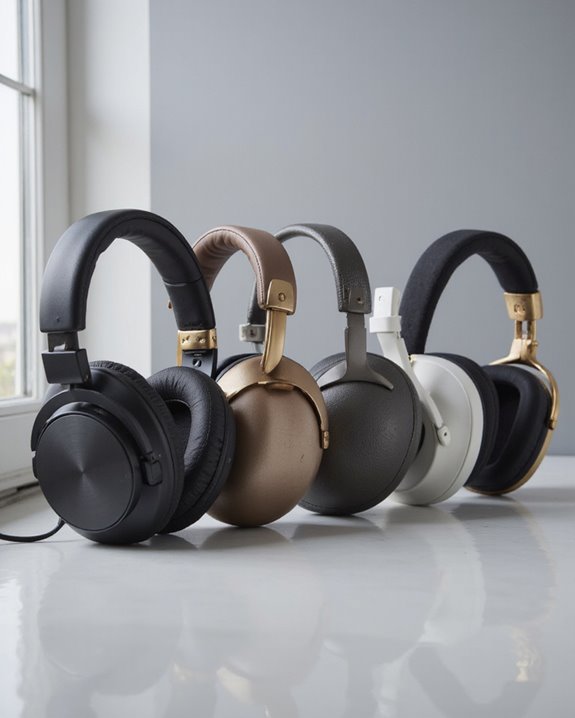
Shopping for over-ear headphones means weighing a handful of factors against each other rather than chasing one perfect spec. Sound quality across the frequency range, how well the active noise cancellation actually works, and battery performance that can swing anywhere from 20 to 60 hours all matter. So does the physical fit — cushion material, headband adjustability, and overall weight all decide whether you’ll still be comfortable three hours in. And then there’s the wireless-versus-wired question: convenience and freedom of movement on one side, uncompressed audio fidelity on the other. Your answer depends on what you’re actually doing with the headphones, not what sounds best on a spec sheet.
Sound Quality and Range
Good sound is the whole point, so start here. Look for headphones that cover the full 20 Hz to 20,000 Hz range — that’s the accepted boundary of human hearing, and anything less means you’re missing part of the picture.
Beyond raw frequency range, check the dynamic range and THD figures if they’re published. THD under 1% is a good benchmark for clean, undistorted playback, and a wide dynamic range keeps quiet passages from getting swallowed by louder ones. 40mm or larger drivers tend to reproduce sound more accurately across the spectrum. What you want, ultimately, is balance — bass that doesn’t drown vocals, treble that doesn’t turn harsh — so you notice details in a track you’d have missed on cheaper gear.
Noise Cancellation Features
ANC has come a long way. The better systems now knock out up to 95% of ambient noise, using microphone arrays that pick up outside sound and cancel it with an opposing wave in real time.
Hybrid noise cancellation tends to be the most effective approach on the market, since it blends electronic cancellation with physical sealing to handle both low rumble — think engines — and mid-frequency noise, cutting the latter by up to 90%. Multiple microphones, tested across a wide range of real environments, help keep performance consistent no matter where you are.
When you actually need to hear what’s going on around you, transparent mode lets ambient sound back in without pulling the headphones off. Just know that all this processing has a cost: expect 40-60 hours of battery depending on how hard you’re running ANC.
Battery Life Duration
Battery life shapes the whole experience, especially once noise cancellation enters the picture and starts eating into runtime. Most current models land somewhere between 40 and 100 hours, though actual mileage depends heavily on how you use them.
Turn on active noise cancellation and expect battery life to drop by as much as 50%, sometimes down to 40 hours or less. The upside is that fast-charging has gotten good enough that a 5-10 minute plug-in can buy you another 4-10 hours of listening. If you want the longest possible runtime, keep volume around 60% — that’s typically where you’ll see 50-60 hours in standard mode.
Comfort and Fit Design
Comfort is what separates a pair you’ll actually wear from one that ends up in a drawer after a week.
Aim for something in the 0.25 to 1 pound range — light enough to forget you’re wearing it, but not so light it feels flimsy. Memory foam cushions that mold to your ears matter a lot if you’re regularly logging four-plus-hour sessions, and adjustable headbands and ear cups mean the fit actually matches your head rather than a generic average. If you wear glasses, look specifically for breathable materials and plush padding around the temples — that’s where discomfort tends to start. And if total noise isolation matters more to you than a classic over-ear fit, our guide to the best ear plug headphones is worth a look instead.
Wired Vs Wireless Options
Wired and wireless each solve a different problem, so the right pick depends on your listening habits, not brand loyalty.
Wired headphones give you a rock-solid connection with zero battery anxiety and no interference — a strong case for studio work or anywhere crowded with wireless signals. The catch, obviously, is a cable that limits how far you can wander from your source.
Wireless models trade that tether for freedom, with Bluetooth ranges and battery life anywhere from 20 to 100-plus hours depending on the model. Latency is barely noticeable these days, and features like multi-device pairing more than make up for the occasional recharge. If you’re constantly switching between phone, laptop, and tablet, wireless is probably the better fit despite needing the occasional top-up.
Build Quality and Durability
Durability determines whether your headphones are still going strong in year three or falling apart in month six. Metal alloys and quality plastics resist daily wear far better than cheaper builds, and reinforced hinges with multiple pivot points hold up under the folding and unfolding that comes with daily use.
Check for an IPX4 water-resistance rating, which covers sweat and light splashes — useful even if you’re not planning to work out in them. Rubberized joint coatings add a buffer against accidental drops, and a well-balanced weight — typically 200-300 grams — reduces strain on the parts most likely to fail. None of this is just about comfort; it’s what keeps the headphones structurally sound years down the line.
Price Vs Performance Value
Finding the sweet spot between price and performance is really the crux of picking good over-ear headphones. Pricier models generally buy you battery life past 50 hours and noticeably better ANC, but that doesn’t mean cheap options are worthless.
In my experience, the $100-$200 range tends to deliver the best ratio of features to cost. Sub-$50 models can work for casual listening but usually cut corners on sound quality and extras. Whatever you land on, check that it covers the standard 20 Hz-20 kHz range, and pay attention to user ratings above 4 stars — that’s a solid proxy for whether a pair actually delivers at its price point.
Connectivity and Compatibility Types
Today’s over-ear headphones connect more ways than ever. Bluetooth 5.0 or newer gets you a reliable 10-meter wireless range, which covers most everyday use without dropouts.
For guaranteed low-latency audio, a traditional 3.5mm jack still beats wireless, and it works with virtually anything that has a headphone port. USB-C does double duty for audio and charging through one port, which simplifies your cable situation. Multipoint Bluetooth is worth seeking out too — it lets you stay paired to two devices at once and switch between them without re-pairing every time.
Across the board, these headphones play nicely with whatever device you own, whether that’s a phone, tablet, laptop, or desktop, since they rely on standard, widely supported protocols.
Frequently Asked Questions
Can I Wear Over-Ear Headphones While Exercising or Running?
You can, but I wouldn’t recommend it for anything intense. Over-ear headphones tend to trap heat, soak up sweat, and shift around during fast movement — not a great combo for a run. For workouts, you’re better off with sports-specific earbuds rated IPX4 or higher, built with a secure fit in mind for actual athletic use.
How Long Should High-Quality Over-Ear Headphones Typically Last?
With reasonable care, expect 5-7 years out of a good pair. Keep them clean, store them in a case, and keep them away from extreme heat or cold. The parts most likely to fail first are cables (2-3 years), ear pads (1-2 years), and headband padding (3-4 years) — but since premium models often let you replace these parts individually, you can stretch that lifespan well past average.
Are Over-Ear Headphones Safe for Children to Use?
They can be, with a few precautions. Keep volume capped at 85 decibels or lower, and look for headphones with built-in volume limiters so kids can’t accidentally crank it. Monitor how long they wear them, confirm the fit is right, and build in 10-15 minute breaks every hour. As a general rule, cap daily use at 2 hours to protect developing hearing.
Can Over-Ear Headphones Cause Hair Loss or Headaches?
Real hair loss is unlikely unless you’re wearing them uncomfortably tight for extended stretches, though you might notice temporary flattening. Headaches are more common and usually come down to pressure points from a tight headband or listening at excessive volume. Adjust the fit properly, take breaks, and keep volume under 85 decibels to avoid both issues.
What’s the Best Way to Clean and Maintain Over-Ear Headphones?
Start by removing the ear cushions and wiping them down with a slightly damp microfiber cloth and mild soap. Wipe the drivers themselves with a dry cloth only — never let moisture near them directly. Store the headphones in a case when not in use, rotate which side of the cups takes wear, and check cables periodically for fraying. A monthly clean and yearly ear-pad swap will keep them performing and smelling fresh.