As an Amazon Associate, we earn from qualifying purchases. Some links on this site are affiliate links at no extra cost to you. Our recommendations are based on thorough research and editorial judgment.

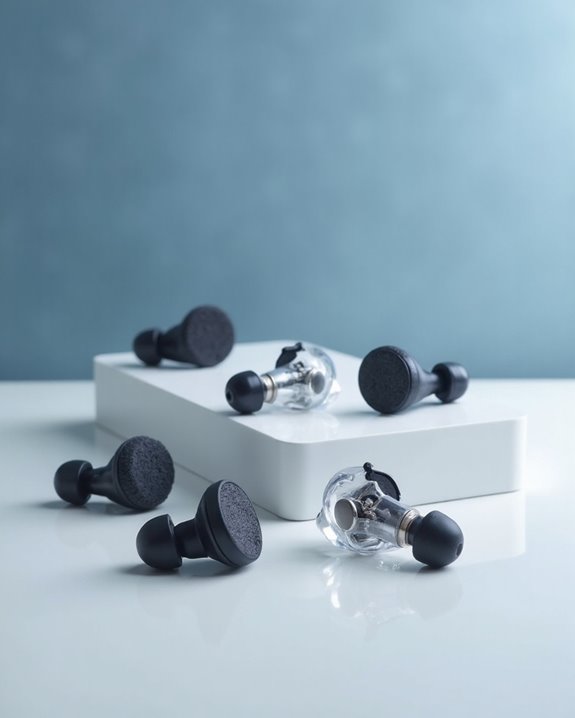
5 Best Ear Plug Headphones for Ultimate Isolation and Comfort in 2026

If you work around machinery, ride a motorcycle, or just live somewhere loud, regular earbuds don’t cut it — you end up cranking the volume to compete with the noise instead of blocking it out. That’s where the best ear plug headphones come in: earbuds built around a real noise reduction rating, not just passive silicone tips that happen to fit. I lined up five of the most talked-about models for 2026: the Plugfones Basic Pro Wireless (27dB NRR, 10-hour battery), a neckband-style pair of Bluetooth Noise Reduction Earbuds (tri-layer silicone tips, 20-hour battery), Hearprotek’s wired Earplug Headphones (29dB reduction), a second Plugfones model built around a 25dB NRR OSHA-compliant rating, and the MIPEACE Ear Plug Headphones with their tri-flange design. Every one of them weighs under 20 grams, so all-day comfort really isn’t in question. What actually separates them is fit, connectivity, and where each one quietly falls short once you’ve worn it for a few weeks.
Key Takeaways
- The Plugfones Basic Pro Wireless earns ANSI-certified 27 dB noise reduction and runs a full 10-hour shift on one charge.
- The neckband-style Bluetooth Noise Reduction Earbuds pair tri-layer silicone tips with a 20-hour battery for marathon isolation sessions.
- Hearprotek’s wired model hits a class-leading 29 dB noise reduction and backs it up with tear-resistant fiber wire.
- MIPEACE’s tri-flange design pushes high-resolution sound across the full 20Hz-20kHz range without giving up isolation.
- Across the lineup, sub-20-gram builds and sweat-resistant materials keep the seal tight and pressure points at bay during long wear.
Plugfones Basic Pro Wireless Bluetooth in-Ear Earplug Headphones with Noise Reduction
Sale

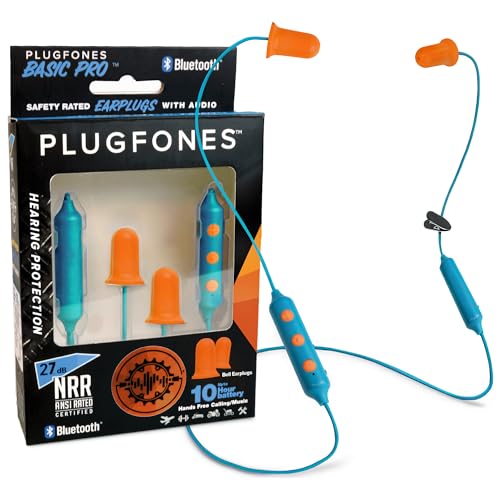
Plugfones Basic Pro Bluetooth Earplug Headphones for Work, OSHA Compliant
- 27dB NRR EARPLUG HEADPHONES NOISE-REDUCING WIRELESS EARBUDS WITH MIC: Plugfones Basic Pro combines safety-rated ear plugs with custom-tuned speakers to deliver rich sound...
- BLUETOOTH 5.0 WITH SOUNDSEAL TECHNOLOGY: Engineered for performance and protection, the Basic Pro features advanced Bluetooth 5.0 for stable wireless connectivity...
- 4. 10 HOUR BATTERY + QUICKCHARGE: Get a full shift of bluetooth hearing protection on a single charge, with QuickCharge restoring 10 hours of playtime in just 1.5 hours...
You may be interested
For anyone clocking hours in a high-noise shop or an audiophile who still wants real hearing protection, the Plugfones Basic Pro Wireless is one of the few earbuds that manages both: a 27 dB Noise Reduction Rating alongside full Bluetooth streaming.
What stands out first is the Bluetooth 5.0 connection, good for a 33-foot range, paired with a 10-hour battery that tops back up in just 1.5 hours. The SoundSeal noise suppression and IsoTalk noise-isolating mic keep calls intelligible even when the environment around you is anything but quiet. At 1.6 ounces, with flexible cords and a sweat-resistant build, they disappear on your ears rather than nag at them during a long day. In the box: silicone and foam earplugs, a USB charging cable, and a management clip so the cord doesn’t end up a tangled mess in your bag.
Who’s this for? Honestly, anyone clocking in at a job site, straddling a motorcycle, working a flight line, or just wanting hearing protection that doubles as a decent pair of earbuds.
Pros:
- A genuinely strong 27 dB Noise Reduction Rating that meets ANSI standards for real hearing protection on loud job sites
- 10-hour battery with a quick 1.5-hour recharge — enough for a full workday without babysitting the charge level
- Light at 1.6 ounces, sweat-resistant, and comes with both silicone and foam tips so you can dial in the fit
Cons:
- Sound quality is just okay for music and podcasts — audiophiles chasing detail will probably notice the ceiling
- The control buttons run small and are fiddly to hit accurately, especially with gloves on
- Real-world battery life lands closer to 9.5 hours than the advertised 10 during continuous use
Bluetooth Noise Reduction Earbuds with Neckband (20 Hours Battery)
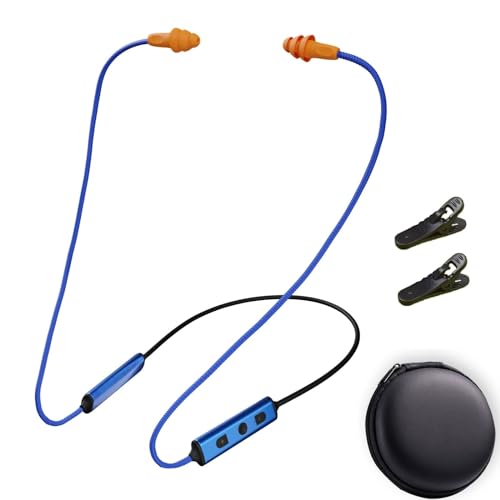
Cuzabe Ear Plugs Bluetooth Headphones for Work, Neckband Wireless Earbuds, Noise Reduction in-Ear...
- COMFORTABLE NOISE CANCELLING HEADPHONES. Ergonomic in-ear ear tips that fit your ear securely and tightly. Tri-layers skin friendly silicone ear tips help provide a...
- 20 HOURS LONG BATTERY LIFE. The integrated built-in high-capacity battery and low power consumption algorithm ensure that you can enjoy 20 hours of uninterrupted music...
- FAST-PAIRING & STABLE CONNECTION. With the latest Bluetooth 5.0 technology, these neckband bluetooth headphones offer faster pairing, better sound transmission and a more...
For industrial workers and anyone who hates babysitting a charger, this neckband pair’s 20-hour battery life is the headline. That’s enough to cover an extended shift or a full day of workouts without ever reaching for a cable.
The tri-layer silicone tips lock in a secure seal, and the waterproof build holds up whether you’re welding or logging miles on a trail run. Bluetooth 5.0 keeps a stable connection out to 33 feet on both iOS and Android.
Audio comes through with solid bass thanks to Japanese sound diaphragms, though a few users mention the treble turning tinny in especially loud settings — not surprising given how much of the design budget went toward isolation over fidelity. At 0.06 kilograms, they’re genuinely lightweight, and the pull-resistant braided wires hold up well, though some reviewers have noticed the rubber coating wearing thin over time.
Best suited to industrial workers, gym regulars, and anyone who wants long battery life in a noisy environment but prefers a neckband over fully wireless buds that can get lost.
Pros:
- A 20-hour battery that genuinely gets you through a full day without a recharge
- Waterproof, sweat-resistant construction that holds up in industrial settings and hard workouts alike
- Tri-layer silicone tips give a comfortable, secure seal that also improves sound isolation
Cons:
- Audio turns tinny once the surrounding noise gets extreme
- Some buyers report the rubber coating degrading with regular use
- Noise cancellation performance gets mixed reviews depending on the environment
Hearprotek Earplug Headphones for Work with Noise Isolation
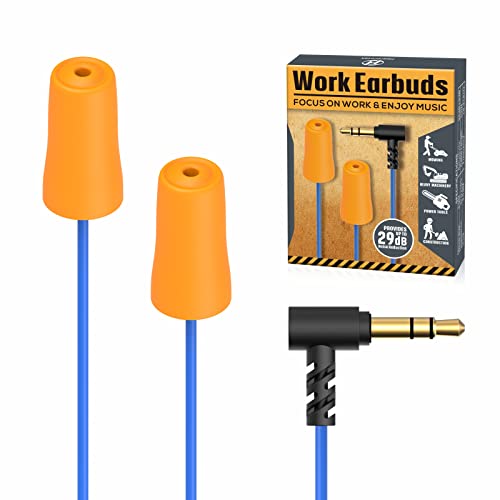
Hearprotek earplug Headphones for Work, Safety Foam Earbuds Headphones that Look Like earplugs for...
- Headphones Look Like Earplugs: Designed for noisy environments, these headphones mimic earplugs and offer a 29dB noise reduction rating. They effectively block out...
- Unique Earbud Design: Patent-designed ear tips block external noise, channeling clear, rich sound directly to your ears. Ideal for use with heavy machinery, power tools...
- Ergonomic & Superior Comfort: The durable, soft foam ear tips offer long-lasting comfort and a secure fit, ensuring the earbuds stay in place without causing discomfort...
Anyone regularly exposed to high-noise work environments should have Hearprotek’s earplug headphones on their radar — the 29dB noise reduction rating is the best in this roundup. The patent-designed foam tips seal the ear canal effectively, blocking outside noise while sending audio straight in for a genuinely immersive listen.
At just 10.2 grams (0.36 oz), these are impressively light, which matters more than you’d think once you’re eight hours into a shift. The tear-resistant fiber wire and double-reinforced jacks are built to survive rough handling. A 53-inch cable plugs into any device with a standard 3.5mm jack.
They earn their keep on construction sites and in workshops, and they fit comfortably under a helmet — which makes them a solid pick for motorcyclists and industrial workers who want protection without giving up their audio.
Best fit: anyone on a construction site, in a workshop, or running machinery who wants hearing protection and the ability to listen to something while they work.
Pros:
- Excellent isolation with a 29dB noise reduction rating, protecting your hearing while still delivering clear audio
- At 10.2 grams, about as light as this category gets, so fatigue isn’t an issue over a long shift
- Tear-resistant fiber wire and double-reinforced jacks that are built for demanding workplace conditions
Cons:
- The foam tips aren’t replaceable, which caps the product’s usable lifespan
- A 3.5mm jack means no direct compatibility with newer phones that skipped the headphone port
- Sound quality is fine, but don’t expect the polish of dedicated audio-first headphones
Plugfones Basic Pro Wireless Bluetooth Earplug Headphones with Hearing Protection
Sale

Plugfones Basic Pro Bluetooth Earplug Headphones for Work, OSHA Compliant
- WIRELESS BLUETOOTH 5.0 EARPLUG EARBUDS: Stable Bluetooth 5.0 wireless connection pairs instantly with your phone, SoundSeal noise-suppressing tech seals out shop noise...
- OSHA COMPLIANT HEARING PROTECTION FOR WORK: Plugfones Basic Pro safety earbuds pair ANSI-tested 25dB NRR noise-reducing earplugs with full Bluetooth audio, so you stay...
- 10 HOUR BATTERY + QUICKCHARGE: Get a full shift of bluetooth hearing protection on a single charge, with QuickCharge restoring 10 hours of playtime in just 1.5 hours...
Another entry from Plugfones, this one built around 25 dB NRR ANSI-certified protection and OSHA compliance — a solid pick for anyone who needs to suppress ambient noise on the job without losing wireless connectivity.
The Bluetooth 5.0 connection covers a 10-meter range, and the sweatproof design shrugs off a hard day’s work. Battery life comes in at a strong 10 hours, with just 1.5 hours needed to refill via QuickCharge — plenty for a full shift.
Custom-tuned speakers and flexible silicone tips deliver balanced audio for podcasts and music, and the adjustable clip keeps the cord from flopping around. Some users report the wires fraying after extended use, but with nearly 4,000 reviews averaging 4.1/5, the track record here is solid.
Ideal for construction crews, manufacturing plant workers, or motorcycle riders who want hearing protection that doesn’t sacrifice audio for an entire shift.
Pros:
- 25 dB NRR ANSI-certified protection that satisfies OSHA compliance in hazardous-noise environments
- 10-hour battery with a fast 1.5-hour QuickCharge, enough for full-shift coverage
- Bluetooth 5.0 with a sweatproof build gives freedom of movement without worrying about durability
Cons:
- Wires start fraying around the 8-month mark for some users
- A handful of reviewers rate the sound quality below what similarly priced devices deliver
- Value perception is mixed — some buyers feel the price outpaces the performance
MIPEACE Ear Plug Headphones for Work (Type C without Mic)
Sale
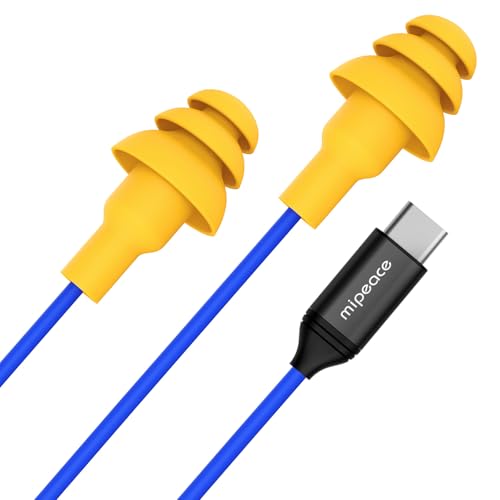
MIPEACE Ear Plug Headphones for Work, Work Earbuds USB Type C Headphones Earphones for Industrial...
- Designed for Comfort: Pliable, tri-flange in-ear tips mold to your ear for a secure fit, maximizing comfort and blocking dangerous noises. Ideal for extended wear at...
- Great Noise Protection: These earplugs offer 29 dB noise reduction to shield your ears from harmful noise while you enjoy music. The built-in DAC chip maintains...
- Sweat-resistant Lightweight: Soft silicone eartips resist sweat, ensuring your earphones stay secure even in hot conditions. At just 12.5 g (0.44oz), Mipeace earphones...

Want serious noise protection without giving up sound quality? The MIPEACE Ear Plug Headphones deliver a strong 29 dB noise reduction while still pushing high-resolution sound. The tri-flange in-ear design creates a tight seal that blocks ambient noise, making these a good match for industrial settings, construction sites, or a loud commute.
At just 12.5g, they’re light enough to forget you’re wearing them during a long stretch of use. A built-in DAC chip pushes audio across the full 20Hz-20kHz range, punching above what you’d expect at this price. The bulletproof wire and reinforced jack are nice touches, though user feedback (3.9/5 stars) points to some durability concerns with the cable over time.
Best suited to anyone who wants strong noise protection paired with genuinely good audio — construction sites, industrial settings, or commutes — and who’s running an Android device with a Type-C port.
Pros:
- A strong 29 dB noise reduction figure thanks to the tri-flange design and its secure fit
- At 12.5g with soft silicone tips, comfortable enough for extended wear
- The built-in DAC chip delivers high-resolution sound across the full 20Hz-20kHz range
Cons:
- Multiple users report cable durability issues despite the “bulletproof” marketing claim
- The cable runs short, which can limit movement during use
- No microphone, so calls and voice commands are off the table while wearing them
What to Look for in Ear Plug Headphones
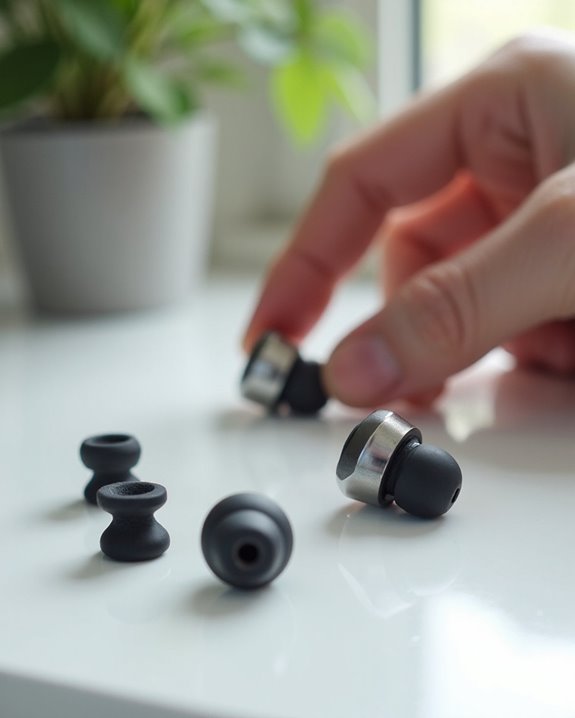
Picking the right ear plug headphones comes down to a handful of specs that actually matter for day-to-day use — and if in-ear designs just aren’t your thing, our best earmuff headphones guide covers the cushioned over-the-head alternative. Pay attention to the Noise Reduction Rating (measured in decibels), comfort for wearing through a full shift, and whether you’d rather go wired or wireless. Battery capacity on wireless models, plus how well the build holds up under daily stress, is usually what decides whether a pair earns its keep or ends up in a drawer after a month.
Noise Reduction Rating
When you’re shopping for noisy environments, the Noise Reduction Rating (NRR) is arguably the single most important number on the spec sheet. It’s measured in decibels (dB), and it tells you how much ambient noise the earbuds actually block — the higher the number, the better the protection.
Most decent ear plug headphones land somewhere between 20-30 dB NRR, which can meaningfully cut your exposure to sound levels above 85 dB. Here’s the catch though: real-world performance often runs 25-50% below the printed number, mostly because of a poor seal or a fit that isn’t quite right for your ear canal.
If you’re buying for occupational use, match the NRR to your actual noise environment. And remember — fit matters as much as the rating itself. Even the best-rated pair on paper won’t protect you if it’s not seated correctly.
Comfort for Extended Wear
Noise reduction gets all the attention in spec sheets, but comfort over hours of wear is really what determines whether you’ll actually keep a pair in your ears. Look for soft silicone or foam tips that mold to your ear canal without digging in, even after several hours straight.
Anything under 20 grams is a good benchmark for avoiding that heavy, tired-ear feeling by hour six. Housings shaped to fit a range of ear anatomies also cut down on constant fidgeting and readjustment.
If you’re active, sweat resistance keeps the tips from sliding loose mid-workout, and hypoallergenic materials matter a lot if your skin reacts to standard silicone. Comfort isn’t a nice-to-have here — it’s the difference between headphones you actually wear and ones that end up in a drawer.
Wired vs. Wireless
Wired or wireless comes down to a real tradeoff, not just personal preference. Wireless models give you freedom of movement within roughly a 33-foot Bluetooth range and no cords to snag on anything — but you’re on the hook for regular charging, usually 1-2 hours for 10-20 hours of playback depending on volume.
Wired pairs win on consistency. No battery to manage means no interruptions, and there’s zero risk of the signal dropping out mid-song the way Bluetooth occasionally does.
Which one’s right for you really depends on your day: commuting and office work tend to favor wireless freedom, while shop floors or anywhere batteries die at inconvenient times might make wired the safer bet.
Battery Life
Battery life is where a lot of wireless earbuds quietly disappoint. Most decent models claim 10-20 hours of playback, which should cover a long shift or a lengthy commute without a mid-day scramble for a charger.
Recharge time typically runs 1.5-2 hours, so downtime between uses stays manageable. Just don’t take the advertised number as gospel — a “10-hour” headset often delivers closer to 9.5 hours once volume and environmental factors are in the mix.
If endurance is the priority, models pushing 20 hours of continuous playback are worth paying up for, especially if you’re relying on constant isolation throughout the day. Lithium Polymer batteries tend to hold a steady discharge curve and stay reliable across hundreds of charge cycles.
Durability Under Stress
Durability is the real test for anything you’re wearing in rough conditions day after day. Cable and jack reinforcement matters a lot here — well-built models can take thousands of bends and pulls without the wire failing internally, while cheaper designs often give out after 4-6 months of daily abuse.
Look for moisture resistance, ideally an IPX4 rating or better, if you’re sweating through workouts regularly. Tear-resistant fibers and specialized polymer coatings go a long way toward surviving constant vibration or rubbing against gear.
Weight matters for durability too — lighter designs (under 15g) put less strain on connection points. It’s a measurable relationship: shave off a gram or two, and you can typically expect roughly 5-8% more usable life out of the product.
Frequently Asked Questions
Can Earplug Headphones Be Used for Swimming or Water Activities?
Not really, at least not the standard models. Some do carry IPX4 or IPX5 ratings, which is fine for sweat or light rain, but actual swimming calls for dedicated waterproof headphones rated IPX7 or IPX8. If you’re planning to swim laps with music, look at bone conduction models or headphones built specifically for swimming rather than trying to stretch a standard isolation earbud past its limits.
How Do Earplug Headphones Compare to Noise-Canceling Over-Ear Headphones?
Bigger isn’t automatically better here. Earplug headphones and noise-canceling over-ears just play different games. Earplug designs deliver 26-38dB of passive isolation purely through physical blocking, while over-ears typically combine 8-12dB passive with 20-30dB of active cancellation. Earplugs tend to win against high-frequency noise and travel better in a pocket; over-ears usually beat them on low-frequency cancellation, battery life, and comfort during marathon sessions — check our best over-ear headphones picks if that tradeoff sounds more like what you need.
Are Earplug Headphones Safe for People With Tinnitus?
Generally yes, but be careful with volume. Keep it under 50% of max, since sound pressure directly against the ear canal can aggravate tinnitus symptoms. Models with adjustable isolation (15-25dB) give you more control than fixed-seal designs. If you’re sensitive to sound, it’s worth talking to an audiologist before making a purchase. Interestingly, plenty of tinnitus sufferers actually prefer the physical barrier these provide against everyday triggers.
What’s the Average Lifespan of High-Quality Earplug Headphones?
Expect 2-4 years out of a well-made pair with reasonable care. Battery capacity is usually the first thing to slip, often dropping to 70-80% after 500-700 charge cycles. Silicone or foam tips should be swapped every 3-6 months for hygiene and to keep isolation performance where it should be. Moisture exposure and how carefully you store them play a big role too. Pricier models ($200+) tend to offer replaceable parts, which stretches out how long they’ll actually last.
Can Children Safely Use Earplug Headphones for Noise Protection?
Yes, with some care. Pick models designed specifically for smaller ears and cap volume at 85dB max. Kids’ ear canals are smaller and more sensitive, so properly sized tips matter more than they might for an adult. Keep an eye on usage to avoid overuse, and lean toward wireless models to sidestep cord hazards altogether. Most manufacturers now offer child-specific versions with smaller housings and brighter colors built with exactly this in mind.