As an Amazon Associate, we earn from qualifying purchases. Some links on this site are affiliate links at no extra cost to you. Our recommendations are based on thorough research and editorial judgment.

5 Best Sleep Headphones for Perfect Night’s Rest in 2026

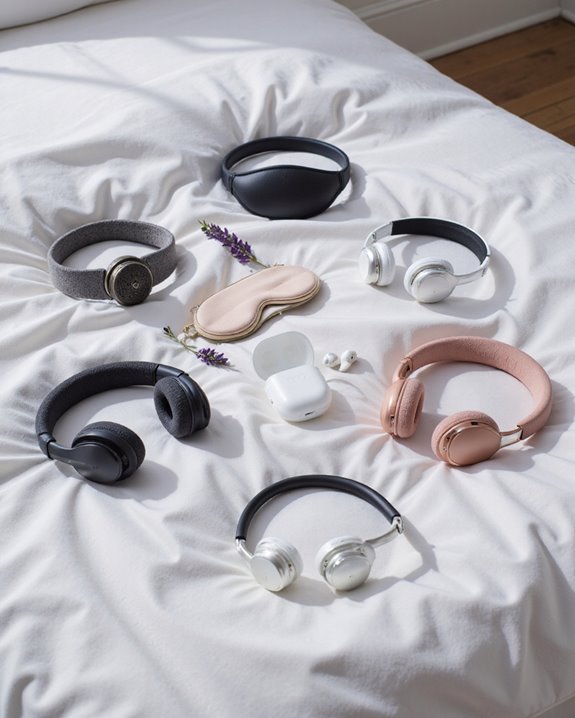
I’ve spent more nights than I’d like to admit testing sleep headphones, and the truth is most of them get one thing right and botch everything else. The best sleep headphones for 2026 are the ones that disappear once you’re lying down – no digging into your ear, no band creeping off your head at 3am. Right now the Soundcore Sleep A20 is the one I keep coming back to, thanks to its 30dB noise reduction and a genuinely absurd 80-hour total battery life once you count the case. Perytong’s wireless headband is the budget-friendly pick, doubling as a blackout mask with 10 hours of playback. LC-dolida’s Bluetooth 5.4 mask surprised me with how good the audio actually sounds, Ertuly’s tiny earbuds block a respectable 24dB of noise, and the SHS01 headband rounds things out with sweat-wicking comfort that also works for workouts. Below is where each one shines – and where it falls short.
Key Takeaways
- The Soundcore Sleep A20 is the most fully-featured pick here: 30dB noise reduction, 80-hour total battery life, and real sleep tracking baked in.
- Perytong’s headband earns its keep by pulling double duty as a sleep mask and Bluetooth speaker, good for 10 hours a charge.
- LC-dolida punches above its price with Bluetooth 5.4 range and surprisingly full stereo sound, cushioned by memory foam so it doesn’t dig in.
- Ertuly’s sleep earbuds are the choice if you hate anything bulky – a dedicated sleep mode and 24dB of noise blocking in a tiny silicone shell.
- The SHS01 headband is the most durable of the bunch, with moisture-wicking fabric, washable parts, and a 2-year warranty that says a lot about build confidence.
Perytong Wireless Sleep Headphones Bluetooth Headband

Perytong Sleep Headphones Wireless, Bluetooth Sports Headband Headphones with Ultra-Thin HD Stereo...
- 【Sleep Headphones & Sports Headband 2 in 1】Perytong Bluetooth headband allows you to listen to music without having to wear additional headphones, and protect you...
- 【Thin Speakers Perfect Headphones for Sleeping】Headband headphones bring you peaceful sleep all night, built-in 2 ultra-thin speakers, devices control module is in...
- 【Longer Service Time and Premium Audio】Sleeping headphones bluetooth 5.4 HiFi advanced sound technology wireless bluetooth headphones offer an upgraded rechargeable...
You may be interested
If you sleep on your side and have given up on earbuds jabbing into your ear canal every time you shift, this headband is worth a look. It runs on Bluetooth 5.2 with ultra-thin HD stereo speakers built into the fabric, and a 2.5-hour charge buys you roughly 10 hours of playtime – enough for most people to fall asleep and stay asleep without a mid-night recharge.
What sold me on the design is how practical it is day-to-day: touch controls mean you never have to fumble for a phone in the dark, and the stretchy headband flexes to fit heads from 9.8 to 10.6 inches. It’s genuinely good at blocking light and staying comfortable while you’re on your side. Just don’t expect real noise cancellation – despite how it’s marketed, this is passive blocking at best, and the speaker modules can feel a little thick under your ear in certain positions.
Who it suits: side sleepers, restless movers, and anyone who wants to drift off to a podcast without wired earbuds tangling around them.
Pros:
- Ten hours of playback on a single charge – more than enough for a full night
- Works as both a sleep mask and a sports headband, so it’s not a one-trick purchase
- Touch controls make hands-free adjustments simple, even half-asleep
Cons:
- Speaker bulk can be noticeable if you sleep on your side a lot
- The headband can slip loose if you toss and turn
- Not truly noise-canceling, whatever the packaging implies
MUSICOZY Bluetooth Sleep Headband Headphones

MUSICOZY Sleep Headphones Bluetooth 5.4 Sleep Eye Mask with HD Speakers
- Comfortable & Ergonomic Design: The MUSICOZY Bluetooth Eye Mask combines the benefits of Bluetooth headphones with a sleep mask; made from soft velvet and stretch cotton...
- Long Battery Life with Type-C Charging: Featuring a 200mAh high-performance battery, these Bluetooth sleep headphones provide over 14 hours of continuous playtime on a...
- Perfect Light Blockout Anywhere: The adjustable cartilage design of this Bluetooth sleep mask ensures a snug fit that effectively blocks light; extra cushioning enhances...
If traditional sleep earbuds dig into your ears the second you roll onto your side, the MUSICOZY sleep headband is the softer path. Thin speakers sit in a soft fabric band so you can drift off to podcasts or white noise without a plastic shell pressing into the pillow. Bluetooth 5.4 keeps the connection stable on the nightstand, and the fabric washes easier than most in-ear sleep gadgets.
Who it suits: side sleepers who bounce off hard earbuds and want something soft enough for every night.
Pros:
- No in-ear pressure when you sleep on your side
- Washable fabric band that’s easier to keep clean
- Simple Bluetooth connection from the nightstand
Cons:
- Sound isolation is lighter than sealed sleep buds
- Not ideal if you want discreet invisible earbuds
LC-dolida Sleep Headphones Bluetooth Wireless Eye Mask
Sale


LC-dolida Sleep Headphones, 3D Sleep Mask Bluetooth Wireless Music Eye Mask, Sleeping Headphones for...
- 【Sleep Headphones & Bluetooth Sleep Mask & Sleep Eye Mask 3 in 1】LC-dolida sleep mask with bluetooth headphones features a sleep mask designed with wireless speakers...
- 【Bluetooth 5.4 Wireless Connection Earphones】LC-dolida bluetooth sleeping mask headphones feature with latest Bluetooth 5.4 chip: fast paring speed and less power...
- 【HD Stereo Sound and Long Battery Life】 The bluetooth sleeping mask with High-fidelity stereo sound, which produce great sound quality and provide a well-closed and...
This one is trying to solve three problems at once – noise, light, and comfort – and mostly succeeds. The LC-dolida mask runs on Bluetooth 5.4 and pairs almost instantly, holding a connection out to about 45 feet, which is more range than you’ll ever actually need in bed.
The 3D contoured design is what stands out: deeper eye cavities mean no pressure on your eyelids, and it’s genuinely one of the better options I’ve tried for side sleeping. Sound quality is a pleasant surprise for a sleep mask – properly positioned speakers deliver high-fidelity stereo rather than the tinny output you’d expect. Charge it for 1-2 hours and you get 8-10 hours of playtime, and the memory foam plus hypoallergenic lining keep things comfortable while blocking light all night.
Who it suits: travelers, side sleepers, and anyone dealing with occasional insomnia who wants light-blocking and audio in one wearable.
Pros:
- Bluetooth 5.4 gives it a reliably strong connection out to roughly 45 feet
- 3D contoured memory foam design is genuinely comfortable for side sleeping
- 8-10 hours of playtime from a quick 1-2 hour charge
Cons:
- Speakers need to be lined up correctly with your ears or sound quality drops
- You may find yourself readjusting it mid-sleep
- Pricier than a basic sleep mask without any audio built in
Sleep Earbuds for Side Sleepers with Noise Blocking & Dual Mode
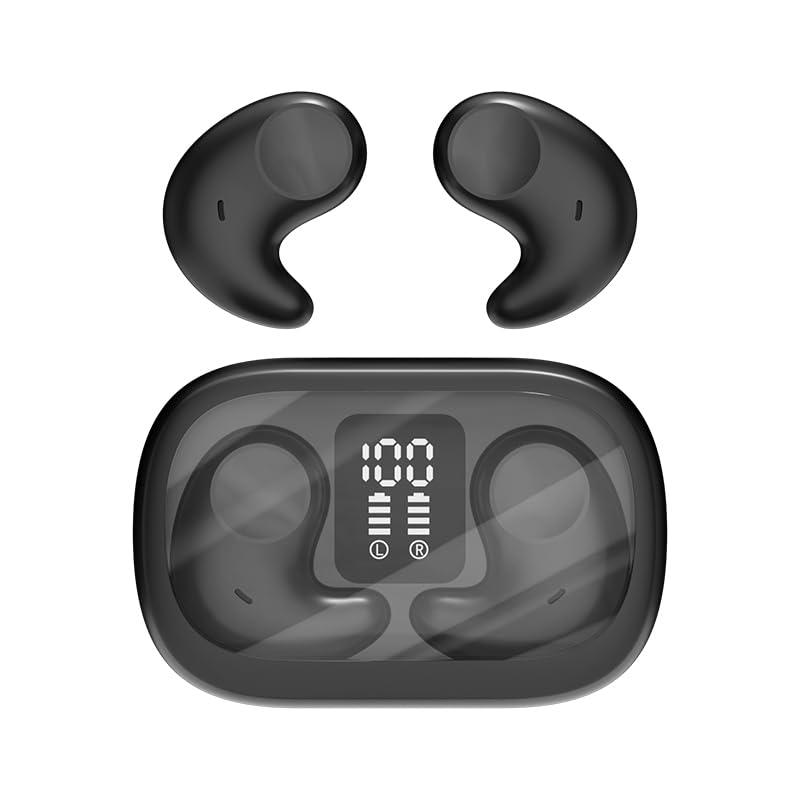
Piluyaa Sleep Earbuds Bluetooth in Ear Light-Weight Headphones, Mini Invisible Earplugs Small Design...
- Advanced Bluetooth 5.4 & One - Step Pairing: Boasting the latest Bluetooth 5.4 tech, these wireless earbuds offer lightning - fast, rock - solid connections. No more...
- Smart Touch Control & Peaceful Sleep: M51 Sleep earbuds feature dual - ear touch controls. Tap to play/pause, skip tracks, adjust volume, answer calls, or wake the voice...
- Ergonomic Design for Side Sleepers: Repeatedly refined, the earbud shape hugs your ear's inner curve for a stable, comfy fit, even when you're sleeping on your side...
Ertuly went a different direction: instead of a headband or mask, these are genuinely tiny earbuds, measuring just 0.69 x 0.61 x 0.98 inches, so there’s almost nothing to feel when you turn your head into the pillow. Three sizes of soft silicone ear caps let you dial in the fit, and they block up to 24dB of outside noise passively.
Battery life is the tradeoff – you get 4-6 hours per charge, though the case stretches total use to about 30 hours across a week of nights. The nice touch is sleep mode, triggered with four quick clicks, which kills the low-battery chirps and blinking lights that otherwise ruin a dark bedroom. Bluetooth 5.3 keeps the connection stable, and they’re waterproof enough to survive sweat or the occasional drool.
Who it suits: anyone who wants the smallest possible footprint in their ear and doesn’t want to deal with a headband at all.
Pros:
- About as compact and low-profile as sleep earbuds come, with three tip sizes for fit
- Sleep mode shuts off distracting lights and alert sounds
- Blocks up to 24dB of noise without needing active cancellation
Cons:
- 4-6 hours of battery per charge is on the short side
- No active noise cancellation, just passive blocking
- Touch controls are fiddly to hit accurately while lying down
Sports Headband Wireless Headphones with Built-in Speakers

Sleep Headphones Sports Headband, Adjustable Wireless Headband Headphones, Long Time Play Headphone...
- 【Wireless Sleep Headphones & Wireless Sleep Mask & Wireless Sports Headband 3 in 1】 Easy to use as a sleeping headphones,music eye mask,or wireless headband...
- 【10+ Hours Play Time】Built-in rechargeable battery, this wireless headband headphones can provide more than 10 hours of playing time with only 2 hours charging time...
- 【Awesome Alternative to Earbuds, Perfect Sleep Headphones for Side Sleepers】 The speakers inside the super-comfy headband are flat and padded, making sleeping...
The SHS01 is really built for double duty – it’s as much a workout headband as it is a sleep accessory. Built-in speakers sit inside a moisture-wicking headband, and you get up to 10 hours of playtime whether you’re out for a run or already in bed.
The flat, padded speakers are the key design choice here: they’re low-profile enough not to dig into your ear when you’re lying on your side, and the adjustable band stretches to fit different head sizes. Because the material is meant for sweat, it holds up well through both workouts and warm nights, and it doubles as ear warmth on cold runs. Range tops out around 20-30 feet, charging takes about 2 hours, and Ertuly – sorry, SHS01 – backs it with a solid 2-year warranty. One thing to know going in: several users note the volume runs hot even on the lowest setting, so keep that in mind if you’re sensitive to loud audio at night.
Who it suits: people who want one product that works for both training sessions and bedtime, and don’t mind a slightly athletic look.
Pros:
- Doubles as workout gear and sleep headphones – one purchase, two uses
- Ten hours of playtime per charge
- Washable, sweat-resistant material with flat speakers built for side sleeping
Cons:
- Minimum volume can still feel loud for some ears
- A few users report an awkward fit around the eyes and ears
- Wireless range tops out at just 20-30 feet
How to Choose the Best Sleep Headphones for You
Shopping for sleep headphones isn’t like shopping for regular earbuds – comfort matters more than sound quality, full stop. Start with fit and comfort features: how the ear cups distribute pressure, how adjustable the headband is, whether it’ll survive a night of tossing and turning. From there, look at the numbers that actually affect your sleep – battery longevity (aim for 8-12 hours minimum), how fast it recharges, and frequency response (20Hz-20kHz is the standard range worth expecting). Beyond that, weigh noise-blocking performance in decibels, how solidly it’s built, and whether you can actually wash the thing after a few sweaty nights.
Comfort and Fit
Fit is, honestly, the single biggest factor in whether you’ll actually use sleep headphones past week one. Look for ergonomic shapes with contoured ear cups and adjustable straps that can flex to match your head and however you like to sleep.
Models that ship with multiple sizing options for ear tips and headbands are worth the extra thought, since a bad fit ruins everything else about the product. Favor soft, breathable materials – anything stiff will start to hurt after an hour, let alone eight. Zero-pressure contact points matter more than most buyers realize; they’re the difference between waking up refreshed and waking up with an ear ache. Low-profile builds also make side sleeping bearable instead of a fight with your pillow. When you’re comparing options, hypoallergenic materials and a genuinely secure fit should outrank flashy features every time.
Battery Life and Charging
Nothing ruins a sleep routine faster than dead headphones at 2am. Across the models here, playback ranges from 4 to 14 hours per charge, depending on the mode and feature set you’re using.
Most units recharge fast – typically 1 to 2.5 hours for a full charge – which matters if you’re the type who forgets to plug in until right before bed. A model with a charging case can stretch total playtime up to 80 hours before you need an outlet again. Dedicated sleep modes tend to squeeze out more hours than standard Bluetooth playback, and quick-charge features can save you on nights you left it drained.
Audio Quality and Controls
Sound quality is easy to overlook until it’s the reason you can’t fall asleep. Look for a frequency response of 20 Hz to 20,000 Hz – that’s the range that keeps voices, ambient tracks, and music sounding balanced rather than tinny.
Dynamic drivers tend to deliver fuller bass and clearer detail, which matters more than you’d think for podcasts and white noise. Touch-sensitive controls are worth prioritizing too, since fumbling for a physical button in a dark room gets old fast. Some of the better models also include smart volume adjustment that keeps levels steady rather than blasting you awake when an ad plays louder than the podcast.
Bottom line: aim for high-fidelity stereo with minimal distortion. That combination is what actually keeps you asleep instead of jolting you awake.
Noise Blocking Capabilities
If your bedroom sits next to a snorer or a busy street, noise blocking becomes the deciding factor. The strongest models here cut external sound by up to 30 dB, which is enough to meaningfully dull snoring, traffic, or a noisy neighbor.
Passive noise isolation – sealed ear tips creating a physical barrier – does most of the heavy lifting in this category. The better four-point masking systems manage up to 24 dB of reduction even while you’re on your side, which is impressive given how little material is actually involved. Also check how well a model handles high frequencies, up to 20,000 Hz, since that’s where alarm beeps and phone notifications tend to live. Fit and sound-blocking materials work together here – one without the other won’t get you the quiet you’re after.
Durability and Maintenance
Sleep headphones take a beating – sweat, drool, side-sleeping pressure, night after night – so durability isn’t optional. Prioritize waterproof or sweat-resistant materials that won’t break down after a few weeks of regular use.
Check whether components are actually washable, since that’s what keeps sweat and skin oils from building up over months of use. Battery health matters here too – look for 8-14 hours per charge with 1-2.5 hour charging times, so you’re not constantly tethered to an outlet. Materials should be lightweight and hypoallergenic, holding up to nightly wear without irritating your skin. Get these fundamentals right and your sleep headphones should hold up for years, not months.
Frequently Asked Questions
Can Sleep Headphones Cause Ear Infections or Wax Buildup?
They can, yes, if you’re not keeping up with basic hygiene. Wearing anything in your ear for hours creates a warm, damp environment that bacteria are more than happy to move into. Wipe your ear tips down with alcohol wipes regularly, skip wearing them if your ears are already irritated, and know that prolonged use can trap moisture and compact earwax over time.
How Long Do Sleep Headphones Typically Last Before Needing Replacement?
Think of them like a phone battery – they degrade whether you baby them or not. Budget models ($20-50) usually give you 1-2 years of nightly use, while premium options ($100+) can last 2-4 years if you take care of them. Battery capacity is usually the first thing to go, dropping from 8-12 hours down to 4-6 hours after about a year. How long yours lasts really comes down to how often you use them, how you store them, and whether they’re wired or wireless.
Are Sleep Headphones Safe to Use Every Night?
Generally, yes – as long as you’re sensible about it. Keep volume under 85dB, give your ears occasional breaks, and pick models with breathable materials so moisture doesn’t build up. Clean them regularly to avoid bacterial growth, and if you notice any discomfort or pain, ease off for a bit. Wireless models also remove the strangulation risk that cords can create while you sleep.
Can Children Safely Use Sleep Headphones?
I’d tread carefully here for kids under 12. They’re not inherently unsafe, but you’ll want strict volume limits (max 85 dB), a properly fitted headband, and supervision rather than letting a young child wear them unsupervised overnight – cords especially carry a strangulation risk. If you do go wireless, choose something built specifically for children with volume caps and washable, removable parts. For very young kids, a white noise machine is honestly the simpler, safer choice.
Will Sleep Headphones Interfere With My Alarm Clock in the Morning?
Probably not – most sleep headphones use open-air or partial-seal designs specifically so outside sound can still get through. If your alarm is on your phone, it’ll override whatever’s playing through the headphones, so you’ll hear it regardless. If you rely on a standalone alarm clock, either set its volume louder than your headphones or look for a model with auto-shutoff, so the headphones power down after a few hours instead of playing all night.