As an Amazon Associate, we earn from qualifying purchases. Some links on this site are affiliate links at no extra cost to you. Our recommendations are based on thorough research and editorial judgment.

5 Best Radio Headphones of 2026 – Sound Quality, Workplace Comfort

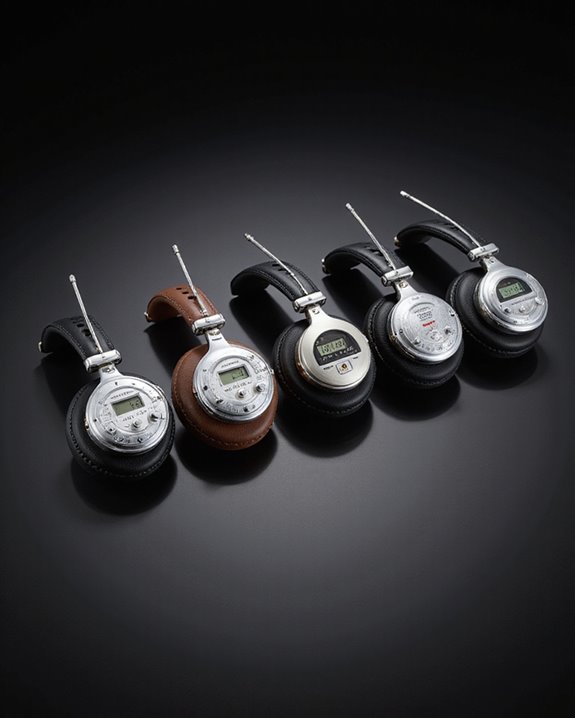
I’ve strapped on a lot of ear protection over the years, and the best radio headphones still surprise me: a good pair turns mowing the lawn or standing on a factory floor into something almost pleasant. The DeWalt DPG15 brings 31dB noise reduction to the table, the PROHEAR 033 pairs that same protection with Bluetooth 5.4 and a genuinely absurd 125-hour battery life, and 3M’s WorkTunes still nails clear AM/FM reception with digital tuning after years on the market. The ZOHAN EM042 throws in a digital display for good measure. Prefer pure FM listening? Look at wireless models covering 88-108MHz with memory foam cushioning. None of that tells the whole story, though – the details below are where these models actually separate themselves.
Key Takeaways
- Digital tuners that store up to 20 presets save you from hunting through static every time you want your usual station.
- Battery life swings from 24 hours to a startling 125 hours depending on how you’re connecting, and most models recharge fully in about 2 hours.
- Memory foam cushions and builds under 160g keep these comfortable even after a full shift or a long weekend project.
- Noise reduction ratings between 24 and 31dB genuinely protect your hearing without turning the audio to mush.
- You get a mix of connectivity – AM/FM tuning, Bluetooth 5.4, and a 3.5mm AUX jack – so one pair can cover radio, calls, and your own playlists.
Best FM Reception: A Wireless Radio Headset Worth Trusting
Sale

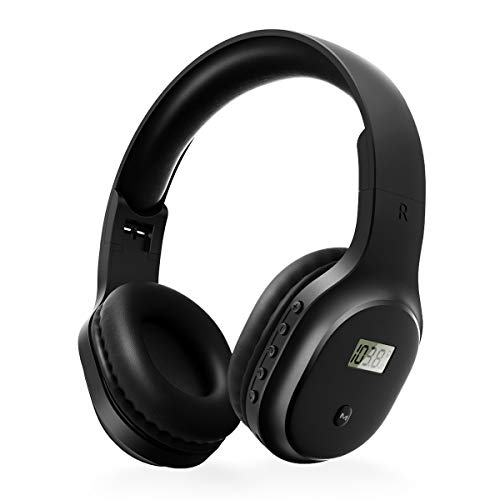
YUFFUN Rechargeable and Portable Personal FM Radio Headphones with Best Reception, Wireless Headset...
- 𝗙𝗠 𝗗𝗜𝗚𝗜𝗧𝗔𝗟 𝗥𝗔𝗗𝗜𝗢, NO AM. A headset with FM radio built in. The high reception sensitivity, channel memory function for quick...
- Lithium batteries Rechargeable lithium batteries (650mAh), which runs up to 32 hours. It will be full charged in about two hours.
- 𝗠𝗲𝗺𝗼𝗿𝘆 𝗬𝗼𝘂𝗿 𝗙𝗮𝘃𝗼𝗿𝗶𝘁𝗲 𝗦𝘁𝗮𝘁𝗶𝗼𝗻. Don't need to spend too many steps to find your favorite radio...

You may be interested
If you spend your weekends outdoors, this pair of FM digital headphones might be exactly what you’re after. Reception sensitivity is strong across the entire 50-108 MHz frequency range, and the over-ear cups do double duty as passive sound isolation while delivering surprisingly punchy bass for something built around a radio tuner.
At just 160g, they disappear on your head – running, gardening, whatever – without the neck fatigue heavier headsets cause. The 650mAh rechargeable battery is rated for 24 hours, which held up in my experience, and the double-deck headband with memory foam earmuffs keeps things comfortable well past the point where cheaper headphones start pinching. There’s also a 3.5mm AUX input if you’d rather plug into a laptop, plus touch controls and channel memory for jumping straight to favorite stations.
Who should buy this: outdoor types, gardeners, dog-walkers, and anyone who wants solid FM reception and a battery that won’t quit halfway through a project.
Pros:
- 24-hour battery life, and it only takes about 2 hours to top back up
- Both FM radio and an AUX input, so you’re not locked into broadcast-only listening
- Light at 160g, with memory foam earmuffs that stay comfortable for hours
Cons:
- No AM band at all
- Volume steps jump more than I’d like – fine control is tricky
- Some owners report the left ear cup wearing out faster than the right
DeWalt DPG15 Industrial Safety Electronic Hearing Muff

DEWALT DPG15 Hearing Protection Earmuffs with AM/FM Radio, LCD Display, 8 Presets, 3.5mm Aux, NRR...
- ADVANCED DIGITAL TUNING: Enjoy your favorite AM/FM stations with precision digital tuning and a clear LCD display for easy station identification. Requires 2 AA batteries...
- CUSTOMIZABLE LISTENING EXPERIENCE: Store up to 8 radio station presets per band, ensuring your top stations are just a button press away.
- VERSATILE AUDIO COMPATIBILITY: Easily connect to any audio device with the 3.5mm auxiliary plug, ideal for seamless integration with your music library.
For anyone who needs real hearing protection without giving up entertainment, the DeWalt DPG15 earns its keep. It’s built around a digital AM/FM radio system with an LCD display, so you’re getting a legitimate safety tool that happens to also play the ballgame.
Eight preset stations per band means you’re not stuck re-tuning every shift, and a 3.5mm auxiliary jack lets you plug in a phone or MP3 player when radio isn’t cutting it. The lightweight shell and foam-filled ear cups make all-day wear tolerable, and the tough plastic housing shrugs off the abuse of an actual jobsite while still functioning as protective gear.
Who should buy this: workers on loud jobsites who want hearing protection that doesn’t feel like a sacrifice during long shifts.
Pros:
- Does two jobs at once – hearing protection and AM/FM entertainment
- Foam-filled ear cups make extended wear genuinely comfortable
- 8 presets per band plus an auxiliary input for outside audio
Cons:
- Needs batteries to power the electronics
- Bulkier than plain earmuffs with no radio built in
- Reception quality can shift depending on where you’re working
PROHEAR 033 Bluetooth Radio Headphones with Hearing Protection
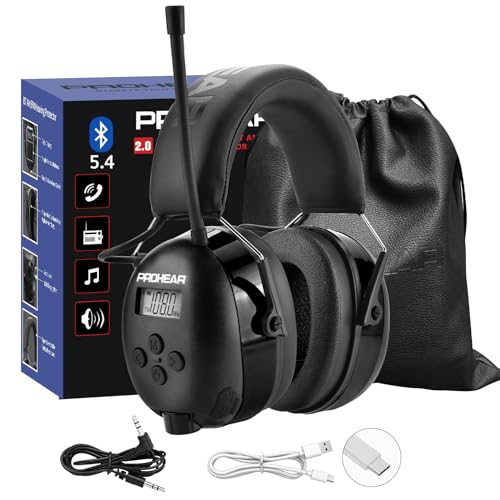
PROHEAR 033 AM FM Bluetooth 5.4 Radio Headphones - USB C Rechargeable 1500mAh Battery - Radio...
- [Upgraded USB-C Charging Mode] Compared with the old EM033, this Version 2 Radio Headphones have been upgraded in charging method: from the old 3.5mm charging port to...
- [HIFI Sound & BLUETOOTH 5.4 Compatible] PROHEAR 033 Bluetooth hearing protection with High-Fidelity Speakers for premium sound quality. Enjoy HIFI Sound Audio, immerse...
- [FM AM DIGITAL RADIO & STORED STATIONS] Elevate your work or leisure experience with our built-in Digital Amplitude/Frequency Modulation Radio Tuner. -Our radio ear muff...
The PROHEAR 033 is the pick if you’re in a genuinely loud environment day after day – its 31dB SNR noise reduction is among the best in this roundup. It carries ANSI S3.19 certification, meaning it can knock an 80dB environment down to a much safer 55dB.
ABS plastic construction keeps it durable, while ultra-soft ear cushions keep it from feeling like safety gear. Battery life is the real headline here: 48 hours over Bluetooth 5.4, or a jaw-dropping 125 hours if you’re running it through the AUX cable instead. The digital tuner stores 20 radio presets, USB-C charging feeds the 2000mAh battery, and the snap-in design makes swapping parts simple. Anti-sweat cushions are a nice touch if you’re wearing these through a physical shift.
Who should buy this: construction crews, factory workers, and anyone who needs serious hearing protection but still wants Bluetooth for calls and music.
Pros:
- 31dB SNR with ANSI certification – genuinely effective in loud environments
- Battery life that’s hard to beat: 48 hours Bluetooth, 125 hours AUX
- Covers hearing protection, Bluetooth, and AM/FM radio in one unit
Cons:
- Bulkier than a standard headphone thanks to the protective build
- Costs more than basic hearing protection without the extras
- Only 10 presets each for AM and FM, fewer than some rivals
3M WorkTunes AM/FM Hearing Protector with Audio Technology

ZOHAN 019 Noise Cancelling Headphones for Adult - NRR 28dB Hearing Protection Ear Muffs for Working...
- Superior Noise Reduction: Our earmuffs are designed with advanced noise-canceling technology, effectively blocking out harmful noise levels up to 28 decibels. Whether...
- Comfortable Fit: We prioritize comfort, and our earmuffs are crafted with soft, padded material that contours to the shape of your ears. They're lightweight and easy to...
- Fit for Most Head Sizes: With our adjustable headband design, you can easily customize the fit of our earmuffs to suit your specific head size. Whether you have a small...
3M has been in the hearing-protection business long enough to know what they’re doing, and the WorkTunes AM/FM model shows it. You get 24 dB NRR protection alongside AM/FM radio and an auxiliary jack for streaming from your phone.
Controls are glove-friendly, which matters more than you’d think when you’re wearing work gloves in the cold, and Audio Assist talks you through setup so you’re not fumbling with a manual. You can program up to 50 stations, which is more than most people will ever need. Plush ear cushions and a padded headband make these comfortable, and at just 1.06 pounds your neck won’t complain by the end of the day. With a 4.4-star rating across more than 13,000 buyers, reception quality and battery life have clearly held up under real-world use.
Who should buy this: landscapers, DIYers, and hobbyists who want hearing protection they can also listen to music or radio through while working.
Pros:
- 24 dB NRR protection without sacrificing entertainment options
- Plush cushions and a light build make long wear comfortable
- AM/FM radio, phone connectivity, and 50-station memory in one headset
Cons:
- A handful of users have reported the volume knob acting up
- Can crowd safety glasses depending on your face shape
- Runs on 2 AA batteries that need regular replacement
ZOHAN EM042 AM/FM Radio Headphone with Digital Display & Noise Reduction
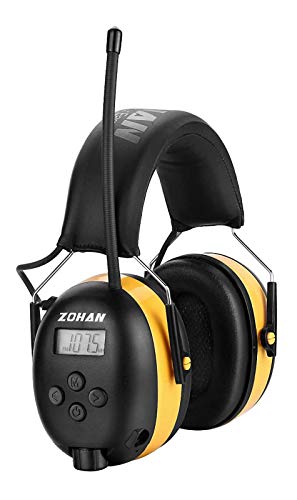
ZOHAN AM/FM Radio Headphone with Digital Display,30dB SNR,Ear Protection Noise Reduction Earmuffs...
- Unrivaled Performance: Chip is the “brain” of an electronic product. The ZOHAN EM042 AM/FM radio hearing protector features a brand new internal chip which offers the...
- Effective Noise Reduction & OSHA Compliant:Certified with a 25dB NRR, these digital radio earmuffs provide dependable hearing protection and comply with OSHA safety...
- Distinguished Comfort: We redefine the headband of muffs, and it’s wider, thicker, softer, and much more comfortable. The muff’s ear cushion are snap-in design, and...
If you want hearing protection with entertainment built in and don’t need to spend a fortune, ZOHAN’s EM042 gets the basics right. It packs noise reduction technology, a digital display, and an AUX port for connecting an iPod, all running on AA batteries good for 4+ hours.
Owners use these for everything from mowing to chainsaw work to long flights. FM reception reportedly reaches 15 miles in central New Jersey testing, though AM clarity is hit or miss. The fit runs comfortable and snug, blocking outside noise effectively, and the controls make programming stations painless. One reviewer put these through 18 months of rough treatment and they’re still working, backed by responsive support through Pitt’s customer service.
Who should buy this: outdoor workers and hobbyists who want protection plus radio entertainment for mowing, logging, or running machinery.
Pros:
- Held up through 18+ months of rough, daily use
- Snug, comfortable fit with solid noise blocking
- AUX port for iPod plus FM reception up to 15 miles
Cons:
- AM reception is weak and often unclear
- Only rated for 4+ hours before batteries need swapping
- Volume may not be loud enough if your hearing is already compromised
What Actually Matters When Choosing Radio Headphones
Picking the right radio headphones comes down to a handful of factors that actually matter in daily use. Look for reception range of 100+ feet, battery life of at least 20-30 hours, and noise protection rated 24 dB NRR or better. Comfort features like padded headbands and adjustable cups matter too, and you’ll want clean, interference-free AM/FM tuning. If overall sound quality matters more to you than radio performance specifically, our roundup of the best all-around headphones is worth a look as well.
Reception Range and Quality
Reception is where cheap radio headphones fall apart – crackly static instead of a clean signal. When you’re comparing models, prioritize FM coverage across the full 88-108 MHz range, since that unlocks access to the most stations.
How well a pair pulls in weak signals matters as much as raw range. Under good conditions, FM reception can stretch up to 15 miles, though hills, buildings, and weather will all knock that down. Digital tuning tends to outperform old-school analog dials – no more inching the knob back and forth hoping to land on frequency. Presets help too; most decent models store around 10 stations per band, so you’re not re-scanning every time you put them on.
Battery Life Duration
Battery life makes or breaks the experience with radio headphones, and current models span anywhere from 24 hours to well over 100. Look for lithium batteries in the 650mAh-2000mAh range if you want models that actually last.
How you use them matters, too – Bluetooth and high volume both eat into runtime faster than plain FM listening. Planning long sessions? Pick a model with efficient power management and quick charging; anything that tops up in under 2 hours won’t leave you sitting around. Some models offer both wired and wireless modes, and it’s worth remembering Bluetooth draws more power than a wired AUX connection. Match the mode to how you actually plan to use them, and expect real-world battery life to vary a bit from the marketing numbers.
Noise Protection Level
Protecting your hearing is the whole point of a lot of these, honestly. Aim for a Noise Reduction Rating (NRR) or Signal-to-Noise Ratio (SNR) of at least 24 dB if you’re working around real noise.
Good radio headphones carry ANSI S3.19 certification, which confirms the attenuation claims aren’t just marketing. In an 80 dB environment, a 25 dB reduction brings you down to a much safer 55 dB. Ear cup design and cushion material both play into the final noise isolation rating, which typically lands somewhere between 20-31 dB SNR. If you’re regularly around sound above 85 dB, don’t cut corners here – long-term exposure adds up.
Comfort and Fit
Comfort isn’t a nice-to-have when you’re wearing these for hours at a stretch – it’s the difference between finishing a shift happily or ripping them off at lunch. Stick to models under 6 ounces if neck and head strain is a concern. Want something even more compact? Our guide to the best small headphones covers models built for a lower-profile fit.
Memory foam cushions that mold to your ear shape distribute pressure more evenly than firm foam or plastic pads, which matters over a full day. An adjustable headband is non-negotiable too – it keeps the fit snug without creating pressure points, no matter your head size. Padded ear cups and headbands add a bit of shock absorption if you’re moving around a lot.
For loud environments, look for models advertising noise isolation up to 31 dB. That level of isolation creates a genuinely immersive listening experience while keeping harmful ambient noise out.
AM/FM Band Options
AM and FM each have their strengths, and which one matters more depends on what you listen to. Consider carefully whether a single-band or dual-band model fits your habits.
Talk radio, news, and long-distance broadcasts – especially at night – favor AM band support (535-1705 kHz). For music and generally cleaner audio, FM band reception (88-108 MHz) wins every time. Honestly, dual-band models are the safer bet for most people, since you can switch depending on content and reception conditions. FM’s frequency modulation gives you better fidelity; AM’s amplitude modulation trades some of that for wider geographic reach, particularly once the sun goes down.
Auxiliary Input Capabilities
An auxiliary input turns a radio headset into something more flexible – suddenly you’re not limited to broadcast content. The standard 3.5mm jack connects straight to a phone or MP3 player, opening up your whole music library.
Battery life through AUX mode is often the real standout, stretching up to 125 hours on some models. Combined with noise isolation that cuts ambient sound by up to 31 decibels, the result is clearer playback than you’d expect. Sound quality through AUX generally matches or beats FM broadcast audio, and switching between radio and auxiliary sources is usually seamless – no adapters, no fuss, just standard cables.
Durability and Build Materials
Build quality determines whether your radio headphones survive a season of real use or fall apart after a few drops. Look for high-impact plastics or reinforced composites that can take a hit without cracking.
Pay attention to comfort materials too – memory foam and padded fabric should hold their shape after repeated compression, not go flat within weeks. Most solid models land between 5 and 10 ounces, a reasonable balance between sturdy and portable. Weather resistance matters as well; water-repellent coatings protect the electronics inside from sweat and light rain. Check the hinges and ear cup attachments specifically – that’s where cheaper models tend to fail first under regular stress.
Control Panel Accessibility
How easy the controls are to use day-to-day shapes your whole experience with these more than most buyers expect. Look for clearly labeled buttons and dials laid out intuitively enough that you can adjust settings without breaking focus on whatever you’re doing.
Glove-compatible controls matter if you’re working outdoors in the cold, and ergonomic placement on the headband or ear cup makes a real difference. Backlit displays with adjustable brightness help whether you’re outside in harsh sun or working somewhere dim. The best control panels also give tactile feedback – a distinct click or a slight vibration – so you know a setting actually changed without having to check.
Frequently Asked Questions
How Long Do Radio Headphone Batteries Typically Last Before Needing Replacement?
It really depends on your usage and the battery type. Alkaline batteries typically deliver 20-30 hours, rechargeable NiMH cells run 15-25 hours per charge, and high-end lithium-ion batteries can stretch to 40-60 hours. Volume level matters more than people expect – crank it up and you’ll drain the battery noticeably faster. With regular use, plan on replacing alkaline batteries roughly every 2-3 weeks.
Can Radio Headphones Receive Emergency Weather Broadcasts and Alerts?
Yes, quite a few models can. Headphones with NOAA Weather Radio (NWR) functionality tune into the 24/7 weather alert network across frequencies between 162.400 and 162.550 MHz. For the widest coverage, look for models supporting all seven NOAA frequencies with automatic alert reception, which can trigger an alert even if the volume’s turned down low.
Are Radio Headphones Water-Resistant for Outdoor Use in Light Rain?
Most offer basic water resistance rather than true waterproofing. Mid-range models commonly carry IPX4 or IPX5 ratings, enough for light splashes or drizzle but not a downpour. Check the IP rating on any product advertising weather resistance – the higher the second number, the better the protection. For dependable outdoor use, aim for at least IPX4 certification.
Do Radio Headphones Work in Areas With Weak Signal Reception?
It comes down to antenna quality and tuning technology. Headphones with built-in FM antennas or digital tuners generally out-perform basic analog units in weak-signal areas. Even the best models will struggle somewhere truly remote, but ones with strong signal processing and high sensitivity ratings (measured in dBm) will still pull in a clearer signal than average.
Can Multiple People Listen to the Same Radio Station Simultaneously?
Absolutely – several ways to do it, in fact. You can tune multiple headphones to the same frequency independently, split a single radio source across several headsets with a splitter, or use a wireless transmission system. Whichever method you choose, keep everything precisely synced to the same frequency for the best simultaneous listening experience.