As an Amazon Associate, we earn from qualifying purchases. Some links on this site are affiliate links at no extra cost to you. Our recommendations are based on thorough research and editorial judgment.

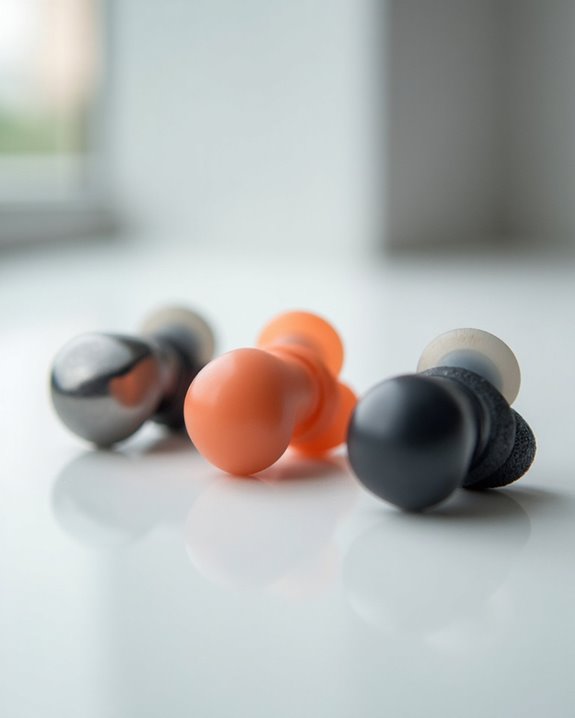
3 Best Hearing Protection Earbuds of 2026 – Audio quality, Hearing Protection

I’ve run gunshots, jackhammers, and front-row concerts past my ears while testing hearing protection earbuds, and three models keep earning a spot in my bag: GLORYFIRE (26dB reduction, 8-hour battery), Elgin Ruckus (25dB NRR, 12-hour battery with IP65 rating), and Decibullz (custom moldable design). GLORYFIRE is my pick for tactical shooting thanks to its dual indoor/outdoor modes, Elgin Ruckus is built for construction crews who need to talk to each other over noise, and Decibullz molds to your own ears for musicians who don’t want a generic fit. Picking the right pair of best hearing protection earbuds really comes down to three things: the noise reduction rating, how long the battery lasts, and what you’re actually going to be doing while wearing them.
Key Takeaways
- GLORYFIRE cuts noise by 26dB and switches between two modes so you’re not deaf to the world around you during a hunt or a day at the range.
- Elgin Ruckus carries a certified 25dB NRR, runs 12 hours on a charge, and shrugs off dust and sweat thanks to an IP65 rating.
- Solid hearing protection earbuds land somewhere between 20-30dB of noise reduction; anything at 25dB or above is what you want once ambient noise creeps past 85dB.
- Expect 8-12 hours of runtime per charge, and a pocket charging case can stretch that closer to a full 24 hours between plug-ins.
- Decibullz stands apart with thermoplastic molding for a fit that’s truly yours, though a handful of users notice some frequency distortion during performances.
GLORYFIRE Ear Protection for Shooting (26dB Noise Reduction)

ZOHAN 019 Noise Cancelling Headphones for Adult - NRR 28dB Hearing Protection Ear Muffs for Working...
- Superior Noise Reduction: Our earmuffs are designed with advanced noise-canceling technology, effectively blocking out harmful noise levels up to 28 decibels. Whether...
- Comfortable Fit: We prioritize comfort, and our earmuffs are crafted with soft, padded material that contours to the shape of your ears. They're lightweight and easy to...
- Fit for Most Head Sizes: With our adjustable headband design, you can easily customize the fit of our earmuffs to suit your specific head size. Whether you have a small...
You may be interested
If you shoot regularly and hate choosing between protecting your ears and staying aware of what’s happening around you, GLORYFIRE’s electronic earbuds solve that problem well. Rated at 26dB noise reduction, they’re loud enough to blunt a gunshot but still let normal conversation and range chatter through clearly.
What sold me on these is the dual indoor/outdoor mode switch – flip between settings depending on whether you’re at an indoor range or out in a field, and speech stays intelligible either way. Battery life sits at 8 hours per charge, and the included charging case tacks on another 24 hours when you’re away from an outlet. No fiddly setup either: hold the power button for two seconds and you’re live.
People who’ve switched from bulky earmuffs or foam plugs tend to say the same thing – fewer headaches, less sweating under the ears, and they forget they’re even wearing hearing protection after a while.
Who should buy these: Tactical shooters, range regulars, and hunters who want real gunshot suppression without losing track of what’s happening around them.
Pros:
- Switching between indoor and outdoor modes keeps speech clear while still delivering 26dB of protection when a shot goes off
- Rechargeable with 8 hours of use plus a charging case good for another 24 hours, so you’re never hunting for spare batteries
- Small, light, and available with several ear tip sizes for a fit that stays put whether you’re stalking game or standing at a bench
Cons:
- They power down automatically after 2 hours, so long sessions mean remembering to switch them back on
- Indoor mode nudges the volume down a touch, which takes a session or two to get used to
- Costs more upfront than a pack of foam plugs or basic passive earmuffs
Elgin Ruckus Wireless Bluetooth Earplug Headphones (25 dB NRR)
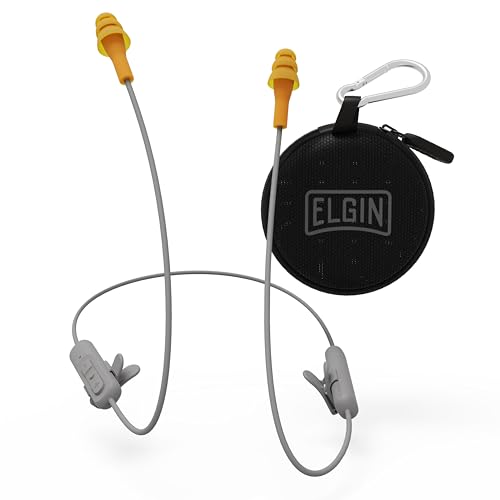
Elgin Ruckus Wireless Bluetooth Earplug Headphones, Noise Canceling Mic
- OSHA-COMPLIANT HEARING PROTECTION: Professional hearing protection earbuds with a certified 25 dB Noise Reduction Rating (NRR); Designed for construction sites...
- CLEAR COMMUNICATION ON LOUD JOB SITES: Wireless Bluetooth earplug headphones with Bluetooth 5.3 technology and a noise-canceling microphone; Maintain reliable...
- FULL-SHIFT BATTERY PERFORMANCE: Long-lasting work earbuds deliver 12+ hours of continuous playback; Ideal for extended workdays, travel, warehouse operations, and outdoor...
For anyone clocking in at a job site or a factory floor, the Elgin Ruckus earbuds do double duty – a certified 25 dB Noise Reduction Rating plus the ability to actually talk to coworkers without pulling anything out of your ears.
Bluetooth 5.3 keeps the connection solid out to about 50 feet, which matters when you’re moving around a busy site. Battery life runs a full 12 hours off a 2.5-hour charge – basically a whole shift covered. The IP65 rating means dust and sweat aren’t going to kill them, and the Kevlar-reinforced cables hold up to the kind of abuse a work environment throws at gear. With 8mm dynamic drivers and a 20Hz-20,000Hz frequency range, audio quality doesn’t take a back seat to protection, and the noise-canceling mic keeps calls and radio chatter understandable even with machinery running nearby.
Who should buy these: Construction crews, factory workers, airport ground staff, and anyone else spending their day around serious noise who still needs to communicate.
Pros:
- 25 dB Noise Reduction Rating is certified and meets OSHA standards for loud workplaces
- A 12-hour charge covers a full shift, and it only takes 2.5 hours to top back up
- IP65 rating and Kevlar-reinforced cables mean they can take a beating on the job
Cons:
- At 1 ounce, they run a bit heavier than typical earbuds during a long day
- Protection is passive isolation only, no active noise cancellation, so extremely loud environments may need extra help
- Finding the right silicone tip size takes some trial and error before the seal feels right
Decibullz Professional Moldable Earplugs for Musicians and DJs
Sale


Decibullz Professional Moldable Earplugs, Noise Cancelling Earplugs, Concert Ear Plugs, Perfect for...
- PROFESSIONAL ACOUSTIC PERFORMANCE: Decibullz Professional Filters combine Decibullz top rated DIY Thermo-fit Molded Earpieces with professional acoustic filter technology...
- ACCURATE PASSIVE REDUCTION: Decibullz Professional Filters use a physical passive membrane that is made of a breathable material, this leads to optimal linear attenuation...
- FULL CLARITY OF SOUND: Traditional noise-isolating earplugs and cheap, generic acoustic filters may offer some protection, but incoming sound is muted, muffled, and...
Musicians and DJs have different needs than a shooter or a construction worker, and Decibullz Professional Moldable Earplugs are built around that. The thermo-fit process lets you heat the included plastic and mold it directly to your own ear canal, so it stays put through a three-hour set instead of working loose. The acoustic filters attenuate sound evenly across the frequency range rather than just muffling everything, which matters if you’re monitoring your own mix on stage.
In the box you get two thermoplastic molds, two professional filters, three sizes of triple flange tips, and foam tips for when you want maximum blocking instead of clarity. They carry a 3.9-star rating, which tracks with what I’d expect – genuinely useful passive protection for live environments, though a few users mention some coloration at certain frequencies.
Who should buy these: Musicians, DJs, and regular concertgoers who want a custom fit and don’t want to sacrifice too much sound quality for protection.
Pros:
- Thermo-moldable design conforms to your exact ear shape, so they don’t work loose mid-performance
- Acoustic filters preserve tonal balance and dynamics instead of just flattening everything
- Comes with multiple tip styles (triple flange and foam) so you can dial in protection for the room you’re in
Cons:
- Some listeners notice distortion at specific frequencies, which isn’t ideal if you’re monitoring professionally
- The included lanyard has drawn complaints in reviews for its design
- A 3.9-star average is solid but not top-of-class next to some rivals
What to Look for in Hearing Protection Earbuds
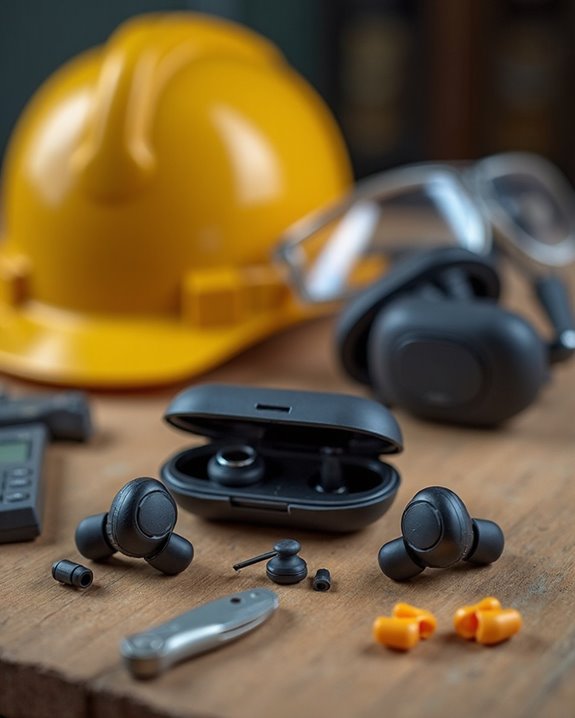
Blocking noise is only part of the equation. Before you buy, weigh the Noise Reduction Rating in decibels, how long the battery actually lasts through a real day of use, and whether the design stays comfortable for hours at a stretch. Then there’s the trickier tradeoff: how much sound quality you’re willing to give up for protection, and whether you need special modes for concerts, job sites, or the outdoors.
Noise Reduction Rating
NRR is the number that matters most, and it’s worth understanding what it actually means. It’s a decibel figure representing the average sound attenuation a device delivers across a range of frequencies, not just at one pitch. Most decent hearing protection earbuds fall somewhere between 20 and 30 dB.
If you’re regularly in noise above 85 dB, aim for at least 25 dB of protection. Don’t dismiss small differences either – one extra decibel, say 25 versus 26, can matter more than it sounds like in real-world conditions. Generally speaking, a higher NRR means more of the noise gets blocked.
These numbers come from controlled lab testing under recognized regulatory standards, so you can trust the rating reflects genuine, repeatable protection rather than marketing spin.
Battery Life
Battery life is where daily-use earbuds either earn their keep or become annoying fast. Most quality models run 8 to 12 hours per charge, enough for a work shift or a long day outdoors.
If you need all-day coverage, look for quick-charge support that gets you back to full in 2-3 hours rather than sitting on a charger overnight. Many models also flash a low-battery warning around the 8-hour mark, so you’re not caught off guard mid-task.
For multi-day use, a pocket charging case is worth paying for – it can push total runtime to roughly 24 hours between real charging sessions, which is a genuine advantage on job sites or festival weekends where an outlet isn’t always nearby.
Comfort and Fit
None of the noise-blocking specs matter if the seal against your ear canal isn’t right. Look for multiple tip sizes – small, medium, large in silicone or foam – since ear canals vary a lot from person to person.
Custom-moldable materials are worth the extra effort if you wear these for hours at a stretch; they shape to your ear and create a seal that’s both more protective and more comfortable than a generic tip. Weight matters too – lighter, more ergonomic designs cause less fatigue over a long shift. Silicone feels gentler against skin, while foam expands to fill gaps without creating pressure points.
If you’re moving around a lot, don’t ignore stability features like tethers or wing tips. They keep the earbuds from working loose exactly when you need protection the most.
Audio Quality Balance
Good hearing protection does more than just cut noise – it has to let the right sounds through. Look for a wide frequency response, ideally 20 Hz to 20,000 Hz, so nothing gets distorted or lost.
Sensitivity around 100 dB tends to amplify ambient sound naturally without over-boosting it into distortion. The better models use linear attenuation, meaning loud sounds get reduced evenly rather than clipped or muffled unevenly, which keeps speech understandable. Dual-mode designs that adjust based on your surroundings are especially useful if you move between quiet and loud environments during the day.
The best of these combine active noise cancellation with passive isolation, so you get clean audio without cranking the volume to dangerous levels just to hear clearly.
Environment-Specific Modes
The earbuds that really impress me are the ones that adapt on the fly. They switch automatically between settings – sharpening speech indoors, then dialing up to 26 dB of attenuation once you step into a genuinely loud outdoor environment.
Test these modes for how well they hold audio quality below the point of distortion across both industrial and recreational settings. The strongest options preserve directional sound too, so you still know where a noise came from, which matters more than people expect when situational awareness is part of the job.
Look for smart environmental detection paired with practical power-saving touches, like an automatic shutoff after 2 hours of inactivity. Small details like that add up to meaningfully longer battery life across a full day of use, whether you’re in a workshop or at a show.
Durability and Materials
How these hold up over months of use often comes down to materials most people never think to check. Flexible silicone components that resist moisture and hold their shape matter more than they get credit for, especially if you sweat through a shift regularly.
An IP65 rating or better tells you the earbuds can handle dust and water exposure, which is non-negotiable for industrial or outdoor use. Reinforced cables resist the kind of repeated bending that snaps cheaper cords, and impact-resistant housings protect the internals when you inevitably drop a pair.
The longest-lasting models use breathable, hypoallergenic materials that don’t break down with daily wear. Get the materials right and you’re not just extending the life of the earbuds – you’re keeping the protection level consistent for as long as you own them.
Frequently Asked Questions
Can Hearing Protection Earbuds Be Used During Water Sports?
Yes, but only if you pick models actually rated for it – look for waterproof designs with an IPX7 or IPX8 rating. Standard hearing protection earbuds aren’t built to handle submersion, so don’t assume yours will hold up. Go for a sealed design with a secure enough fit that it won’t pop loose mid-activity. A few specialized swim earbuds even offer adjustable attenuation, letting sound through when you need awareness while still cutting harmful noise. Keep in mind water resistance ratings fade with repeated exposure over time, so don’t expect day-one performance forever.
How Long Do Rechargeable Hearing Protection Earbuds Typically Last?
Expect 4-8 hours on a single charge from most models, with premium options stretching to 10-12 hours. Actual runtime depends on how loud you’re playing audio, how aggressive the noise cancellation is set, and how much Bluetooth is doing in the background. The charging case usually holds 2-4 extra full charges, so total usage between outlet visits can reach 20-40 hours. Battery health generally stays solid for 2-3 years before you’ll notice a real drop in capacity.
Are There Hearing Protection Earbuds Suitable for Children?
Yes – kid-specific models exist, and they’re built differently on purpose: lower maximum volume caps (typically 75-85dB), smaller designs that actually fit smaller ear canals, and simpler controls a child can manage. Brands worth checking include Puro Sound Labs, JBL JR, and Etymotic Research ETY-Kids. NRR on these tends to run 12-22dB, which is lower than adult models but appropriate for the use case. Always double-check the manufacturer’s age guidance – most target kids 3 and up.
Can I Wear Hearing Protection Earbuds With Hearing Aids?
Generally, no – standard hearing protection earbuds and hearing aids don’t mix well. The physical bulk can damage the hearing aid or create uncomfortable pressure in the ear canal. Instead, look at:
- Over-ear protection designed to fit over hearing aids
- Custom-molded products made specifically for hearing aid wearers
- Behind-the-ear (BTE) compatible earmuffs
Some newer hearing aids also include built-in noise reduction modes that make separate protection unnecessary. Talk to your audiologist before buying anything – they’ll know what actually works with your specific hearing aids.
Do Hearing Protection Earbuds Work for Autism Sensory Sensitivity?
They can, yes. By reducing the background noise that tends to trigger sensory overload, adjustable-attenuation earbuds let a wearer control exactly how much sound gets through rather than blocking everything indiscriminately. Important sounds still come through clearly while overwhelming ambient noise gets filtered down. Look for hypoallergenic materials and a customizable fit, since tactile sensitivity often shows up alongside auditory sensitivity. Plenty of users on the spectrum report noticeably lower anxiety and better focus once they start wearing them regularly.