As an Amazon Associate, we earn from qualifying purchases. Some links on this site are affiliate links at no extra cost to you. Our recommendations are based on thorough research and editorial judgment.

5 Best Ear Protection Headphones for Ultimate Noise Reduction in 2026

If you’ve ever walked off a shooting range or a construction shift with your ears ringing, you already know why picking the right ear protection headphones actually matters. I’ve put a stack of these through their paces over the years, and the differences show up fast once you’re actually wearing them. The Decibel Defense takes the top spot here for raw noise blocking with a 37dB NRR, while the ProCase sits at 28dB NRR and wins on comfort for long shifts. Need music or phone calls while you work? The PROHEAR 037 pairs 30dB SNR protection with Bluetooth. The Walkers Razor Slim (23dB NRR) goes the opposite direction, amplifying ambient sound so you don’t lose track of what’s happening around you. And if you want something small enough to forget you’re wearing it, the MIPEACE earbuds cut 29dB while staying pocket-sized. None of these is a universal answer – the right pick depends on how loud your environment actually gets and what else you need the headphones to do.
Key Takeaways
- The Decibel Defense leads this list on raw protection at 37dB NRR – a strong pick if you’re around jackhammers or heavy machinery all day.
- The ProCase reaches 28dB NRR, still lets muffled speech through, and folds down small enough to toss in a bag.
- The Walkers Razor Slim trades some protection (23dB NRR) for omnidirectional mics, which matters on a range where you still need to hear commands and conversation.
- The PROHEAR 037 backs its 30dB SNR rating with a genuinely impressive 120-hour battery, so charging anxiety isn’t really an issue.
- Across the board, padded headbands, adjustable sizing, and lighter builds (9 to 15 ounces) are what separate the pairs you can wear for eight hours from the ones you rip off after two.
ProCase Noise Reduction Ear Muffs, NRR 28dB Hearing Protection
Sale


ProCase Hearing Protection Ear Muffs SNR 33dB, Noise Cancelling Headphones
- Dual Standard Noise Attenuation: Tested by NVLAP accredited lab per EU EN352-1 standard, certified SNR 33dB (printed on product outer package). Industry recognized...
- Fully Adjustable Headband: Adjustable metal frame and padded headband fit most adult and teen head sizes. Distributes pressure evenly, no squeezing or pinching even after...
- Foldable & Portable Design: ProCase earmuffs fold into a compact size, easy to store in bags, toolboxes or pockets. Lightweight build makes them perfect for shooting...
You may be interested
If you spend real time in high-decibel environments, the ProCase Noise Reduction Ear Muffs are worth a serious look – industrial-grade protection at NRR 28dB and SNR 34dB, backed by ANSI S3.19 certification. The shell is durable ABS with thick foam lining doing the actual sound-blocking work.
What stands out here is the flexible ergonomic headband paired with 360-degree rotatable ear cups and a metal rack adjustment – it genuinely fits both kids and adults without feeling like a compromise. The padded design keeps pressure off your head during long wear while still holding a snug seal. At just 9 ounces, these compact, foldable muffs earn their keep at shooting ranges, construction sites, and while mowing the lawn, and I’ve seen parents use them to help kids with sensory sensitivities get through loud events.
Who it’s for: Anyone who needs dependable hearing protection at shooting ranges, job sites, or noisy events – and that includes families managing sensory sensitivities, kids with autism among them.
Pros:
- NRR 28dB and SNR 34dB ratings block harmful noise levels while still letting muffled speech through
- Soft padded headband, breathable ear cups, and enough internal room to fit over hearing aids comfortably
- 360-degree rotating cups, adjustable metal rack, and a folding design that actually fits in a bag – not just marketing copy
Cons:
- Expect a tight fit out of the box; give them a day or two to loosen up
- A handful of users mention headaches after wearing them for extended stretches
- Solid at reducing noise, but don’t expect total silence – speech and certain frequencies still get through
Decibel Defense Professional Safety Ear Muffs (37dB NRR)
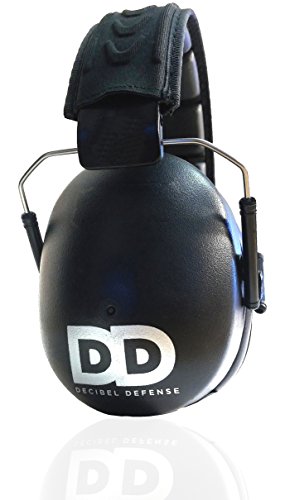
DECIBEL DEFENSE Professional Safety Ear Muffs 37dB NRR - The HIGHEST Rated & MOST COMFORTABLE Ear...
- INDUSTRY-LEADING 37 dB NRR – Block out dangerous noise and protect your hearing in the loudest environments. Industry-leading 37 dB NRR delivers powerful hearing...
- TWO SIZES – Get a secure fit that actually works. Available in Regular and XL. Regular fits most adults and teens ages 10+. XL adds extra extension for larger heads...
- ALL DAY COMFORT, SNUG BY DESIGN – Wear them for hours without interruption. Padded headband and soft dBTech foam provide lasting comfort during extended use...
Want the highest protection number on this list? That’s the Decibel Defense Professional Safety Ear Muffs, rated 37dB NRR (34dB OSHA-adjusted). In practice, that means they outblock most competitors when you’re standing next to a jackhammer, a rifle, or heavy machinery.
The padded headband is comfortable enough to wear over glasses and stretches to fit XL head sizes without pinching. They fold flat for storage in a range bag or toolbox. At 11.2 ounces and backed by what the company calls a “Double-D Guarantee,” these American-made muffs show up everywhere from shooting lanes to noisy classrooms, and some parents use them for kids on the autism spectrum who need a break from sensory overload.
Who it’s for: Anyone facing genuinely loud environments – shooting ranges, construction, industrial floors – plus people managing sensory sensitivities, including those on the autism spectrum.
Pros:
- 37dB NRR (34dB OSHA-adjusted) puts this ahead of most competing muffs on raw protection
- Padded headband and an XL sizing option make long wear comfortable, even over glasses
- Folds flat, works for both adults and kids age 4 and up, and stores easily
Cons:
- Fit is snug at first and needs a short break-in period
- At 11.2 ounces, these run a bit heavier than some competitors
- You’re paying a premium for that NRR rating, so it costs more than basic ear protection
Walkers Razor Slim Electronic Hearing Protection Earmuffs
Sale


Walker's Razor Slim Electronic Muff, Black
- PROTECT YOUR HEARING - Walker's Razor Ear Muffs have an ultra low-profile design featuring extra slim ear cups, for a secure fit; these ear muffs protect against...
- SOUND AMPLIFICATION - Walker's Razor Ear Muffs amplify safe sounds using two hi-gain microphones to provide clear omnidirectional hearing; The low-end frequencies are...
- RUGGED DESIGN - These muffs feature a rugged design with a rubberized coating, helping to prevent damage to the interior electronics; the housing is made from a...

Shooters who want protection without going deaf to range commands should look at the Walkers Razor Slim. The ultra-low profile design delivers NRR 23dB protection, but the trick is the omnidirectional microphones that amplify safe ambient sound with surprisingly clear low-frequency detail.
Build quality shows in the details – rubberized coating, a sound-dampening composite housing, and cushioned ear cups that don’t dig in over a long session. A recessed volume dial and an external battery door (two AAAs, included) keep things simple. There’s even a 3.5mm jack if you want to plug in music.
With 4.8/5 stars across more than 47,000 reviews, this is a lightweight pair (15.2 ounces) that manages the balancing act between blocking noise and letting you actually communicate.
Who it’s for: Shooters, hunters, and range regulars who need protection that doesn’t cut them off from range commands or conversation.
Pros:
- Smart tradeoff between NRR 23dB protection and sound amplification for situational awareness
- Low-profile, cushioned design holds up during long sessions at the range
- Rubberized build quality backed by 47,000+ positive reviews
Cons:
- 15.2 ounces starts to feel noticeable during marathon range days versus lighter options
- NRR 23dB tops out lower than some alternatives – may not cut it in extremely loud settings
- Amplification features need battery power (2 AAAs) to work at all
PROHEAR 037 Bluetooth Hearing Protection Headphones with Noise Reduction
Sale

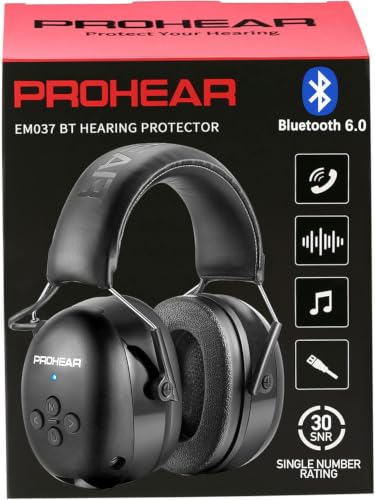
PROHEAR 037 Bluetooth 6.0 Hearing Protection Headphones with Rechargeable 1100mAh Battery, 30dB SNR...
- EXTREMELY SMOOTH BLUETOOTH 6.0 TECHNOLOGY: The connection to the phone is smoother, faster and more stable. Bluetooth has a wider range, better sound quality and smarter...
- BOTH ENTERTAINMENT AND HEARRING PROTECTION: Not only does it have a very high noise reduction level: SNR 30dB protects your hearing against loud noise, but it also gives...
- WORK SAFELY AND COMFORTABLE: IDEAL FOR building, lawn mowing, woodworking, landscaping, and protecting your hearing in a noisy environment. Comfortable headband and soft...
Workers who want protection and entertainment in one package tend to land on the PROHEAR 037. It delivers a solid 30dB SNR noise reduction rating while doubling as a set of Bluetooth headphones.
Bluetooth 5.3 gives you an 80-foot wireless range, and the rechargeable 1500mAh battery is rated for 120 hours of playtime – long enough that most people won’t think about charging it during a normal work week. The headband is padded, the ear pads are soft and breathable, and I found them comfortable enough for full shifts of construction, woodworking, or landscaping.
Controls are built into the ear cup – volume, track skip, calls – so you’re not fumbling to remove protection just to answer the phone. It ships with a 3.5mm connector, a charging cable, and a protective leather bag.
Who it’s for: Industrial workers, contractors, landscapers, and woodworkers who want hearing protection that doubles as their music setup.
Pros:
- 30dB SNR rating holds its own against dedicated hearing protection
- 120-hour battery life with fast charging means very little downtime
- Soft pads and an adjustable headband make all-day wear realistic, not just marketed
Cons:
- ABS plastic construction won’t feel as rugged as metal-built alternatives on rough job sites
- Once the battery dies, you lose Bluetooth (though the 3.5mm cable is a decent backup)
- Bulkier than muffs built purely for protection with no entertainment features
MIPEACE Noise Isolating Work Earbuds for Industrial Safety
Sale

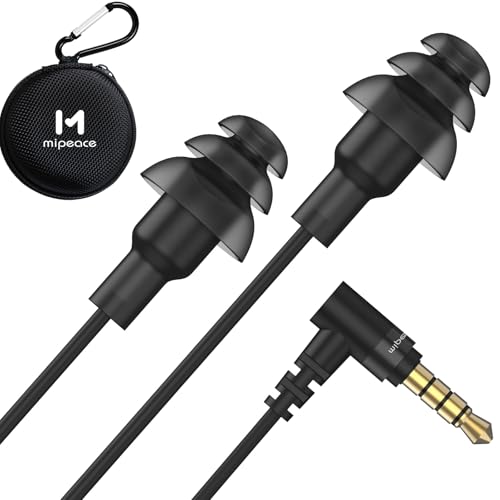
MIPEACE Work Earbuds Headphones, Ear Plug Headphones for Work-Noise isolating Earbuds Earphones for...
- Designed for Comfort: Tri-flange, ergonomic in-ear tips mold to your ear for a secure, comfortable fit. They block out harmful noise, making them ideal for long-term use...
- Great Noise Protection: With a 29 dB noise reduction rating, these earplugs protect your ears from harmful noise while allowing you to enjoy music. The earplug tips block...
- Sweat-Resistant Lightweight: Made from soft, sweat-resistant silicone, these earbuds stay reliable in hot conditions. At just 10 grams , Mipeace earphones are...
Not everyone wants full ear muffs, and that’s where the MIPEACE earbuds come in. They manage 29dB of noise reduction while keeping audio clear through tuned speakers – protection and functionality in a much smaller package.
The tri-flange ergonomic tips create a seal that blocks ambient noise without the fatigue you’d expect from all-day wear. At 10 grams, you genuinely forget they’re in by midshift. The bulletproof, tear-resistant cable and reinforced audio jack are built for rough treatment, which makes sense for construction sites and manufacturing floors where gear gets abused.
They plug into any standard 3.5mm jack and carry a 4.4/5 rating from more than 3,300 buyers who back up the noise-blocking claims.
Who it’s for: Workers on industrial, construction, or manufacturing floors who want hearing protection without giving up audio altogether.
Pros:
- 29dB noise reduction holds up well against full-size alternatives
- 10 grams and a tri-flange fit mean you barely notice them during a full shift
- Bulletproof cable and reinforced jack are built to survive rough job sites
Cons:
- A few users still report mild discomfort despite the ergonomic tips
- 3.5mm-only means you may need an adapter for newer phones
- Sound quality is functional, not audiophile-grade – don’t expect premium audio here
What to Look For in Ear Protection Headphones
Picking the right ear protection headphones comes down to a handful of factors that decide whether they actually work for your situation. Start with the Noise Reduction Rating (NRR) in decibels, then think about comfort for long stretches of wear, and whether active or passive noise cancellation fits your needs better. Your environment matters too – a construction site, a factory floor, and a concert venue all call for different tradeoffs – and so does how portable you need the headphones to be.
Noise Reduction Rating
The Noise Reduction Rating is the single most useful number when comparing ear protection headphones – it’s a standardized measurement of how much sound they’ll actually block. NRR values on this list run from 23dB to 37dB, and higher numbers mean stronger attenuation.
Match the NRR to where you’ll actually use these. If you’re regularly around noise above 85dB, don’t go below 25dB NRR – that’s the point where hearing damage becomes a real risk over time. One thing worth knowing: real-world performance almost always falls short of the printed rating, since fit and environment both chip away at the lab number. Manufacturers test under controlled, ANSI-certified conditions, and OSHA even publishes adjustment formulas to estimate your actual protection – so treat the number on the box as a ceiling, not a guarantee.
Comfort During Extended Wear
A handful of comfort factors decide whether a pair of ear protection headphones survives your whole shift or ends up crammed in a bag after an hour. Pressure distribution matters most – look for padded headbands and ear cups that spread weight evenly instead of digging into one spot.
Weight matters too. Anything under roughly 300 grams tends to hold up better over a full day. Breathable ear pad materials also help – nobody wants sweaty, irritated ears by lunchtime.
Adjustability is non-negotiable; a headband that only fits one head shape well isn’t going to work for everyone on a crew. And finally, prioritize soft, cushioned seals that mold to your head without breaking the acoustic seal that’s doing the actual protecting.
Active vs. Passive
Understanding active versus passive noise reduction will change how you shop for ear protection headphones.
Active systems use microphones and processors to detect ambient noise and generate an opposing sound wave, cutting low-frequency noise by up to 30dB. That makes them great for constant drones like airplane engines – but they need battery power to function at all.
Passive protection relies on physical barriers – dense foam, thick cup shells – to block sound with zero electronics involved. Passive designs land in a similar 20-30dB range overall, but they tend to win on high frequencies, and they’re always working, need no power, and are usually simpler and more durable. Your call here really comes down to what frequencies dominate your environment and whether you want to deal with batteries.
Intended Usage Environment
Matching ear protection headphones to your actual environment matters more than chasing the highest number on the spec sheet. If you’re regularly exposed to noise above 85 decibels, prioritize a higher NRR rating – full stop.
For unpredictable noise spikes – machinery kicking on, explosions on a range – look for headphones that respond instantly rather than gradually. If communication matters, models with selective sound amplification or voice passthrough let conversation through while still blocking the harmful stuff.
Working outdoors or moving around a lot? Choose weather-resistant designs with a fit that stays put during activity. And for sensory-sensitive use – studying, or for people on the autism spectrum – go with consistent, even noise isolation rather than variable reduction that can feel jarring.
Size and Portability
How big and how portable your ear protection headphones are affects whether you’ll actually use them day to day. Weight is the first thing to check – the sweet spot on this list runs from 9 to 15 ounces, light enough to avoid neck fatigue without sacrificing protection.
Foldable designs shrink down for storage in a tool bag, backpack, or even a jacket pocket. Look for adjustable headbands and properly sized ear cups that balance comfort with a compact footprint. The best options fold and unfold quickly, so switching between storage and use doesn’t become its own chore.
If you bounce between job sites or travel a lot, compact dimensions that don’t compromise performance should be near the top of your checklist.
Frequently Asked Questions
Can Children Use Noise Reduction Headphones Safely?
Yes, kids can safely wear noise reduction headphones as long as you take a few precautions. Volume should stay capped at 85dB max – that’s the pediatric safety standard. Look for models built specifically for children: proper sizing, lighter weight (under 185g), and adjustable headbands. Don’t let extended wear become a habit; cap daily use at 1-2 hours and keep an eye on younger kids so misuse doesn’t lead to hearing damage.
How Long Do the Batteries Last in Electronic Hearing Protection?
Basic electronic earmuffs running on AAA batteries typically last 10-20 hours. Premium models with rechargeable lithium-ion packs stretch that to 20-40 hours of continuous use. A few things affect runtime:
- Feature usage (Bluetooth drains the battery faster)
- Volume level settings
- Battery quality and capacity
- Ambient temperature
Many newer models add auto-shutoff to save power when they’re not in use. If you’re working long shifts, look for replaceable batteries or USB-C fast charging as a backup plan.
Are These Headphones Comfortable to Wear With Glasses?
Most modern hearing protection headphones are designed with glasses in mind, though comfort still varies by cushion thickness and clamping force. Look for notched ear cushions or memory foam padding that carve out space for glasses frames. The 3M WorkTunes and Walker’s Razor lines both include dedicated eyewear relief zones that cut down on pressure points. Many manufacturers now list “glasses-friendly” specs directly in their product documentation.
Can I Still Hear Important Alerts While Wearing Noise Cancellation Headphones?
Yes – most premium models include a “transparency” or “ambient” mode that lets environmental sound through on demand. Plenty also feature smart detection that automatically pauses noise cancellation for alarms, sirens, or announcements. Some of the more advanced options use AI to sort which sounds get through, blocking constant background noise while still letting distinct alert tones reach you.
How Do I Properly Clean and Maintain Ear Protection Headphones?
Cleaning isn’t just about hygiene – it actually affects noise reduction performance. Wipe ear cushions down weekly with alcohol-free wipes to prevent buildup that creates tiny acoustic gaps. For deeper maintenance, remove the cushions quarterly and clean them with a mild soap solution. Store your headphones in their case between uses, and replace the cushions annually – worn padding can cut protection by as much as 25%, according to industry testing.