As an Amazon Associate, we earn from qualifying purchases. Some links on this site are affiliate links at no extra cost to you. Our recommendations are based on thorough research and editorial judgment.

The 3 Best Audiophile Headphones of 2026, According to Sound Engineers

Chasing the best audiophile headphones in 2026 usually means picking your battles: clarity versus comfort, wireless convenience versus raw fidelity, budget versus bragging rights. I’ve spent time with dozens of pairs, and three keep earning their spot on my desk. The Sennheiser HD 560S is the modern neutral workhorse—clean, honest, and easy to drive for critical listening, with a 12-39,000 Hz range and just 0.1% distortion. The beyerdynamic AVENTHO 300 takes the opposite approach, layering STELLAR.45 drivers with Dolby Atmos head tracking for a modern, wireless-first listening experience. And the HIFIMAN Edition XS splits the difference, bringing planar-magnetic performance down to a price normal people can actually justify, courtesy of its Stealth Magnet Technology and NEO supernano Diaphragm. Below, I break down what each one really sounds and feels like, so you can match the spec sheet to your ears.
Key Takeaways
- The Sennheiser HD 560S is still the benchmark for clarity: 0.1% distortion and a reproduction of acoustic instruments and vocals that few headphones at any price can match.
- The beyerdynamic AVENTHO 300 pairs STELLAR.45 drivers with Dolby Atmos head tracking, giving it a spatial, layered sound with genuinely deep bass separation.
- The HIFIMAN Edition XS leans on Stealth Magnet Technology and a NEO supernano Diaphragm to deliver precise imaging across the full frequency range.
- Both the Sennheiser and HIFIMAN models go open-back, trading noise isolation for a wider, more natural soundstage and lower distortion.
- None of the three feel like a chore to wear—each stays under 320 grams, which matters more than you’d think after a two-hour listening session.
Sennheiser HD 560S – The Reference Open-Back Audiophile Headphone
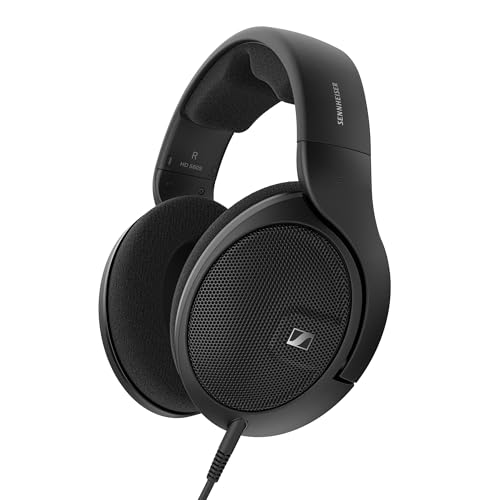
Sennheiser HD 560S Open-Back Over-Ear Wired Headphones – Neutral, Natural Sound for Music, Gaming...
- Wide, Natural Soundstage: Open-back design delivers lifelike depth and directional detail. Ideal for music lovers and gamers seeking a more immersive alternative, and...
- Neutral, Accurate Sound: Precision-tuned transducers reveal subtle details across the entire frequency range. Excellent for audiophile listening and refining audio during...
- Lightweight Comfort: Velour ear pads and ventilated earcups reduce heat buildup and pressure, supporting long listening sessions for music, gaming, schoolwork, or content...
You may be interested


If you’re a mastering engineer, or just someone who’s tired of headphones that hype the bass and blur everything else, the Sennheiser HD 560S is worth your attention. This open-back headphone has been an industry standard since its debut, and it hasn’t been dethroned.
Lightweight aluminum voice coils and neodymium magnets give the HD 560S exceptional transient response across its 12-39,000 Hz frequency range. Distortion sits at a barely-there 0.1% THD, and the 300-ohm impedance combined with 97 dB sensitivity keeps dynamics accurate once you feed it decent amplification. The circumaural design, detachable Kevlar-reinforced cable, and optimized diaphragm eliminate standing waves, so acoustic instruments and vocals come through with a transparency that’s hard to describe until you’ve heard it.
Who should buy this: professional audio engineers, mastering specialists, and audiophiles who care more about accuracy than flash, and who don’t mind investing in the amp to match.
Pros:
- Exceptional clarity and transparency, with distortion measured at just 0.1% THD
- Professional-grade build with replaceable parts, including that Kevlar-reinforced cable
- Acoustic instruments and vocals sound remarkably natural, with spatial imaging that feels honest rather than exaggerated
Cons:
- 300-ohm impedance means you’ll need a dedicated headphone amp to hear it at its best
- The price tag isn’t for casual listeners
- Soundstage is narrower than some open-back rivals in this class
beyerdynamic AVENTHO 300 Wireless Over-Ear Headphones (Black)
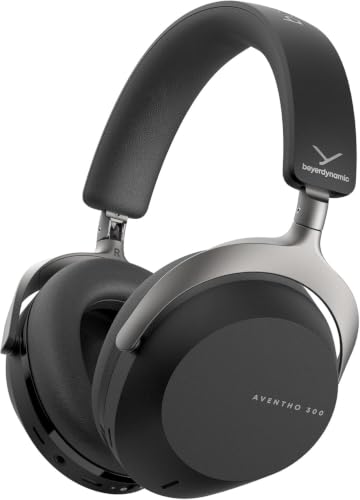
beyerdynamic AVENTHO 300 Wireless Bluetooth Headphones, Over Ear, Active Noise Cancelling, USB-C...
- Superior Comfort for Extended Wear: Engineered with soft memory foam ear pads and a padded headband, these over-ear headphones wireless ensure a secure, relaxed fit for...
- Effortless Device Switching: Stay seamlessly connected with multipoint Bluetooth, allowing you to easily switch between devices without interruption; perfect for...
- Unmatched Battery Longevity: Experience up to 50 hours of uninterrupted listening with these comfortable wireless noise cancelling headphones. Ideal for extended flights...
The beyerdynamic AVENTHO 300 is built for people who want spatial audio and don’t want to charge their headphones every night. Its STELLAR.45 drivers and Dolby Atmos head tracking create a genuinely immersive soundstage, and adaptive noise canceling lets you dial in exactly how much of the outside world you want to hear.
At 319 grams, these over-ears still manage an impressive 50-hour battery life with ANC running. Multipoint Bluetooth 5.4 and a USB-C wired option round out the connectivity. I did run into an occasional firmware hiccup and a power button that’s fussier than it should be, but none of that undercuts the sound—bass is deep, instrument separation is crisp, and the ergonomics and included case make long sessions genuinely comfortable.
Who should buy this: music lovers and professionals who want premium wireless sound with real spatial depth, long battery life, and comfort that lasts through a whole workday.
Pros:
- STELLAR.45 drivers and Dolby Atmos head tracking add up to genuinely outstanding sound quality
- 50-hour battery life with ANC switched on is hard to complain about
- Premium materials, comfortable ergonomic design, and a protective case included in the box
Cons:
- Firmware updates have been inconsistent, and the power button can be finicky
- Priced higher than most competitors in this category
- ANC performance occasionally glitches or dips
HIFIMAN Edition XS Planar Magnetic Headphones
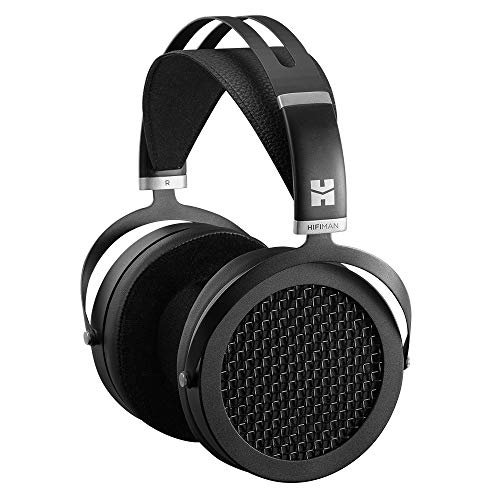
HIFIMAN SUNDARA Over-Ear Full-Size Planar Magnetic HiFi Stereo Wired Headphones for...
- Featuring Newly Developed Diaphragm that is 80% Thinner than the HE400 Series Resulting in a Wider Frequency Response, Faster and More Detailed
- With the weight spreading strap for outstanding comfort but with a more fashion conscious look with its sleek and sumptuous matte black finish.
- With its all metal headband the SUNDARA is built to take the rigours of urban street life. The SUNDARA is as tough as it is beautiful.
Want planar-magnetic performance without the planar-magnetic price? HIFIMAN’s Edition XS delivers exceptional value through its innovative Stealth Magnet Technology and NEO supernano Diaphragm—tech that used to live only in headphones costing three times as much.
The acoustically transparent design eliminates wave diffraction turbulence, and the result is remarkably accurate full-range audio. That NsD diaphragm is 75% thinner than conventional designs, which speeds up response time and sharpens imaging across a naturally wide soundstage. Comfort holds up too: the lightweight headband uses high-grade memory foam that doesn’t collapse after an hour. User-replaceable 3.5mm cables mean you can swap in whatever cable you like, or just replace one that’s worn out, without retiring the whole headphone.
Who should buy this: audiophiles who want high-end planar magnetic performance at a more accessible price, and who mostly listen at home or in a studio rather than on the go.
Pros:
- Stealth Magnet Technology and the NEO supernano Diaphragm deliver clarity and accuracy that punch above the price
- Wide, natural soundstage with detailed imaging and a fast response time
- Comfortable build, with a lightweight headband and quality memory foam padding
Cons:
- Its size makes it a poor travel companion
- Open-back design means sound leaks out and outside noise leaks in
- Needs real amplification to show what it can actually do
What to Look for When Choosing Audiophile Headphones
Once you’re ready to spend real money on audiophile headphones, a handful of technical factors will decide whether you end up happy or disappointed. Start with sound signature (warm, neutral, or bright), impedance (which dictates what amp you’ll need), and the fundamental fork between open-back designs, which open up the soundstage, and closed-back designs, which isolate you from the room. Beyond the sonics, look hard at build quality and ergonomics—weight distribution, clamping force, and pad material all decide whether you still want to wear these three hours in.
Sound Signature and Profile
Sound signature is the foundation everything else builds on. Frequency response, usually spanning 20 Hz to 20 kHz, tells you how faithfully a headphone reproduces the full spectrum, from sub-bass rumble to shimmering highs.
Check total harmonic distortion (under 0.1% is the target) and impedance, which typically runs between 16 and 600 ohms. Match that number to what your source can actually drive—higher-impedance headphones usually demand dedicated amplification to sound their best. Soundstage and imaging matter too: they determine whether you can pinpoint where each instrument sits in a mix, or whether everything blurs into a single wall of sound. Together, these specs shape the tonal personality that makes one headphone feel completely different from another on paper-similar specs.
Impedance and Power Requirements
Impedance quietly determines whether your headphones and your source are actually compatible. Before buying, check both impedance and sensitivity against whatever you plan to plug them into.
For phones and laptops, lower-impedance headphones (16-32 ohms) are the practical choice—they’ll play loud enough without extra gear. For a dedicated listening rig, high-impedance models (250-600 ohms) can sound noticeably better, but only once paired with a proper amplifier. Sensitivity ratings around 90-105 dB/mW tell you how efficiently a headphone turns power into volume. Skimp on amplification with a high-impedance pair and you’ll hear it: distortion creeps past 0.1% THD when the amp can’t supply enough voltage and current.
Open-Back vs. Closed-Back
Impedance aside, open-back versus closed-back is probably the decision that shapes your experience the most. Open-back designs deliver a wider soundstage and a more natural sense of space, since their vented construction reduces internal reflections and distortion. The tradeoff is sound leakage, sometimes 20-30 decibels worth—your officemate will hear your music.
If isolation matters more to you, or you’re listening somewhere public, closed-back is the better call. It’ll block roughly 15-30 decibels of ambient noise and keep your audio to yourself. Bass also tends to hit harder in a sealed chamber, though usually at the cost of slightly higher distortion than an open-back equivalent.
Build Quality and Durability
Build quality is where a lot of the price difference actually lives, since durability affects both how long a headphone lasts and what it’s worth if you resell it. Look closely at the frame materials—metal or high-grade reinforced plastic holds up far better to daily use and the occasional drop than cheap polymer.
Detachable cables are a small feature that saves you real money down the line, since a frayed cable no longer means a dead headphone. Weight matters too: premium models typically run 200 to 500 grams, and you’ll want to weigh durability against how that feels after an hour on your head. Don’t ignore earpads, either—memory foam with a leatherette cover holds its shape far longer than cheap foam. Sealed seams and sturdy hinges round out the checklist for anything meant to survive years of use.
Comfort and Weight Balance
Comfort is the factor people underrate until it’s too late. Anything under 300 grams tends to be noticeably kinder to your neck over a long session, and that difference compounds the longer you listen.
Good headband and ear cup design matters more than raw weight alone—look for adjustable components that spread pressure evenly rather than concentrating it in one spot. Clamping force between 2 and 3 Newtons tends to be the comfort sweet spot: secure enough to stay put, gentle enough not to ache. Earpad padding does a lot of the remaining work; soft, high-quality cushioning spreads pressure across your ears instead of digging in during those three-hour listening marathons.
Cable and Connection Options
Sound quality gets all the attention, but the cable and connection setup shapes how much you’ll actually enjoy using these headphones day to day. Prioritize detachable cables—they’re easy to replace and let you upgrade later without buying a whole new headphone. Oxygen-free copper cables minimize signal loss and keep resistance low, which preserves fidelity.
Versatile connectivity is worth paying attention to as well—both 3.5mm and 6.3mm jacks cover most gear you’ll own. If wireless matters to you, modern Bluetooth 5.4 supports multipoint connections, so you can bounce between your laptop and phone without re-pairing. A 3-meter cable gives you enough slack for most setups without turning into a tangled mess on your desk.
Driver Technology Differences
How a headphone’s driver works has a real, audible effect on what comes out of it. The high end mostly splits between dynamic and planar magnetic drivers.
Dynamic drivers use voice coils and magnets to move a diaphragm, and they can cover an impressive range—12 Hz to 39,000 Hz in some designs—typically at 300-ohm impedance. Planar magnetic drivers work differently, using ultra-thin diaphragms, up to 75% thinner than conventional ones, with conductors embedded directly in a magnetic field. The payoff shows up in the numbers: planar designs often reach distortion as low as 0.1% with faster transient response. Sensitivity varies by model, with some hitting 97 dB SPL. Neither technology is objectively better—your ears and your listening habits should decide which one you want.
Price-to-Performance Ratio
Price-to-performance is the metric that actually matters once you’ve narrowed down the specs you care about. In my experience, mid-range options often deliver a bigger jump in sound quality and build than their price would suggest—the law of diminishing returns kicks in hard past a certain point.
Compare frequency response, THD, and impedance against price across a few models before you commit. Look at sound pressure levels and driver type across price tiers to figure out where the real value sits. A simple side-by-side spec comparison will tell you more than any marketing copy.
Usually, the best performers aren’t the most expensive headphones on the shelf—they’re the ones that balance genuinely useful features against a price you don’t regret.
Frequently Asked Questions
How Long Do Audiophile Headphones Typically Last Before Needing Replacement?
With proper care, expect 7-10 years out of a high-end pair before you need to replace it outright. Lifespan comes down to build quality, how often you use them, and how well you maintain and store them. Drivers themselves usually hold up for 5-8 years, while wear parts like ear pads and cables need swapping every 1-2 years. Regular cleaning and keeping them away from extreme heat or cold go a long way toward stretching that lifespan.
Can Audiophile Headphones Damage Hearing if Used at High Volumes?
Yes—absolutely. Audiophile headphones are built for high-fidelity reproduction, not hearing protection, and they can easily reach sound pressure levels above 85 dB. A good rule of thumb is the “60/60 rule”: no more than 60% volume for no more than 60 minutes at a stretch. Better sound quality doesn’t make loud volume any safer for your ears over time.
Are Audiophile Headphones Worth the Investment for Casual Music Listeners?
Think of them like a sports car for your ears: impressive, but not something everyone needs. You’ll hear real improvements in detail, soundstage, and frequency response, but you’re also looking at $300-1000+ for that upgrade. Unless you’re critically evaluating high-resolution files or producing music yourself, a solid mid-range pair in the $100-200 range will probably cover what you actually need.
What’s the Difference Between Audiophile Headphones and Noise-Canceling Headphones?
Audiophile headphones and noise-canceling headphones are built to solve different problems. Audiophile models chase precise, detailed sound reproduction using high-fidelity drivers and premium components. Noise-canceling headphones lean on microphones and processing to actively cancel outside sound, sometimes at a small cost to audio purity, in exchange for isolation. A handful of high-end models try to do both, but most still excel at one or the other, not both equally.
Can Audiophile Headphones Be Used for Gaming and Movie Watching?
Absolutely—and honestly, they’re great for it. Their wide frequency response (often 5Hz-40kHz) and precise imaging make it easier to hear a footstep sneaking up behind you in a game or catch a quiet line of dialogue buried in a movie’s mix. You won’t get active noise cancellation from most of them, but the audio fidelity alone can make games and films feel noticeably more immersive.