As an Amazon Associate, we earn from qualifying purchases. Some links on this site are affiliate links at no extra cost to you. Our recommendations are based on thorough research and editorial judgment.

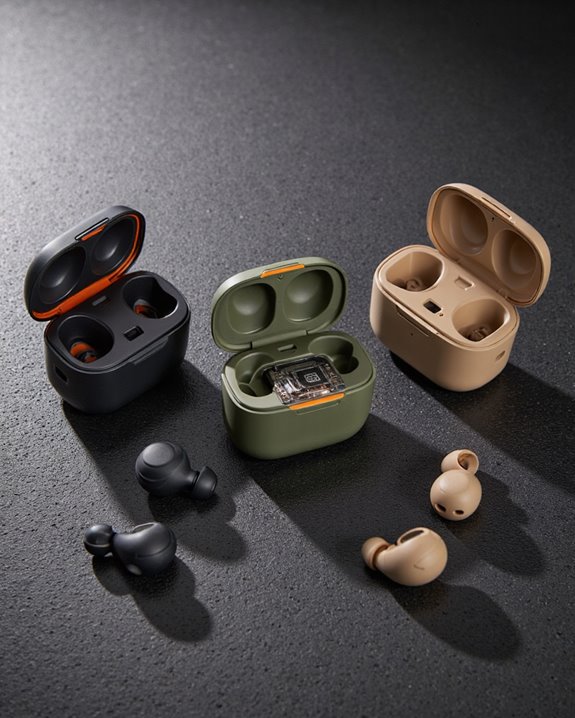
The 3 Best Shooting Earbuds for Hearing Protection in 2026

If you shoot regularly, you already know that regular music earbuds won’t cut it — gunfire is loud enough to cause permanent damage in a single afternoon at the range. I’ve spent a lot of range time testing hearing protection, and for 2026 three models keep rising to the top of my list for best earbuds for shooting: the Peltor Sport Tri-Flange, rated at 26 dB NRR with a washable, reusable build; the Xuhal Corded Ear Plugs, which push protection up to 29 dB thanks to a triple-cone silicone design; and the Walkers Silencer, an electronic option at 25 dB NRR that lets you hear range chatter through digital enhancement. All three clear the 22 dB floor I consider the minimum for shooting, but each does its job a little differently. Here’s what sets them apart.
Key Takeaways
- The Walkers Silencer earbuds hit 25 dB NRR while still letting you carry on a conversation, thanks to built-in digital sound enhancement.
- The Peltor Sport Tri-Flange delivers a dependable 26 dB NRR, is fully washable, and comes with tri-flange tips that fit a wider range of ear sizes.
- Xuhal’s Corded Ear Plugs top the group at 29 dB noise reduction, using a triple-cone design that’s also waterproof.
- Every pick here beats the 22 dB NRR baseline I’d insist on for shooting protection, and each has an ergonomic design to match.
- Fit options, secure retention under recoil, and the ability to survive long range days are what separate these from the bargain-bin alternatives.
Peltor Sport Tri-Flange Reusable Earplugs (3 Pair, NRR 26 dB)

Peltor Sport Tri-Flange Corded Reusable Earplugs, 3-Pairs per Pack
- 26 dB Noise Reduction Rating (NRR)
- Tri-flange design for snug, comfortable fit
- Washable and corded, reusable

You may be interested
The Peltor Sport Tri-Flange Reusable Earplugs are what I’d hand a shooter who wants solid protection without fuss. The NRR of 26 dB is genuinely strong for a passive earplug, and being USA-made hasn’t hurt their reputation — they knock down hazardous noise while staying comfortable enough to forget you’re wearing them.
What really sells me on the tri-flange design is how it adapts to different ear canal shapes, and it plays nicely with hats, muffs, and other gear you might be wearing at the same time. The polymer holds up over time, and the neon yellow cord is a small but smart touch — you’re far less likely to lose these in the grass or a range bag. Toss in a storage container and washable material, and upkeep is basically a non-issue. Reviewers agree: over 6,700 ratings average 4.5 stars, and at 0.32 ounces these are light enough to disappear in your pocket between strings.
Who they’re for: shooters and hunters who want reusable protection that balances noise reduction, comfort, and everyday durability without a big price tag.
Pros:
- 26 dB NRR gives you real protection for shooting, not just a token rating
- Tri-flange tips fit a range of ear canal sizes and don’t fight with hats or muffs
- Washable and reusable, with a storage case included — cheap to own over time
Cons:
- The cord gets in the way if you’re wearing certain jackets or gear straps
- Getting a proper seal takes a little practice at first
- Only 3 pairs per pack, which some heavy users will burn through fast
Xuhal Corded Ear Plugs (200 Pair Reusable Silicone)
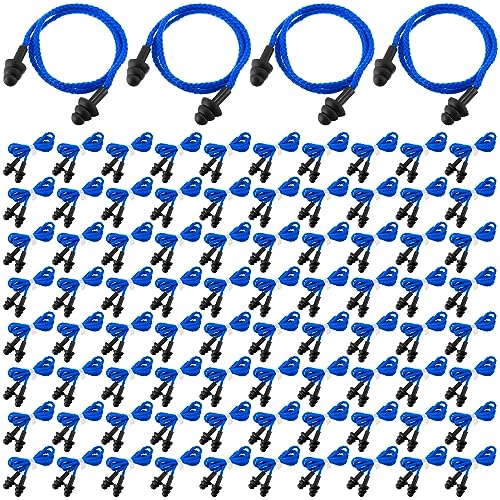
Xuhal 200 Pair Corded Ear Plugs Reusable Silicone, Blue, Black
- What You Will Get: in the package, there are 200 pairs of ear plugs with string; The cords are blue in color and the earplugs themselves are black; The earplugs are...
- Comfortable Silicone Material: the earplugs with cord are made of quality silicone material and have a long service life; The cord is made of tough polyester that can...
- Provide a Peaceful Environment: the industrial earplugs are designed to reduce noise transmission by 29 decibels; They are suitable for blocking unwanted noise and...
If you go through earplugs fast, Xuhal’s 200-pair package of corded silicone earplugs is hard to beat on price alone. The triple-cone shape, molded from solid silicone, holds a 29-decibel noise reduction rating — the highest of the three here — without turning uncomfortable after an hour on the line.
Little details add up: pairs come individually wrapped, the cords are a durable blue, and the black plugs hide dirt better than lighter colors would. The waterproof build means you can rinse them between sessions, which matters whether you’re shooting indoors or out in the elements. The 15-20 foot noise-blocking range isn’t the best on paper, but honestly, it’s plenty for nearly any range scenario you’ll run into.
Who they’re for: anyone shooting often enough that buying earplugs one pair at a time feels wasteful — this is the value play.
Pros:
- 200 reusable pairs in one box means you’re set for years, not weeks
- Triple-cone shape stays comfortable while delivering 29 dB of reduction
- Waterproof and washable, so they actually last through repeated use
Cons:
- 15-20 foot blocking range is middling next to some rivals
- Black plugs are easy to lose track of if one falls to the ground
- Cord length won’t suit everyone’s preference
Walkers Silencer Wireless Electronic Hearing Protection Earbuds
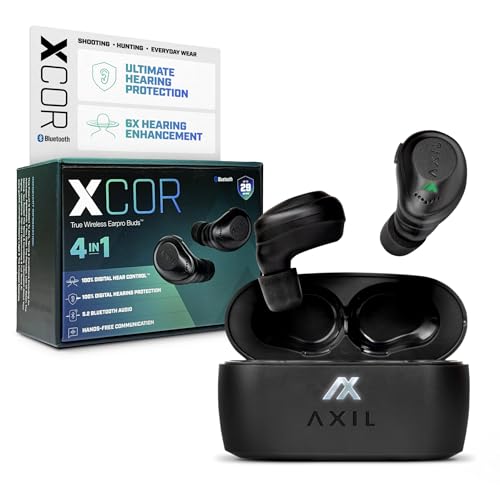
AXIL XCOR PRO Wireless Bluetooth Earbuds, HearPRO Enhancement
- AXIL XCOR PRO True Wireless Earbuds Bluetooth: Our Bluetooth earbuds are a great choice for those who want a complete all-in-one device for hearing protection...
- Hearing Enhancement & Protection: Our wireless Bluetooth earbuds offer digital hearing protection. The digital hearing protection on the XCOR PRO compresses loud noises...
- Hands Free Communication: This allows you to connect your phone to your earbuds wireless Bluetooth, so you never miss a call or text! These can even be paired with some...
For shooters who want portability and don’t want to give up situational awareness, Walker’s Silencer earbuds are the electronic option worth a look. They carry a 25dB NRR rating paired with digital enhancement, so you can still hear your buddy talk without pulling anything out of your ears — the electronics clamp down hard the instant a shot fires.
Fit stays reliable through both pistol and rifle sessions, though I’ll admit the foam tips feel stiffer than I’d like out of the box. The bigger catch is the zinc-air batteries — they bleed power even when the earbuds are switched off, and you’re looking at roughly 8 hours of range time before a swap. They’re not flawless; expect a bit of hiss and the occasional static pop at higher volumes. Still, if basic foam plugs feel too limiting, these are a real step up as long as you don’t mind the battery babysitting.
Who they’re for: shooters who want compact, electronic protection and are willing to trade a bit of audio polish and battery convenience for it.
Pros:
- 25dB NRR is solid protection while still allowing situational hearing
- Compact and light, and it stays put through pistol and rifle recoil alike
- Digital enhancement lets you hold a conversation without removing them
Cons:
- Batteries drain even when powered off and need frequent replacing
- Some hiss and static creep in at higher volumes
- Replacement batteries are pricier and harder to find than you’d hope
What to Look for in the Best Earbuds for Shooting
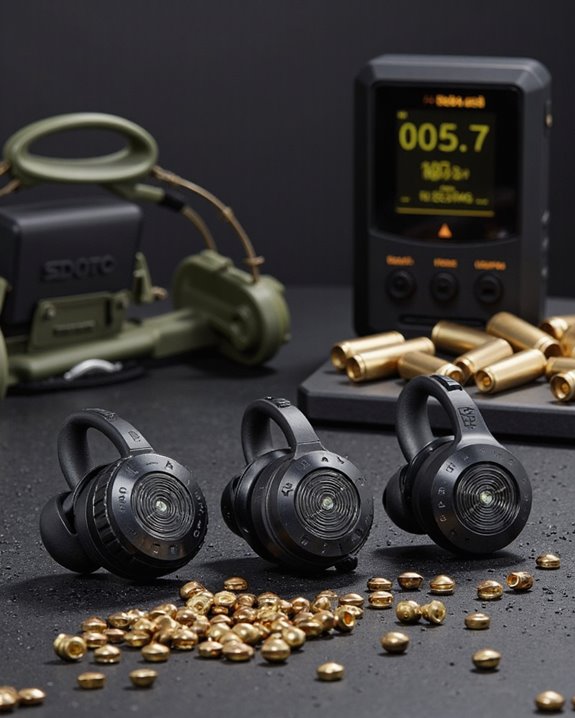
Picking the right shooting earbuds isn’t just about grabbing whatever’s cheapest at the counter — a few specs actually matter for safety and comfort. Noise Reduction Rating (NRR) is the big one; I wouldn’t go below 22dB. Beyond that, look at ergonomic fit and moisture-wicking materials for long sessions, battery life if you’re going electronic (aim for at least 8-10 hours), an IP rating of IPX4 or better for sweat and rain, and a build that can take repeated impact without falling apart.
Noise Reduction Rating (NRR)
How well your shooting earbuds actually protect your hearing comes down largely to the Noise Reduction Rating. This number, measured in decibels, usually falls somewhere between 0 and 30+ dB — and yes, higher is better.
Manufacturers test NRR under EPA-regulated conditions, but real-world results run lower than the label suggests. A rough rule of thumb: subtract 7 dB from the advertised figure to estimate what you’ll actually get. So a pair rated at 27 dB is realistically giving you closer to 20 dB once you’re at the range. Fit, insertion technique, and even weather can shift that number further. Bottom line: aim high on NRR, because gunfire doesn’t leave much margin for error.
Comfort and Fit Design
Protection only works if the earbuds stay put and stay comfortable — otherwise you’ll be fidgeting with them mid-string, which defeats the purpose. Look for soft, flexible materials that won’t dig into your ear canal over a long session.
Multiple flange sizes or customizable tips matter more than people expect, since ear shapes vary a lot. A secure seal keeps the earbuds from shifting loose during recoil, and models with easy insertion mechanisms let you make quick adjustments without breaking the seal.
Retention features — a cord, a clip, anything that tethers the earbuds to you — are worth the extra dollar. Lose one in the dirt mid-drill and you’ll wish you’d paid for it.
Battery Life Requirements
For electronic models, battery management isn’t a minor detail — it’s part of the safety equation. If your earbuds die mid-session, you’re shooting unprotected.
Look for at least 8 hours of continuous runtime so a full range day doesn’t leave you exposed. Check how the earbuds behave in standby, too — some models, like the Walkers Silencer above, keep draining even when switched off. Frequent shooters especially should factor in how often they’ll be swapping batteries, not just how long a single charge lasts.
Read the manufacturer’s specs on replacement intervals before you buy. The best choice balances long runtime with low power draw, so protection doesn’t lapse right when you need it most.
Material and Durability
Battery life aside, the materials and build quality determine how long your earbuds actually last. Look for high-grade polymers or silicone that hold their shape after repeated use instead of going mushy or brittle.
Washable components matter here too — sweat and grime build up fast, and being able to rinse the earbuds keeps them from degrading prematurely. Good ones hold up under vibration and impact without cracking or losing their seal. Cheap materials might save you a few dollars now, but premium builds pay for themselves over years of regular range use.
Water and Sweat Resistance
Moisture is the quiet killer of hearing protection gear, so don’t overlook it. An IPX4 rating is the baseline I’d want — enough to handle sweat and a light drizzle at an outdoor range.
If you shoot in rough weather or humid climates, bump that up to IPX7, which can survive full submersion up to a meter for half an hour. Sealed ports and corrosion-resistant internals are what actually make that rating meaningful, not just a number on the box.
Match the resistance level to how and where you actually shoot. Frequent outdoor use or sweaty summer sessions are exactly when a higher IP rating pays off.
Frequently Asked Questions
Can I Use Regular Music Earbuds for Shooting Protection?
No — don’t do it. Regular music earbuds typically only cut noise by 20-25 decibels, while a gunshot blasts out 140-175 decibels. That gap is enormous. You need protection rated at least 30 NRR, built with impulse noise filtering and acoustic valves that clamp down on sudden spikes while still letting normal conversation through.
How Often Should I Replace My Shooting Ear Protection?
It depends on the type. Electronic earmuffs are generally good for 3-5 years of regular use, sooner if you notice weaker attenuation or visible damage. Foam earplugs are one-and-done — toss them after each use. Custom-molded plugs typically hold up for 3-4 years. Whatever you’re using, give it a quick once-over before each session for cracks or worn-out cushioning.
Are Shooting Earbuds Safe for Children to Use?
They can be, but don’t just hand a kid adult-sized gear and call it good. Shooting earbuds for children need a proper fit and an NRR of 25+ dB, and since kids’ ear canals are smaller and more sensitive, a youth-specific model (or a chat with an audiologist) is the safer route. Adult-sized earbuds often won’t seal right on smaller ears, which defeats the purpose entirely.
Can I Wear Shooting Earbuds With Prescription Hearing Aids?
Don’t layer standard shooting earbuds over hearing aids — you risk damaging the aids and creating painful pressure points. Talk to your audiologist instead about electronic hearing protection built to work alongside hearing aids. Several manufacturers now offer integrated solutions that keep helpful amplification active while still blocking harmful gunfire noise.
Do Shooting Earbuds Work Effectively in Indoor and Outdoor Ranges?
Yes, but the environment changes what you need. Indoor ranges bounce sound off walls and ceilings, so you’ll want a higher NRR — somewhere in the 25-33 range. Outdoor ranges disperse sound more, so 20-25 NRR is usually enough. Either way, the seal is what actually matters — a great NRR rating means nothing if the earbuds aren’t seated properly.